Stem Cell Therapy for Tempe, AZ Patients
Your Own Cells, BMAC and MFAT, for Sports Injuries, Ligament Tears, and Joint Pain
Regenerative Performance treats patients traveling from Tempe for stem cell therapy at its Gilbert, AZ clinic. Stem cell therapy at Regenerative Performance uses your own cells: bone marrow concentrate (BMAC) or microfragmented adipose tissue (MFAT). Both are stem cell therapy; PRP concentrates platelets and growth factors and is not a stem cell treatment. Every injection is performed under the image guidance the structure requires, using ultrasound, x-ray, or both, and every patient begins with a comprehensive 2-hour evaluation before any treatment is planned.
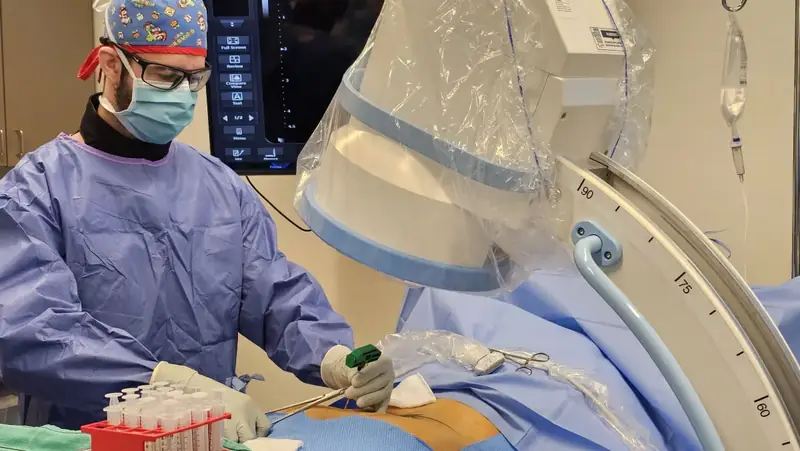
What Stem Cell Therapy Is and How It Works
BMAC is obtained through a bone marrow aspiration, typically from the iliac crest, and processed the same visit into a concentrated preparation of the patient's own cells. MFAT is obtained through a lipoaspiration and mechanically processed; fat-derived (MFAT) injections are always combined with PRP at Regenerative Performance. We only use cells obtained from you; we do not use donor, umbilical, or embryonic cells. A third option, culture-expanded mesenchymal stem cells, is investigational, not FDA-approved, and offered under the federal Right to Try Act, with cells processed at an FDA-compliant cGMP facility; it is described on our culture-expanded mesenchymal stem cell therapy page.
In the United States, autologous bone marrow concentrate for orthopedic conditions is typically an off-label application, not an FDA-approved treatment.
Patients in Tempe searching for stem cell therapy today mostly find general information rather than a clinic that speaks directly to East Valley residents, since no stem cell page from Regenerative Performance has previously answered this search. Stem cell therapy at Regenerative Performance is autologous only: the choice between BMAC and MFAT, or whether a stem cell procedure is the right fit at all, follows a hands-on physical exam and diagnostic ultrasound that identify the structure actually generating the pain, not a generic protocol applied to every patient regardless of the injury. Patients who already worked with Regenerative Performance's PRP therapy for Tempe and are now asking whether stem cell therapy would serve them better have that question answered during the same diagnostic evaluation.
For a deeper look at how stem cell therapy works and the conditions it treats, see the complete guide to stem cell therapy; the stem cell therapy service page walks through the clinic's full evaluation and treatment process.
Sports Injuries, Ligament Tears, and Tendinopathy
Sports-related injuries and overuse tendon problems are among the most common reasons Tempe patients look into stem cell therapy, often after physical therapy and anti-inflammatory treatment have plateaued without resolving the pain. Full-thickness ACL tears that have not retracted and partial-thickness rotator cuff tears are examples where research suggests stem cell therapy may do a better job supporting repair of the structure itself, compared with a treatment that addresses symptoms alone. Some patients feel worse even as imaging improves, and some feel little pain despite imaging that looks worse, so treatment is planned around both the structure and the symptoms rather than the scan result in isolation. A completely retracted ligament tear or a tendon tear that requires surgical repair typically still needs a surgical referral, so an imaging-based evaluation determines whether a given sports injury is a realistic candidate for a regenerative approach.
Tendinopathy in the shoulder, elbow, hip, or ankle may involve more than the painful attachment point, so the exam considers the adjacent joint, ligaments, nerves, cartilage, and subchondral bone rather than stopping at the first likely structure, and imaging is used to test that working diagnosis. Stem cell therapy is typically not a fit for active cancer or bone marrow malignancy, active infection, or an expectation that treatment is certain to succeed. Regenerative Performance treats both long-standing chronic pain and more recent sports injuries, and treats many structures in a single treatment session rather than one at a time.
Running, cycling, and recreational or adult-league sports along the Tempe canal paths and Town Lake area are common sources of the tendon overuse and ligament strain Regenerative Performance sees in patients traveling from Tempe, alongside older sports injuries that were never given a diagnostic workup at the time they happened. Both patterns start with the same detailed history of how and when the injury began, followed by the hands-on physical exam that identifies which structure needs treatment.
Serving Tempe and the East Valley
Regenerative Performance's clinic is in Gilbert, a straightforward drive from Tempe across the East Valley. Traveling from Tempe means using the same East Valley corridors, Loop 202, Priest Drive, or Baseline Road, that many patients already use for work or errands, so the clinic is not an unfamiliar part of the Valley. Patients coming from Tempe for stem cell therapy typically schedule the 2-hour evaluation and the bone marrow or adipose harvest as two separate visits, so the evaluation can establish a diagnosis and treatment plan before any procedure is scheduled, and the harvest and same-day processing can happen without rushing either visit.
Patients who want to know whether stem cell therapy is a fit for a specific sports injury or tendon problem before making the drive from Tempe are welcome to call and ask questions before scheduling anything.
What Every Stem Cell Treatment Includes
Every injection is performed under the image guidance the structure requires, using ultrasound, x-ray, or both, by Dr. Drew Timmermans, ND, RMSK, who completed a residency in Pain Management and Regenerative Medicine at Southwest College of Naturopathic Medicine and has been performing bone marrow concentrate and microfragmented adipose procedures since 2017. Outcomes tracked since 2021 in partnership with DataBiologics.
Procedures that include a bone marrow or adipose harvest are typically done under twilight sedation with a dedicated anesthesia provider monitoring you, while simpler injection-only visits are usually done awake and are well tolerated.
Most patients have increased soreness for 3 to 7 days. Some feel a significant drop in pain in the first 7 to 14 days because the injected cells release natural anti-inflammatory compounds; that early relief wears off after a few weeks, and losing it does not mean the procedure failed. Most patients who respond start to see it within the first 4 weeks, the majority of improvement arrives in the first 6 months, and healing typically continues out to a year.
Frequently Asked Questions About Stem Cell Therapy for Tempe, AZ
Who offers image-guided stem cell therapy near Tempe, AZ?
Regenerative Performance, in Gilbert, AZ, offers image-guided stem cell therapy for patients traveling from Tempe. Every bone marrow concentrate (BMAC) and microfragmented adipose tissue (MFAT) procedure is performed under the image guidance the structure requires, using ultrasound, x-ray, or both, by Dr. Drew Timmermans, ND, RMSK, following a comprehensive 2-hour diagnostic evaluation.
Can stem cell therapy treat sports injuries like ligament tears?
Stem cell therapy can support healing in some sports-related ligament and tendon injuries, particularly full-thickness ACL tears that have not retracted and partial-thickness rotator cuff tears, where research suggests it may help support repair of the structure itself. It is not a substitute for surgery in every case: a completely retracted ligament tear or a full-thickness tendon tear that requires surgical repair typically still needs a surgical referral, so an imaging-based evaluation determines whether a given injury is a realistic candidate.
How long do stem cell therapy results take?
Patients who respond usually start to see results within the first 4 weeks, with the majority of improvement arriving in the first 6 months and healing continuing to develop for up to a year. Most patients have increased soreness for 3 to 7 days after a stem cell procedure. Some notice a significant drop in pain in the first 7 to 14 days as the injected cells release natural anti-inflammatory compounds; that early relief typically wears off after a few weeks, and losing it does not mean the procedure failed.
Does Regenerative Performance offer stem cell therapy for Tempe patients?
Yes, Regenerative Performance offers stem cell therapy to patients from Tempe at its Gilbert, AZ clinic, a straightforward drive across the East Valley. Both the 2-hour evaluation and the treatment visit take place in Gilbert, and Tempe patients regularly make the trip for an autologous, image-guided stem cell option.
Ready to Find Out If Stem Cell Therapy Can Help?
Every injection, using your own bone marrow or fat tissue, is performed under image guidance by Dr. Timmermans at Regenerative Performance's Gilbert clinic, a straightforward drive from Tempe and the rest of the East Valley. Sports injuries, ligament tears, and tendon pain that have not responded to conservative care are the most common reasons Tempe patients make the trip.
More than 1,500 orthobiologic cases since 2015.
726 N Greenfield Rd, STE 101, Gilbert, AZ 85234