Peptide Therapy: Targeted Signaling for Recovery and Longevity
Peptide Therapy in Gilbert, AZ
At Regenerative Performance in Gilbert, Arizona, Dr. Drew Timmermans, ND, RMSK, Dr. Kaitlyn Myers, ND, and Dr. Jack Meister, ND prescribe clinical-grade peptides from licensed 503a U.S. compounding pharmacies. Peptides are short chains of amino acids that act as signaling molecules, reinforcing pathways your body already uses for tissue recovery, immune balance, mitochondrial energy production, hormone regulation, neurological function, gut integrity, and metabolic balancing. Every peptide protocol at our practice begins with a comprehensive evaluation and is matched to your specific goals and clinical picture.
Why Patients Come to Us for Peptides
You Have Tried the Obvious Things and You Are Still Not Where You Want to Be
This is a familiar pattern for a lot of our patients. Bloodwork came back "normal," supplements moved the needle a little and then plateaued, the physical-therapy plan ran its course, and your sleep, nutrition, and training are already dialed in. Things are better than they were, but not where they should be, and the next obvious step is not obvious.
- "The cortisone or gel shot helped for a while, then wore off." Injections like cortisone or hyaluronic acid can quiet symptoms for a time, but they are not designed to rebuild tissue or reliably change the longer-term recovery environment, so relief may fade and the problem can return.
- "My hormones are 'in range' and I still feel flat." Sleep is shallow, body composition is drifting, and training recovery is slower than it used to be, and standard fixes like TRT or BHRT alone have not closed the gap.
- "Every time I make progress, my body flares again." Long COVID, chronic Lyme, mold, recurrent viral reactivation, leaky gut, or IBD keeps resetting the clock, and every flare erodes the gains you have made on everything else.
- "I am not as mentally sharp as I used to be." Anxiety arrives earlier in the day, recall is fuzzy, and focus fragments under pressure, and the cognitive demands of your work are starting to outpace what your nervous system has in reserve.
- "I want tools that target the cell, not just the symptom." Mitochondrial dysfunction, senescent cell load, telomere shortening, and skin collagen loss are real biological processes that drive how you age, and peptides speak to those processes at the layer where the conversation actually happens.

Why Most Plans Stop Short
Why Standard Medicine Treats the Symptom Instead of the Signal
Most allopathic clinics work at the symptom layer because that is what a 15-minute visit allows and that is what insurance reimburses. Peptides often operate one layer deeper, at the signal layer where the molecules tell your tissue when to repair, your immune system when to ramp up or stand down, and your hormone axis when to release, while supporting your mitochondria's own energy production along the way. Miss the signal and the symptom keeps coming back.
Factor 1
Symptom-Only Care vs. Signal-Layer Correction
Anti-inflammatory medication, muscle relaxer, sleep aid, antidepressant: each addresses the symptom expression, not the underlying signal that keeps producing it.
Factor 2
Off-the-Shelf Peptide Stack vs. Evaluation-Driven Protocol
Online peptide clinics prescribe the same three peptides to every patient regardless of presentation. The peptide that fits your case may not appear on that menu at all.
Factor 3
Research-Chemical Sourcing vs. Licensed Compounding Pharmacy
"Research only, not for human consumption" suppliers carry no purity guarantee, no sterility guarantee, and no medical oversight. Patients who self-prescribe from those channels often arrive at our office with no way to know what they were actually injecting.
Factor 4
Single-Drug Thinking vs. Integrative Protocol
Peptides work best when they are layered into a complete plan: BPC-157 alongside PRP for tendon recovery, thymosin alpha-1 alongside an anti-microbial protocol for chronic infection, mitochondrial peptides alongside IV NAD+ for energy.
What to Expect
What Happens in Your Evaluation
The evaluation looks at you as a whole person, not a single lab value and not a peptide to sell. We work through a comprehensive intake and a review of your labs, history, and goals, so we understand what is actually holding your recovery back.
You leave with a working diagnosis, a clear explanation of what we found, and a written plan built around supporting your body's own ability to heal. The plan covers whether peptide therapy is appropriate and, if so, how it fits alongside everything else you are doing. If we do not think peptides are the right tool for your case, we will tell you and outline other options.
Still Not Where You Should Be? The Signal Layer May Be Why
The first step is an evaluation. We will tell you whether peptides fit your case and which categories of peptide make sense for your presentation.
Patients travel from across the U.S., Canada, and internationally for our evaluations.
Understanding Peptides
What Are Peptides and How Do They Work?
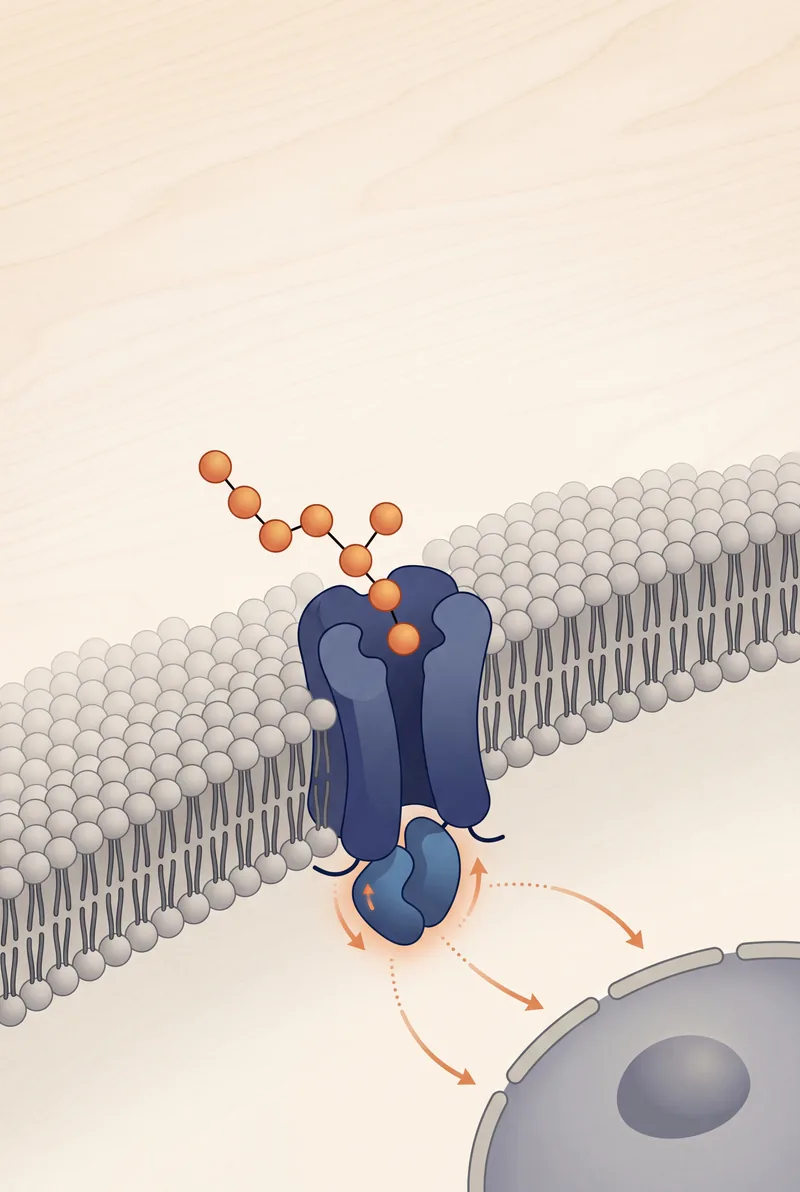
Peptides are short chains of amino acids, typically 2 to 50 amino acids long, that act as signaling molecules in the body. Your body already makes thousands of them on its own, the most familiar one is insulin. Unlike a drug that blocks or overrides a process, a peptide amplifies a signal your body is already designed to use. It tells a specific cell to do what that cell is already programmed to do, just more reliably.
Most peptides act on more than one target at once, which is part of why they tend to be well tolerated with fewer side effects than a single-target pharmaceutical. BPC-157, originally isolated from human gastric juice, signals tendon, ligament, muscle, and gut tissue toward repair pathways. Thymosin alpha-1 modulates innate immunity. SS-31 binds reversibly to cardiolipin in the inner mitochondrial membrane and supports ATP production. Semax elevates BDNF in the hippocampus. CJC-1295 paired with ipamorelin signals the pituitary to release your own growth hormone in pulses that mimic natural rhythm.
Naturopathic peptide therapy at Regenerative Performance in Gilbert, Arizona is prescribed by three naturopathic physicians, Dr. Timmermans, Dr. Myers, and Dr. Meister, each within their own clinical scope. Every peptide we prescribe at Regenerative Performance generally falls into one of nine clinical categories. Which peptide or combination you receive depends on what your evaluation surfaces: symptoms, labs, imaging, history, and the rest of your plan.
What Peptides Can Address
Which Conditions Can Peptides Address at Regenerative Performance?
Below are the nine categories of peptide application we currently prescribe across. Each category has its own peptides, its own dosing rhythm, and its own integration with the rest of your plan. Some peptides appear in more than one category: BPC-157 is a tissue-healing peptide AND a gut-healing peptide; MOTS-C is a mitochondrial peptide AND a metabolic peptide. Your evaluation determines which combination fits your case.
Tissue Healing and Recovery
Best for: Tendon and ligament recovery, post-PRP and post-stem-cell recovery, slow-healing wounds, surgical recovery support, nerve recovery.
Compounds we prescribe in this category: BPC-157, Thymosin Beta-4 (TB4), GHK-Cu, ARA-290, IGF-1 LR3, PPS (pentosan polysulfate sodium).
BPC-157 is our most-prescribed tissue peptide; pre-clinical literature reports accelerated healing of tendon-to-bone repair, increases in type 1 collagen, and is the standard adjunct after PRP and stem cell procedures in our practice. Thymosin Beta-4 (TB4) supports tendon, ligament, and muscle recovery systemically. Our practice also has clinical experience with TB-500, a short synthetic fragment of the thymosin beta-4 molecule, but we generally prefer full-length TB4. That is a clinical preference, not evidence that TB4 produces better recovery outcomes than TB-500. TB-500 is not FDA-approved and is not on FDA's 503A bulk-substances list for compounding pharmacies, so your provider will confirm whether a lawful supply is available before it is ever part of a plan. GHK-Cu may support collagen synthesis and blood vessel growth. ARA-290 is the peptide we reach for in nerve recovery and diabetic neuropathy. IGF-1 LR3 is a long-acting insulin-like growth factor analog we use to support muscle and connective-tissue repair in select cases, and PPS (pentosan polysulfate) supports cartilage and joint health, which is why we layer it in for osteoarthritic-knee cases.
Immune Modulation
Best for: Chronic infections (Lyme, mold, EBV, chronic viral reactivation, long COVID), autoimmunity, chronic inflammatory conditions, immune dysregulation.
Compounds we prescribe in this category: Thymosin Alpha-1, Thymulin, LL-37, VIP, KPV.
Thymosin alpha-1 is our anchor immune-modulating peptide; it modulates innate immunity, is used in chronic viral and intracellular infections, and is a standard component of our chronic infection protocols. Thymulin contributes anti-inflammatory and analgesic activity. LL-37 has direct anti-microbial and immune-modulating properties; VIP supports vasoactive intestinal regulation in CIRS and complex inflammatory cases.
Aesthetic and Skin
Best for: Skin tone and texture, post-procedure aesthetic recovery, hair follicle support, wound and scar repair, collagen and elastin support.
Compounds we prescribe in this category: GHK-Cu, BPC-157.
GHK-Cu stimulates collagen and glycosaminoglycan synthesis in skin fibroblasts, attracts immune cells to the wound, promotes blood vessel growth, and supports hair follicle function.
Mitochondrial Energy
Best for: Persistent fatigue with normal labs, post-viral fatigue, exercise tolerance, recovery between training sessions, age-related decline in cellular energy.
Compounds we prescribe in this category: SS-31 (Elamipretide), MOTS-C, SLU-PP-332.
SS-31 binds reversibly to cardiolipin in the inner mitochondrial membrane and supports ATP/ADP balance; it is the peptide we reach for when the mitochondrion itself is the bottleneck. MOTS-C activates the AMPK pathway to support cellular energy production and insulin sensitivity. SLU-PP-332 is a newer ERR agonist, often layered with NAD+ or 5-Amino-1MQ for comprehensive mitochondrial support.
Hormone and Growth Hormone Axis
Best for: Growth hormone axis support in adults with documented decline, body composition support alongside hormone therapy, fertility-axis support, libido and sexual health.
Compounds we prescribe in this category: CJC-1295 (without DAC), Ipamorelin, Tesamorelin, MK-677, Gonadorelin, Kisspeptin-10.
CJC-1295 (without DAC) combined with Ipamorelin signals the pituitary to release the body's own growth hormone in pulses that mimic natural rhythm, amplifying GH release beyond what either peptide produces alone. Tesamorelin is a separate GHRH analog with strong clinical-trial evidence in visceral adiposity. MK-677 is an oral ghrelin-receptor agonist that supports a sustained nightly GH and IGF-1 elevation. Gonadorelin signals the pituitary to release LH and FSH and is used for HPG-axis support, particularly in men coming off exogenous testosterone or in fertility-axis cases. Kisspeptin-10 acts upstream of gonadorelin at the hypothalamus and is used selectively in fertility-axis work.
Neurological and Cognitive
Best for: Anxiety, memory and attention concerns, post-concussion recovery support, post-stroke cognitive support, neurodegenerative disease support, sleep architecture.
Compounds we prescribe in this category: Selank, Semax, Dihexa, FGL, DSIP.
Semax is a heptapeptide analog of ACTH 4-10 that elevates BDNF and is used in the literature for memory, attention, anxiety, post-stroke recovery, ADHD, and opioid withdrawal. Selank elevates BDNF in the hippocampus and is the peptide we use most for anxiety with cognitive overlap. Dihexa is reported in pre-clinical work to support synaptogenesis and is used selectively in cognitive-decline cases where memory consolidation is the primary concern. FGL is a synthetic NCAM mimetic peptide used intranasally for memory and stress resilience. DSIP (Delta Sleep Inducing Peptide) supports sleep architecture in select cases and is layered alongside the rest of a sleep plan, not in place of it.
Gut Health
Best for: Leaky gut (intestinal permeability), inflammatory bowel disease (UC, Crohn's), IBS, gastric ulcer recovery, gut-driven autoimmunity.
Compounds we prescribe in this category: BPC-157, KPV, Larazotide.
BPC-157 acts systemically in the digestive tract. The published literature on BPC-157 is largely preclinical (including Sikiric et al. on the brain-gut axis) and describes effects on gastric ulcer healing, intestinal permeability, and gut-driven inflammation, mainly in animal models; robust human trials in ulcerative colitis and Crohn's are not yet established. KPV is a tripeptide derived from alpha-MSH that targets intestinal inflammation through NF-kB inhibition without broadly suppressing immune function. It is administered orally. Larazotide (oral) is dosed for gut repair, inflammation, and IBD.
Metabolic Health
Best for: Insulin resistance, post-menopausal metabolic shift, body composition support alongside lifestyle and lab work, visceral adiposity in select adult cases, and physician-supervised weight management when clinical criteria are met.
Compounds we prescribe in this category: 5-Amino-1MQ, MOTS-C, SLU-PP-332, Tesamorelin, MK-677, Semaglutide, Tirzepatide.
5-Amino-1MQ may enhance metabolic rate by reducing NNMT activity and supports increased NAD+ levels for mitochondrial function. MOTS-C is an exercise-mimetic peptide that activates AMPK and is reported in animal models to prevent ovariectomy-induced obesity and insulin resistance. Tesamorelin has documented effects on visceral adipose tissue. Semaglutide is a GLP-1 receptor agonist (the same molecule as Ozempic and Wegovy); tirzepatide is a dual GLP-1 and GIP agonist (the same molecule as Mounjaro and Zepbound). Both are FDA-approved for type 2 diabetes and chronic weight management when clinical criteria are met. Dr. Myers leads weight-management prescribing in this category, always layered with food, training, sleep, and lab-driven correction rather than as a stand-alone shortcut.
Longevity
Best for: Telomere support, senescent cell load, cellular signaling decline with age, mitochondrial decline with age.
Compounds we prescribe in this category: Epitalon, FOX04-DRI, MOTS-C, SS-31, GHK-Cu.
Epitalon stimulates telomerase activity; in animal (rodent) studies, peptide bioregulators including Epitalon increased mean lifespan by 20–40% and slowed age-related biomarker changes (Anisimov & Khavinson, Biogerontology 2010), though human lifespan extension has not been established. FOX04-DRI is a senolytic peptide that selectively triggers apoptosis in senescent cells while sparing healthy cells, which is why it is run in short pulses rather than continuously. MOTS-C and SS-31 carry over from the mitochondrial category, where their cellular-energy effects also map onto the longevity goal. GHK-Cu carries over from the aesthetic category for skin-collagen-loss with age. Longevity peptide protocols are typically cycled throughout the year, built around the rest of your plan rather than stacked on top of it.
What the Research Says
What Does the Published Research Show About Therapeutic Peptides and Compounds?
Most of the peer-reviewed literature on therapeutic peptides comes from pre-clinical and early clinical work. The findings are consistent enough across multiple models, and the early safety signals reassuring enough, that physicians have moved peptides into clinical protocols where the standard of care leaves a gap. Four studies from that literature anchor the protocols below.
Pre-clinical and early clinical studies on therapeutic peptides describe consistent biological effects across multiple models. The published Pentosan Polysulfate (PPS) literature reports clinical improvement in osteoarthritic knee outcomes through 52 weeks after a 6-week course in a small open-label study, which is why we layer PPS into select post-PRP osteoarthritis cases. The growth-hormone-axis literature documents synergistic GH release when a GHRH analog (CJC-1295 w/o DAC) is paired with a GHRP (Ipamorelin), which is why we use the combination rather than either peptide alone.
Every peptide we prescribe is matched to a specific pathway your evaluation identifies, integrated with the rest of your plan, and adjusted at protocol milestones based on your response. The combination of physician oversight, licensed compounding-pharmacy sourcing, and protocol-level integration is what separates clinical peptide therapy from a peptide menu pulled off an online clinic's intake form.
Pre-clinical data does not guarantee clinical outcomes in any individual patient. Individual results may vary. Peptide therapy at Regenerative Performance is prescribed based on clinical evaluation and integrated with the rest of your treatment plan, not on the basis of any single published statistic.
For clinicians and people who like to read studies
Peptide Prescribing: Precision Matters
Why Does Peptide Therapy Vary So Much Between Providers?
Peptide therapy outcomes depend on selecting the right peptide for the right pathway, dosing it correctly, sourcing it from a licensed pharmacy, and integrating it with everything else the patient is doing. Most clinics that offer peptides do not approach this with the same level of clinical rigor.
| Factor | Typical Peptide Provider | Regenerative Performance |
|---|---|---|
| Provider expertise | Wellness clinic, online prescriber, or self-prescription from a research-chemical site | Three naturopathic physicians (Dr. Timmermans, Dr. Myers, Dr. Meister), each prescribing within their clinical scope |
| Evaluation depth | Online intake form; same protocol for every patient | 2-hour in-person evaluation including history, lab review, and diagnostic ultrasound when relevant |
| Peptide selection | Limited menu of 3 to 5 popular peptides | 30+ peptides on the active formulary, selected based on the pathway your evaluation identifies |
| Sourcing | Variable; often overseas "research only" suppliers with no purity guarantee | Licensed 503a U.S. compounding pharmacies |
| Integration | Peptide prescribed in isolation, no coordination with other treatments | Peptide layered with PRP, stem cell therapy, hormone replacement, IV therapy, supplements, lifestyle, and physical therapy |
| Monitoring | No structured follow-up | Ongoing assessment, dose adjustments based on response and tolerability, written re-evaluation at protocol milestones |
| Pricing transparency | Subscription packages; monthly auto-bill | Cash-pay; evaluation cost discussed before booking, peptide protocol cost discussed during the evaluation; no pre-paid packages |
What to Expect
What Does a Peptide Protocol Look Like?
Peptide protocols vary by category, by indication, and by whether peptides are paired with another procedure. The general arc looks like this.
-
1
Evaluation and Lab Review
Before any prescription, we complete a 2-hour evaluation including a focused review of your history, labs, and goals, plus diagnostic ultrasound when relevant. Lab work may be ordered or repeated for any peptide category where the specific peptide determines whether labs are needed, whether or not your case involves an orthopedic issue.
-
2
Protocol Design and Pharmacy Ordering
Your physician selects the peptide (or combination), dose, route, frequency, and duration based on your goals and the evaluation. The prescription is sent to a licensed 503a U.S. compounding pharmacy. Most peptides are shipped to your home in vials with the syringes you will use.
-
3
Administration Training
Most peptides are administered as a small subcutaneous self-injection at home using insulin syringes. Your provider will teach you how to perform subcutaneous injections and confirm your comfort with the process before you start.
-
4
Active Phase (Typically 4 to 12 Weeks)
You administer the peptide on the schedule prescribed. We check in at protocol milestones to track response and adjust dose if needed. Most patients begin to notice the effect of the peptide within the first 4 weeks; mitochondrial, longevity, and growth-hormone-axis peptides may take longer.
-
5
Re-Evaluation and Decision
At the end of the active phase we re-evaluate. The decision to continue, taper, cycle off, or switch peptides is made together based on your response, your goals, and the rest of your plan.
Honest Expectations
Peptide Therapy Is Probably Not Right If:
- You are looking for a quick fix or expecting peptides to replace an actual diagnosis and treatment plan.
- You want peptides without an evaluation, you purchased "research-chemical" peptides online and want us to administer them, or you bought a peptide somewhere else and want us to write the dosing protocol around it.
- You are unwilling to participate in the rest of the plan (nutrition, training, sleep, supplements, lab follow-up, or the procedure the peptide is supporting).
- You expect guaranteed outcomes. Nothing in medicine is guaranteed; peptides are no exception.
We would rather tell you upfront than waste your time.
Patient Stories
What Our Patients Say
"Treatment so far has included detailed bloodwork analysis, supplements, peptides and some knee injections. While I still have a ways to go, I have already seen great improvement in my walking stride and some pain reduction as well."
Verified Google review
"he gave me options to do PRP or stem cell injections and also gave me a less invasive option of taking a combination of supplements, peptides and medications to help natural heal my instability."
Verified Google review
"Dr Timmermans is a relentless learner and keeps digging until he finds the root cause of what is ailing you."
Verified Google review
Common Questions About Peptide Therapy
What is peptide therapy?
Peptide therapy is the medical prescription of short chains of amino acids that act as signaling molecules in the body. Peptides reinforce pathways your body already uses for tissue recovery, immune balance, mitochondrial energy production, hormone regulation, neurological function, gut integrity, and metabolic balancing. At Regenerative Performance in Gilbert, Arizona, peptides are prescribed across nine clinical categories and sourced exclusively from licensed 503a U.S. compounding pharmacies.
How do I get a prescription for peptide therapy in Gilbert, Arizona?
Every patient prescribed peptides at Regenerative Performance starts with a comprehensive evaluation in Gilbert, Arizona. Call 480-508-4226 or book through the website to schedule. The evaluation includes a full intake plus the components your case calls for (intake, lab review when relevant, history, and goal-setting tied to the pathway under question). Peptides cannot be ordered through an intake form alone, and they are not dispensed without a prescriber-patient relationship.
How long does peptide therapy take to work?
Most patients notice the effect of a peptide within the first 4 weeks of a protocol. Tissue-recovery peptides such as BPC-157 are typically continued for 4 to 12 weeks. Growth hormone secretagogues (CJC-1295 with Ipamorelin, Tesamorelin, MK-677) and mitochondrial or longevity peptides (MOTS-C, SS-31, Epitalon) are usually evaluated over 8 to 12 weeks and cycled throughout the year. GLP-1 metabolic peptides (semaglutide, tirzepatide) are titrated over weeks to months. Your prescribing provider will tell you what to expect for your specific protocol at the time of prescription.
How safe is peptide therapy?
The risk of an adverse reaction with prescription peptides at appropriate doses is generally low when prescribed and monitored by a physician. Reported safety profiles vary by peptide and indication, and compounded preparations are not FDA-reviewed for safety, effectiveness, or quality. Your prescriber reviews the specific risks of any peptide with you before you start. GLP-1 receptor agonists (semaglutide, tirzepatide) require screening for pancreatitis history, personal or family history of medullary thyroid carcinoma, and gallbladder disease before prescription. All peptides are sourced from licensed 503a U.S. compounding pharmacies. Your provider monitors your response and adjusts the protocol when needed.
How are peptides administered?
Most peptides are administered as a small subcutaneous self-injection at home using an insulin syringe. KPV and Larazotide are administered orally. Selank, Semax, and FGL are administered intranasally. GHK-Cu is sometimes administered topically. Sublingual liposomal preparations are available for selected peptides. Your provider will teach you how to perform subcutaneous injections and confirm your comfort with the process before you start.
Are peptides covered by insurance?
Insurance may cover FDA-approved peptide medicines, such as brand-name semaglutide or tirzepatide, for their approved uses when plan criteria are met, but unapproved peptides such as BPC-157 are generally not covered. Compounded peptides, including compounded semaglutide and tirzepatide, are not FDA-approved and are generally not covered either. The cost of your evaluation is discussed before you book, and the cost of the peptide protocol itself is discussed during the evaluation, since which peptide we prescribe and at what duration depends on what your evaluation shows. Patient financing is available through Advance Care Card. Regenerative Performance is not contracted with any insurance providers; we are a cash-pay clinic.
What is the difference between prescription peptides and "research chemical" peptides?
Prescription peptides come from licensed 503a U.S. compounding pharmacies. "Research chemical" peptides are sold online from suppliers labelled "research only, not for human consumption" and carry no purity guarantee, no sterility guarantee, and no medical oversight. Regenerative Performance does not administer or condone the use of research-chemical peptides under any circumstance, and we do not write dosing protocols around peptides patients have purchased outside the clinical channel.
Which peptides does Regenerative Performance prescribe?
Regenerative Performance prescribes 30 or more peptides and peptide-adjacent compounds across nine clinical categories. Tissue healing and recovery: BPC-157, Thymosin Beta-4 (TB4), GHK-Cu, ARA-290, IGF-1 LR3, PPS, plus the growth-hormone secretagogues CJC-1295 with Ipamorelin, MK-677, and Tesamorelin. Immune modulation: Thymosin Alpha-1, Thymulin, LL-37, VIP, KPV. Mitochondrial energy: SS-31, MOTS-C, SLU-PP-332. Hormone axis: CJC-1295 with Ipamorelin, Tesamorelin, MK-677, Gonadorelin, Kisspeptin-10. Neurological and cognitive: Semax, Selank, Dihexa, FGL, DSIP. Gut health: BPC-157, KPV, Larazotide. Metabolic health: 5-Amino-1MQ, MOTS-C, SLU-PP-332, Tesamorelin, MK-677, Semaglutide, Tirzepatide. Aesthetic and skin: GHK-Cu, BPC-157. Longevity: Epitalon, FOX04-DRI, MOTS-C, SS-31, GHK-Cu. Which peptide or combination you receive depends on your goals and your evaluation.
Which provider at Regenerative Performance prescribes peptides?
Three naturopathic physicians at Regenerative Performance prescribe peptides within their clinical scope. Dr. Drew Timmermans, ND, RMSK prescribes peptides for procedure patients (tissue recovery, post-PRP, post-stem-cell). Dr. Kaitlyn Myers, ND prescribes peptides for non-procedure patients (immune, gut, hormone, metabolic, neurological, longevity, weight-management GLP-1s). Dr. Jack Meister, ND prescribes peptides for procedure patients alongside Dr. Timmermans (tissue recovery, post-PRP, post-stem-cell) and is often the assigned provider for MSK/orthopedic integrative-care peptide cases. Provider routing is handled at intake. You do not need to pick a provider in advance.
Peptides Speak the Language Your Cells Already Use
Recovery after a procedure, management of a chronic condition, or a long-term plan for cellular health: peptide therapy may be the missing layer in any of those cases. The first step is the evaluation. That is where we identify which signal is under-firing and which peptide, if any, is the right tool to restore it.
Serving patients in Gilbert, Chandler, Mesa, Scottsdale, Phoenix, Tempe, and across the United States.
726 N Greenfield Rd, STE 101, Gilbert, AZ 85234
References
- Kumagai K, et al. Sodium pentosan polysulfate resulted in cartilage improvement in knee osteoarthritis - an open clinical trial. BMC Clinical Pharmacology, 2010; 10:7. DOI: 10.1186/1472-6904-10-7.
- Pickart L, Margolina A. Regenerative and protective actions of the GHK-Cu peptide in the light of the new gene data. International Journal of Molecular Sciences, 2018; 19(7):1987. DOI: 10.3390/ijms19071987.
- Anisimov VN, Khavinson VK. Peptide bioregulation of aging: results and prospects. Biogerontology, 2010; 11(2):139–149. DOI: 10.1007/s10522-009-9249-8.
- Bowers CY, et al. Growth hormone (GH)-releasing peptide stimulates GH release in normal men and acts synergistically with GH-releasing hormone. Journal of Clinical Endocrinology and Metabolism, 1990; 70(4):975–982. PMID 2108187. DOI: 10.1210/jcem-70-4-975.
- Dalmasso G, et al. PepT1-mediated tripeptide KPV uptake reduces intestinal inflammation. Gastroenterology, 2008; 134(1):166–178. DOI: 10.1053/j.gastro.2007.10.026.
Note on regulatory status and off-label use: Most of the compounds described on this page are prescribed off-label or dispensed as compounded preparations. Off-label use means prescribing an FDA-approved drug for an indication, dose, or route the FDA has not formally approved; it is legal, common in medicine, and often supported by published peer-reviewed research. A compounded preparation is made by a licensed compounding pharmacy for an individual patient and is not itself an FDA-approved product. Some items grouped here for convenience are not actually peptides (for example, pentosan polysulfate sodium, MK-677, 5-Amino-1MQ, and SLU-PP-332). A few of the molecules referenced do have FDA-approved products for specific indications (for example, semaglutide and tirzepatide for type 2 diabetes and chronic weight management, pentosan polysulfate sodium as ELMIRON for interstitial cystitis, and tesamorelin as Egrifta), though their use in this context may still be off-label or compounded. Everything we prescribe is ordered by a licensed physician after a comprehensive evaluation, sourced from licensed 503a U.S. compounding pharmacies, and supervised by Dr. Drew Timmermans, ND, RMSK; Dr. Kaitlyn Myers, ND; or Dr. Jack Meister, ND. Compounding-pharmacy availability of any specific peptide named on this page is subject to change based on FDA's current bulk-substance rules and federal or state compounding regulations; if a peptide referenced here is not available for compounding at the time of your evaluation, your provider will discuss the closest clinically appropriate alternative. Individual results may vary based on the compound, the indication, the dose, the protocol duration, and adherence to the broader treatment plan.