Stellate Ganglion Block in Gilbert, AZ

Stellate Ganglion Block: Two-Level SGB at C4 and C6

Reset Your Nervous System

Dr. Drew Timmermans, ND, RMSK at Regenerative Performance in Gilbert, Arizona performs ultrasound-guided two-level stellate ganglion block (2LCSB) at C4 and C6 to calm the fight-or-flight response in patients with PTSD, chronic anxiety, long COVID, and complex pain syndromes. The stellate ganglion block has been used clinically since 1925, making it one of the most established nerve block procedures in medicine. Your first step is a comprehensive evaluation to confirm that an overactive nervous system is driving your symptoms.

100+ Years
Clinical use since 1925
250+
Performed since 2020
~50%
Anxiety reduction at 3 months
Stellate ganglion block at Regenerative Performance

Does It Feel Like Your Body Is Stuck in Overdrive?

  • Racing heart, poor sleep, constant tension. You have tried therapy, medication, breathing exercises. Some of it helps temporarily, but your nervous system keeps snapping back to high alert. The underlying drive never fully shuts off.
  • Anxiety that medication only dulls, never resolves. You manage symptoms every day, but the baseline never truly improves. You are tired of adjusting doses and cycling through prescriptions that mask the problem without addressing where it starts.
  • Lingering symptoms months after COVID. Brain fog, heart palpitations, temperature swings, fatigue that sleep does not fix. Your doctors have ruled out the obvious causes, but your autonomic nervous system is still misfiring and nobody has offered a real solution.
  • Pain that no scan fully explains. Your imaging looks "normal" or "mild," yet burning, throbbing, temperature changes, or pain that does not match the imaging keeps showing up. Sympathetically-maintained pain (including CRPS and post-injury chronic pain syndromes) does not show up on an MRI, and most providers do not test for it.
Person caught in nervous system overdrive — racing thoughts, tension, and the body stuck in fight-or-flight

Why Your Symptoms Keep Coming Back

Why Nothing Has Worked So Far

When the sympathetic nervous system is locked in overdrive, managing symptoms without addressing the source keeps you on a treadmill. Most approaches target the downstream effects while the fight-or-flight pattern continues running underneath.

Pattern 1

"Just Give It Time"

When your nervous system is locked in a sympathetic overdrive state, waiting does not reset it. The longer the pattern runs, the more entrenched it becomes. Months turn into years, and the body adapts to a stress response as its new baseline.

TypicalWait and hope symptoms resolve on their own.
Regenerative PerformanceIdentify sympathetic dysfunction and intervene directly at the level of the nervous system.

Pattern 2

"Try Another Medication"

Medications for PTSD, anxiety, and autonomic dysfunction often manage symptoms without addressing the neurological pattern driving them. Many patients cycle through multiple prescriptions, each with its own side effects, while the root issue remains untouched.

TypicalAdd or rotate medications to suppress symptoms.
Regenerative PerformanceCalm the fight-or-flight response at its source with a targeted stellate ganglion block.

Pattern 3

"There Is Nothing Structurally Wrong"

Sympathetic nervous system dysfunction does not appear on standard imaging. A normal MRI does not mean you are fine. When the problem is neurological signaling rather than structural damage, the diagnostic approach needs to match.

TypicalRely on imaging alone and dismiss symptoms when scans are clean.
Regenerative PerformanceEvaluate autonomic function, symptom patterns, and clinical history to identify sympathetic involvement.

What Happens at Your Evaluation

The evaluation answers WHY your symptoms are happening before any procedure is considered. We use one of two evaluation paths depending on what brings you in:

For PTSD, anxiety, or long COVID inquiring specifically about a stellate ganglion block: a focused 45-minute evaluation to confirm you are a candidate through a detailed clinical history and use of validated questionnaires (PCL-5 for PTSD, GAD-7 for anxiety, COMPASS-31 for autonomic symptoms, Neurobehavioral Symptom Inventory for TBI).

For chronic pain that may have a sympathetic component: a full 2-hour evaluation where Dr. Timmermans performs a hands-on physical exam, reviews your history and any imaging, and uses diagnostic ultrasound to identify the tissue or nerve generating your pain. If sympathetic involvement is significant, the stellate ganglion block may be part of the recommendation.

Either way, you walk away knowing whether the stellate ganglion block is appropriate for your situation and what your next step is. If we do not think it is the right fit, we will tell you and outline other options.

Living in a chronic fight-or-flight state does more than cause discomfort. Sustained sympathetic activation is associated with elevated cortisol, disrupted sleep architecture, impaired immune function, and increased cardiovascular strain. Addressing the source of the activation, not just its symptoms, is the clinical priority.

What the Research Shows

~2x
Greater PTSD reduction vs. sham injection (JAMA Psychiatry RCT, n=113)1
~50%
Anxiety reduction at 3 months in two-level SGB (n=114)2
86%
Long COVID patients reported symptom relief (n=86)3
48%
TBI symptom reduction at 3 months in two-level SGB (n=41)5

The strongest signal for the stellate ganglion block comes from a 2020 sham-controlled randomized trial in JAMA Psychiatry. Paired stellate ganglion block produced approximately twice the CAPS-5 PTSD symptom reduction of sham injections at 8 weeks, establishing that the response is not a placebo effect.

The bilateral two-level (C4 + C6) protocol Dr. Timmermans uses is supported by separate published cohorts. In a 114-patient anxiety analysis, GAD-7 scores dropped roughly in half and remained reduced at three months. A parallel 41-patient TBI analysis reported 48% reduction in neurobehavioral symptoms at the same 3-month mark.

For long COVID, a 2023 retrospective cohort reported symptom relief in 86% of 86 patients, with most showing durable response at approximately one year.

Use of the stellate ganglion block for these conditions is off-label, supported by published research but not formally regulator-approved. Off-label use is legal, common in medicine, and discussed transparently at evaluation.

Published evidence cited above

PTSD — RCTJAMA Psychiatry, 2020
Rae Olmsted KL, et al. Multisite sham-controlled RCT, n=113. CAPS-5 reduction −12.6 vs −6.1 (P=.01) over 8 weeks. DOI: 10.1001/jamapsychiatry.2019.3474
Anxiety — 2-LevelBrain Sciences, 2025
Mulvaney SW, et al. Three-month durability of bilateral two-level stellate ganglion block, n=114. ~52% mean GAD-7 reduction; 86.8% responder rate at 3 months. DOI: 10.3390/brainsci15020188
TBI — 2-LevelBiomedicines, 2025
Mulvaney SW, et al. Bilateral two-level stellate ganglion block for TBI symptom clusters, n=41. 48% mean Neurobehavioral Symptom Inventory reduction; 85% responder rate at 3 months, independent of concomitant PTSD. DOI: 10.3390/biomedicines13071526
Long COVIDCureus, 2023
Pearson R, et al. Retrospective cohort, n=86. 86% reported symptom relief; most maintained response at approximately 1 year of follow-up. DOI: 10.7759/cureus.45161

Outcome statistics cited are from published peer-reviewed studies. Individual results may vary. Use of the stellate ganglion block for PTSD, anxiety, long COVID, TBI, and autonomic conditions is off-label. The stellate ganglion block is not a guaranteed treatment for any condition. Dr. Timmermans evaluates each patient individually to determine whether the procedure is clinically appropriate.

A Powerful Procedure with a 100-Year Track Record May Change How Your Nervous System Operates

Schedule a comprehensive 2-hour evaluation to find out if your symptoms are driven by an overactive nervous system at our Gilbert, AZ clinic.

More than 250 two-level stellate ganglion blocks performed since 2020. Ultrasound-guided at C4 and C6.

What Is a Stellate Ganglion Block?

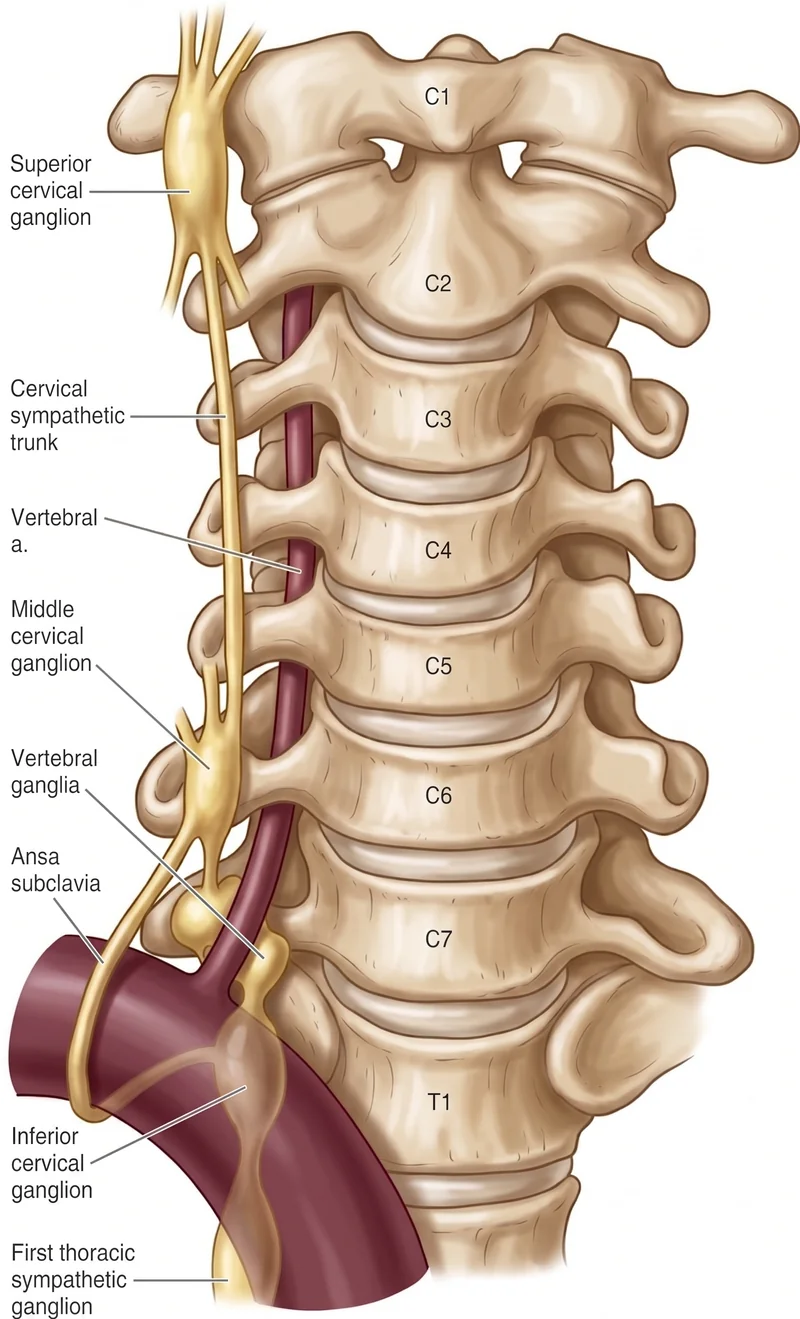
A stellate ganglion block (SGB) is an injection of long-acting local anesthetic (ropivacaine) placed around the cervical sympathetic chain in the front of the neck. The cervical sympathetic chain is a relay system that runs alongside the spine from the upper neck down to the base of the neck, carrying sympathetic (fight-or-flight) signals between the brainstem and the upper body, including the heart, lungs, face, eyes, blood vessels, and arms.

When this signaling becomes overactive, it can drive a wide range of seemingly unrelated symptoms: persistent anxiety, hypervigilance, insomnia, chronic regional pain, temperature dysregulation, abnormal sweating, vascular changes, palpitations, and sympathetically-maintained pain. Many patients arrive with normal imaging and unremarkable labs, having been told there is nothing structurally wrong. Conventional testing does not measure sympathetic tone directly, so the symptoms do not always fit a tidy diagnostic category. The block addresses the dysfunction at its source rather than treating each downstream symptom in isolation.

Published clinical practice guidelines describe the procedure at the C6 level (alongside the cervical sympathetic chain just above the stellate ganglion itself), with the C4 level added in the two-level protocol used at Regenerative Performance to extend coverage further up the chain.4

Anatomical diagram of the cervical sympathetic chain showing the C4 and C6 injection levels used in a two-level stellate ganglion block

How Does a Stellate Ganglion Block Calm the Fight-or-Flight Response?

By delivering anesthetic at two levels of the chain (C4 and C6) under real-time ultrasound guidance, the procedure temporarily interrupts the overactive sympathetic signaling. This interruption allows the nervous system to calm the fight-or-flight response and settle to a lower baseline. The effects of a single block can last months to over a year, and many patients experience noticeable changes within hours of the procedure. For patients with PTSD, this period of reduced sympathetic activity creates a window in which deeper healing can occur in therapy. For patients with long COVID, a 2023 retrospective cohort study reported that most patients did not experience a return of symptoms at approximately one year of follow-up.3

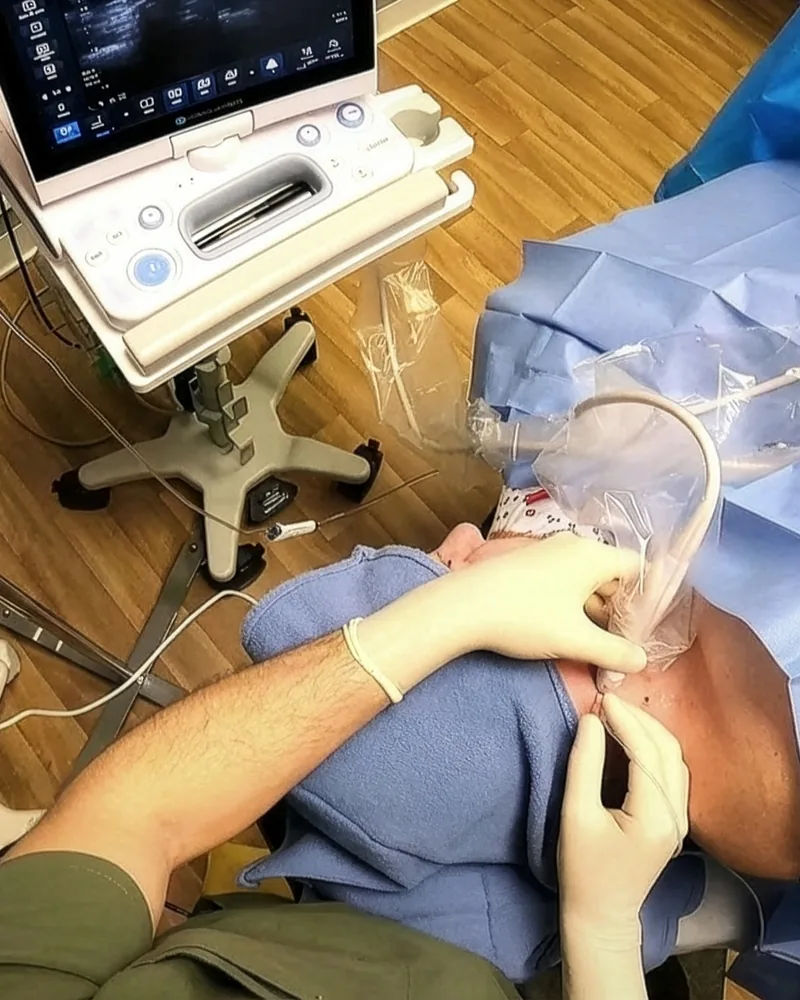
Dr. Timmermans performs every stellate ganglion block under continuous real-time ultrasound visualization. This means the needle, the surrounding anatomy (including the carotid artery, jugular vein, thyroid, and esophagus), and the stellate ganglion are all visible on screen throughout the injection. Ultrasound guidance is not optional for this procedure. The cervical sympathetic chain sits in one of the most anatomy-dense regions of the body, and precision is what separates a safe, effective block from an unnecessary risk.

Why Two Levels (2LCSB) Instead of Single-Level

Published research demonstrates that adding a second injection at the C4 level (in addition to the standard C6 level) produces more complete coverage of the sympathetic chain and can improve response rates compared with a single C6 block.4

Conditions That Respond to Stellate Ganglion Block

The stellate ganglion block treats two distinct groups of patients. The procedure is the same, but the conditions and the people seeking treatment look very different.

For PTSD, Anxiety, and Trauma-Related Conditions

These patients are living in a chronic state of heightened alertness. The sympathetic nervous system locked into overdrive after a traumatic event, and it never came back down. Therapy and medication may help manage the surface, but the neurological pattern persists underneath.

  • PTSD (Post-Traumatic Stress Disorder)
  • Generalized Anxiety Disorder
  • Trauma-Related Sleep Disturbance
  • Hypervigilance
  • Chronic Insomnia (sympathetic-driven)
  • Traumatic Brain Injury symptoms

For Long COVID, Dysautonomia, CRPS, and Autonomic Conditions

These patients have a measurable disruption in autonomic nervous system function. The fight-or-flight response is misfiring, producing symptoms that conventional testing often cannot explain, and standard treatments have not resolved.

  • Long COVID (post-COVID-19 syndrome)
  • Dysautonomia
  • Complex Regional Pain Syndrome (CRPS)
  • Sympathetically-Maintained Pain
  • Tinnitus (sympathetic-related)
  • Post-Surgical Sympathetic Dysfunction

Honest Expectations

Stellate Ganglion Block Is Probably Not Right If:

  • You are looking for a quick fix for situational stress or performance anxiety
  • You are unwilling to address lifestyle factors, sleep, or underlying contributors alongside the procedure
  • You expect a single injection to permanently resolve a complex condition
  • You are looking for the stellate ganglion block as a standalone fix without addressing underlying causes

We would rather tell you upfront than waste your time. If any of these apply and you are still curious, the 2-hour evaluation is the fastest way to find out where you stand.

Stellate Ganglion Block at Regenerative Performance: How Our Protocol Compares

Feature Typical Clinic Regenerative Performance
Levels treatedSingle-level (C6 or C7)Two-level: C4 and C6 (2LCSB protocol)
Guidance methodLandmark-based or fluoroscopyReal-time ultrasound with continuous visualization
Who performs the blockMay be performed by a technician-guided teamDr. Timmermans performs the entire procedure personally
Pre-procedure evaluationBrief intake, limited historyComprehensive 2-hour evaluation to confirm sympathetic involvement before any injection
Imaging of anatomyFluoroscopy shows only bone landmarks (no soft tissue, vessels, or nerves visible)Dynamic ultrasound showing vasculature, nerves, and surrounding soft tissue in real time
Provider credentialsVariesRMSK-certified musculoskeletal sonographer with advanced injection training
Follow-upOften noneSeveral check-in phone calls over the first 10 weeks, then a structured visit at 3 months to assess response and plan next steps
Diagnostic confirmationSymptoms aloneClinical history + validated questionnaires (PCL-5, GAD-7, COMPASS-31, Neurobehavioral Symptom Inventory). For pain indications, full physical exam and review of imaging.

What to Expect

What to Expect From a Stellate Ganglion Block

Most patients notice changes within hours. The procedure is quick, recovery is minimal, and the response gives both you and Dr. Timmermans clear information about whether your symptoms are sympathetically driven.

  1. 1

    Initial Evaluation

    Before any procedure is scheduled, Dr. Timmermans reviews your history, confirms whether sympathetic involvement is driving your symptoms, and explains exactly what will happen during the block, so you leave knowing whether you are a candidate, what the procedure involves, and what to expect day-of.

  2. 2

    Procedure Day

    On the day of the block, you are positioned comfortably and the ultrasound is set up to visualize the target anatomy before anything begins. The injection itself takes under 20 minutes, with about 45 minutes of post-procedure monitoring in clinic, and you remain awake throughout. Dr. Timmermans uses continuous ultrasound guidance to place the anesthetic precisely at C4 and C6 along the cervical sympathetic chain. Temporary effects like a drooping eyelid (Horner's syndrome), slight hoarseness, or a warm sensation in the arm are normal signs that the block reached its target, and most patients rest the remainder of the day while the block is still active.

  3. 3

    Hours 1 to 24 (Immediate Response)

    Many patients notice changes within the first few hours: a sense of calm, reduced anxiety, better temperature regulation, or decreased pain. The temporary Horner's syndrome typically resolves within 4 to 6 hours.

  4. 4

    Weeks 1 to 4 (Assessment Period)

    Over the first few weeks, you and Dr. Timmermans assess the response, including improvements in sleep, anxiety levels, pain patterns, and autonomic function. Some patients experience full benefit from a single block, while most receive a second block on the opposite side within one week to complete the bilateral 2LCSB protocol.

  5. 5

    Months 1 to 3 and Beyond (Sustained Response)

    For many conditions, the benefits of the stellate ganglion block extend well beyond the duration of the local anesthetic itself, with the calming of the fight-or-flight response producing lasting changes in nervous system regulation. Follow-up consists of periodic phone calls over the first 10 weeks, then a structured visit at 3 months to assess long-term response and determine whether additional treatment is warranted.

Stellate Ganglion Block Applications at Regenerative Performance

Neuropsychiatric

Stellate Ganglion Block for PTSD, Anxiety, and Trauma-Related Conditions

The most studied application of the stellate ganglion block. The procedure targets the sympathetic overdrive that keeps the brain locked in a threat-detection state. Published randomized controlled trials1 and a large case series of 285 patients6 demonstrate measurable reductions in PTSD and anxiety symptom severity. For patients with treatment-resistant anxiety, the stellate ganglion block addresses the neurological pattern rather than masking it pharmacologically.

Best for: PTSD, generalized anxiety, treatment-resistant anxiety, trauma-related sleep disturbance, hypervigilance, TBI symptoms

Autonomic

Stellate Ganglion Block for Long COVID, Dysautonomia, and Autonomic Conditions

Stellate ganglion block can calm dysregulated autonomic function across a range of conditions. Long COVID patients with brain fog, palpitations, and temperature instability have reported benefit. Patients with CRPS or other sympathetically-maintained conditions may respond when the underlying driver is sympathetic in nature.

Best for: Long COVID, dysautonomia, CRPS, sympathetically-maintained pain, tinnitus, post-surgical sympathetic dysfunction

We do not sell pre-determined treatment series. After your evaluation, Dr. Timmermans walks through the research on unilateral versus bilateral blocks, makes a recommendation, and you decide. If you elect both sides upfront (the standard 2LCSB protocol), the bundle is discounted. The bundle covers the two sides of the standard protocol, not a multi-round commitment. After you complete the protocol, response is reassessed at 3 months and any further treatment is a separate decision.

What Our Patients Say

Happy to report that after a Stellate ganglion block and vagus nerve hydrodissection, that so many of my symptoms have reduced drastically. I almost feel like my old self again, almost, and at least my symptoms are far more manageable.

Elizabeth ★★★★★

Verified Google review

He also recently performed my Stellate Ganglion Block procedure that has helped tremendously with my anxiety! 10/10, Dr. Myers/Timmermans and their staff are the best naturopathic doctors in the valley.

Jena ★★★★★

Verified Google review

Great atmosphere and friendly staff. Very knowledgeable! They care about making all their patients better.

Zach ★★★★★

Verified Google review

Common Questions

Frequently Asked Questions

What is a stellate ganglion block?

A stellate ganglion block is an injection of local anesthetic placed around the cervical sympathetic chain at the C4 and C6 levels in the front of the neck. The injection temporarily interrupts overactive sympathetic nervous system signaling, allowing the nervous system to calm the fight-or-flight response and settle to a lower baseline. The procedure takes under 20 minutes and is performed under real-time ultrasound guidance.

What conditions can a stellate ganglion block treat?

The stellate ganglion block has been studied and used for PTSD, chronic anxiety, long COVID dysautonomia (autonomic nervous system dysfunction following COVID infection), traumatic brain injury symptoms, complex regional pain syndrome (CRPS), sympathetically-maintained pain syndromes, and several other conditions driven by overactive sympathetic nerves. Use of the stellate ganglion block for most of these conditions (other than CRPS) is off-label. Dr. Timmermans evaluates each patient to determine whether sympathetic dysfunction is contributing to their symptoms before recommending the procedure.

How quickly does a stellate ganglion block work?

Many patients notice changes within hours of the procedure. Reduced anxiety, a sense of calm, better temperature regulation, or decreased pain often begin the same day. The full benefit of the block typically becomes clear over the first one to four weeks.

How long do the effects of a stellate ganglion block last?

Duration varies by condition and individual response. Published data on bilateral 2-level stellate ganglion block shows roughly 50% anxiety reduction sustained at 3 months in 86.8% of patients (Mulvaney 2025). For long COVID, a 2023 retrospective cohort reported that 86% of patients experienced symptom relief, and most did not have a return of symptoms at approximately one year of follow-up (Pearson 2023). For PTSD and anxiety, a single treatment can produce lasting changes in nervous system regulation that persist well beyond the duration of the anesthetic itself. Some patients elect a repeat course depending on response at the 3-month mark. Dr. Timmermans discusses expected timelines based on your specific condition during the evaluation.

Is a stellate ganglion block safe?

The stellate ganglion block has been performed since 1925 across multiple medical specialties with a well-established safety profile. The most common temporary effects are Horner's syndrome (drooping eyelid, constricted pupil on the treated side), mild hoarseness, and a warm sensation in the arm. These resolve within hours. Serious complications are rare, especially when the block is performed under continuous ultrasound guidance, which is significantly safer than fluoroscopy-guided or landmark-based (palpation) approaches because soft-tissue structures (carotid artery, jugular vein, thyroid, esophagus, nerves) are visible in real time throughout the injection. Fluoroscopy shows only bone landmarks; landmark-based technique relies on surface anatomy alone. Ultrasound guidance is what allows the needle to be tracked relative to all surrounding structures, not just bones.

Is the stellate ganglion block painful?

Most patients report mild pressure and brief discomfort during the injection, but the procedure is well-tolerated. The injection itself uses a long-acting local anesthetic (ropivacaine), which numbs the surrounding tissue as it is delivered. A small amount of additional local anesthetic is used at the skin entry point before the block is placed.

Does insurance cover stellate ganglion block?

Insurance covers the stellate ganglion block for specific FDA-approved indications such as complex regional pain syndrome (CRPS). Use of the procedure for PTSD, generalized anxiety, long COVID, traumatic brain injury, and most autonomic conditions is off-label and is not covered by insurance. Regenerative Performance is a cash-pay practice and is not contracted with any insurance plan, regardless of indication.

How much does a stellate ganglion block cost?

Regenerative Performance is a cash-pay practice, and pricing is provided transparently during your evaluation so you know the full cost before committing to any procedure. Financing is available through Advance Care Card for patients who need it.

How many stellate ganglion blocks are needed?

Most patients receive bilateral 2-level stellate ganglion block (one side on one day, the other within one week) as the standard protocol. Some patients experience meaningful benefit from a single block; others benefit from a repeat course depending on response at the 3-month mark. Dr. Timmermans evaluates your response before recommending any additional treatment. Every decision is based on how you are responding.

How do I know if a stellate ganglion block is right for me?

The evaluation is designed to answer that question. Dr. Timmermans reviews your medical history, symptoms, and clinical picture to determine whether sympathetic nervous system dysfunction is contributing to your condition. Not every patient presenting with anxiety, pain, or autonomic symptoms is a candidate. The evaluation identifies whether your symptoms match the clinical profile that responds to this procedure. If a stellate ganglion block is not the right fit, we discuss what other options may be appropriate.

Your Nervous System Does Not Have to Stay Stuck

Whether you are dealing with PTSD that therapy alone has not resolved, long COVID symptoms that no one can explain, or chronic pain that imaging cannot find, a 2-level stellate ganglion block may be the intervention your body needs to break the cycle. Dr. Timmermans performs every block under real-time ultrasound guidance at C4 and C6 at Regenerative Performance in Gilbert, Arizona.

Schedule a comprehensive 2-hour evaluation to find out if your symptoms are driven by an overactive nervous system at our Gilbert, AZ clinic (also serving Chandler, Mesa, Scottsdale, and the greater Phoenix area).

If you are unsure whether a stellate ganglion block is appropriate, or you are traveling from outside the Phoenix area, you can also call and ask about a brief 15 minute discovery call.

More than 250 two-level SGBs performed since 2020. Ultrasound-guided at C4 and C6.

726 N Greenfield Rd, STE 101, Gilbert, AZ 85234

References
  1. Rae Olmsted KL, et al. Effect of Stellate Ganglion Block Treatment on Posttraumatic Stress Disorder Symptoms: A Randomized Clinical Trial. JAMA Psychiatry, 2020; 77(2):130–138. DOI: 10.1001/jamapsychiatry.2019.3474.
  2. Mulvaney SW, et al. Three-Month Durability of Bilateral Two-Level Stellate Ganglion Blocks in Patients with Generalized Anxiety Disorder: A Retrospective Analysis. Brain Sciences, 2025; 15(2):188. DOI: 10.3390/brainsci15020188.
  3. Pearson R, et al. Stellate Ganglion Block Relieves Long COVID-19 Symptoms in 86% of Patients: A Retrospective Cohort Study. Cureus, 2023; 15(9):e45161. DOI: 10.7759/cureus.45161.
  4. Mulvaney SW, Curtis KE, Ibrahim TS. Comparison C6 Stellate Ganglion versus C6 and C4 Cervical Sympathetic Chain Blocks for Treatment of Posttraumatic Stress Disorder (PTSD): Analysis of 147 Patients. Journal of Neurological Disorders & Stroke, 2020; 7(3):1163. jscimedcentral.com/.../neurologicaldisorders-7-1163.pdf.
  5. Mulvaney SW, et al. The Effect of Bilateral, Two-Level Cervical Sympathetic Chain Blocks on Specific Symptom Clusters for Traumatic Brain Injury, Independent of Concomitant PTSD Symptoms. Biomedicines, 2025; 13(7):1526. DOI: 10.3390/biomedicines13071526.
  6. Lynch JH, et al. Stellate Ganglion Block Reduces Anxiety Symptoms by Half: A Case Series of 285 Patients. Journal of Personalized Medicine, 2023; 13(6):958. DOI: 10.3390/jpm13060958.

Note on off-label use: Use of the stellate ganglion block for PTSD, generalized anxiety, long COVID, traumatic brain injury symptoms, and most autonomic conditions is off-label. Off-label use refers to the use of an approved drug or procedure for an indication that has not been formally approved by a regulatory body. Off-label use is legal, common in medicine, and supported by published peer-reviewed research for the conditions listed on this page. Use of the stellate ganglion block for complex regional pain syndrome (CRPS) is FDA-approved. Dr. Timmermans evaluates every patient individually and discusses the regulatory framing of any recommended procedure during the evaluation. Individual results may vary.