Vagus Nerve Hydrodissection at Regenerative Performance

If you feel like your whole system is "off" no matter what you do, you’re not crazy and you’re not weak.

Vagus Nerve Hydrodissection at Regenerative Performance

Many of our patients describe a mix of problems that never seem to add up to a clear diagnosis:

Even after seeing multiple specialists, being told "everything looks fine" or "it’s psychosomatic," they still feel unwell.

Vagus nerve hydrodissection is an emerging, ultrasound-guided procedure that aims to gently free and bathe the vagus nerve in a fluid solution in the neck. In our clinic, that solution is usually a regenerative biologic, such as platelet lysate or protein concentrate (AKA alpha-2-macroglobulin, A2M), and in select cases, 5% dextrose (D5W).

This treatment is not a cure and it does not replace comprehensive medical care. It is an innovative procedure that may be considered as part of a broader plan for carefully selected patients.

  • Chronic, multisite pain (neck, back, shoulders, or limbs) that hasn’t responded to usual care
  • Constant fatigue, "wired and tired," or feeling like the gas and the brakes are on at the same time
  • Fast or pounding heart rate, palpitations, or shortness of breath with normal cardiac testing
  • Digestive symptoms like early fullness, nausea, reflux, or bloating
  • Sensitivity to stress, poor stress tolerance, and "autonomic" symptoms that standard workups can’t explain

What Is the Vagus Nerve?

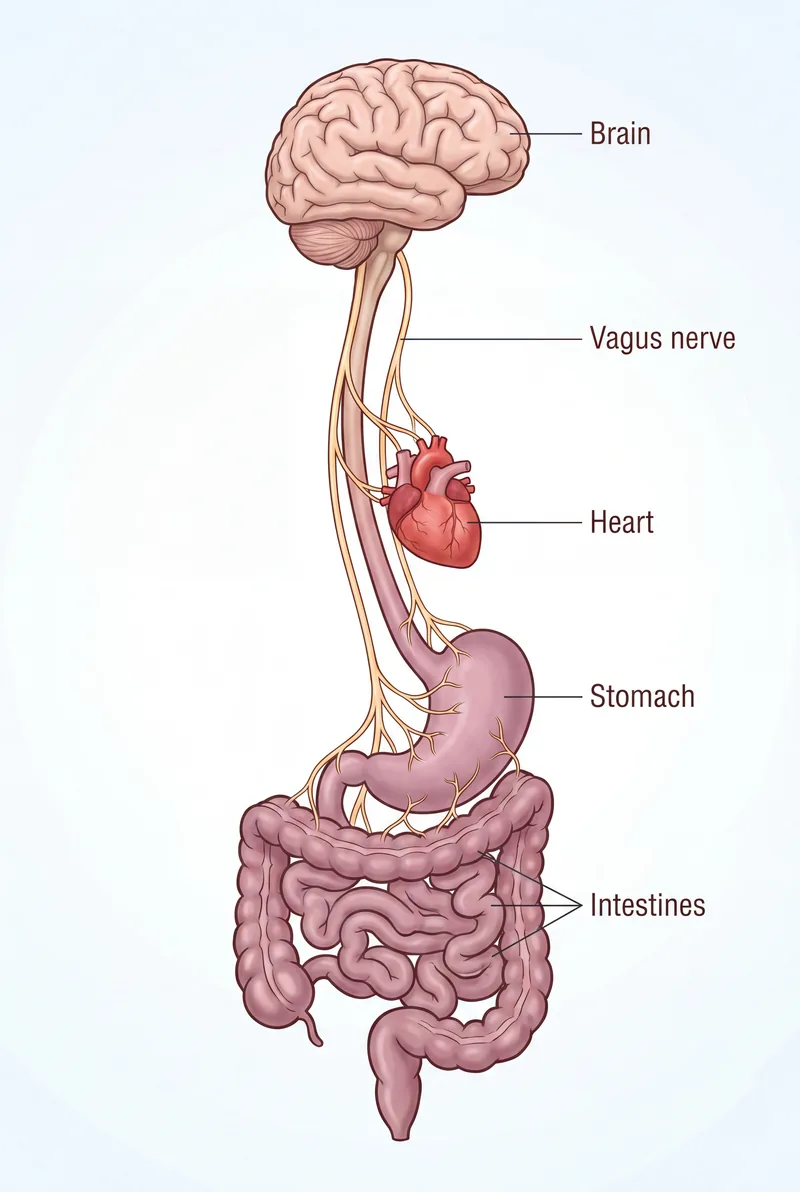
The vagus nerve (cranial nerve X) is a major communication pathway between your brain and body. It helps regulate:

When vagal function is impaired, the body may struggle to calm down, digest, and repair. That can look like chronic pain, autonomic symptoms, and reduced resilience to stress.

  • Heart rate and rhythm
  • Breathing patterns
  • Digestion and gut motility
  • Inflammation and immune signaling
  • Overall "rest-and-digest" / recovery state

What Is Vagus Nerve Hydrodissection?

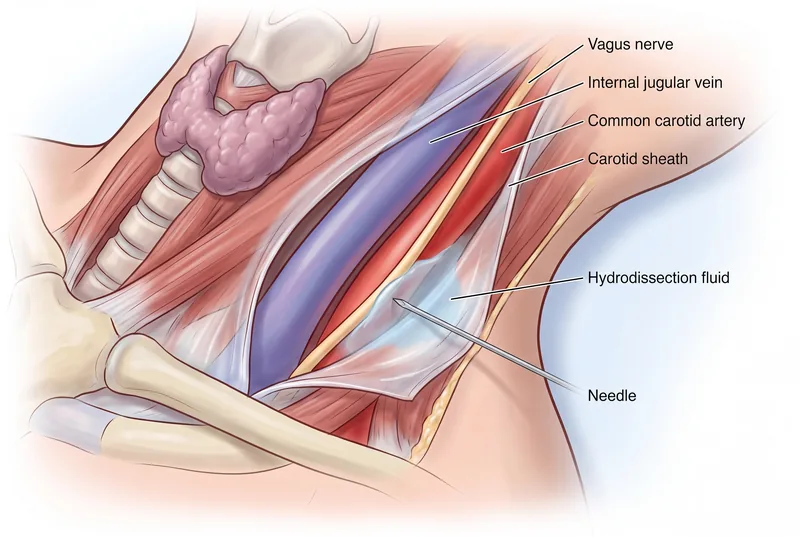
"Hydrodissection" means using fluid, under ultrasound guidance, to gently separate a nerve from the surrounding soft tissues and create a protective "halo" of solution around it.

In vagus nerve hydrodissection, we:

At Regenerative Performance, that solution is typically one of:

The goals of the vagus nerve hydrodissection are to:

"Hydrodissection" means using fluid, under ultrasound guidance, to gently separate a nerve from the surrounding soft tissues and create a protective "halo" of solution around it.

In vagus nerve hydrodissection, we:

At Regenerative Performance, that solution is typically one of:

The goals of the vagus nerve hydrodissection are to:

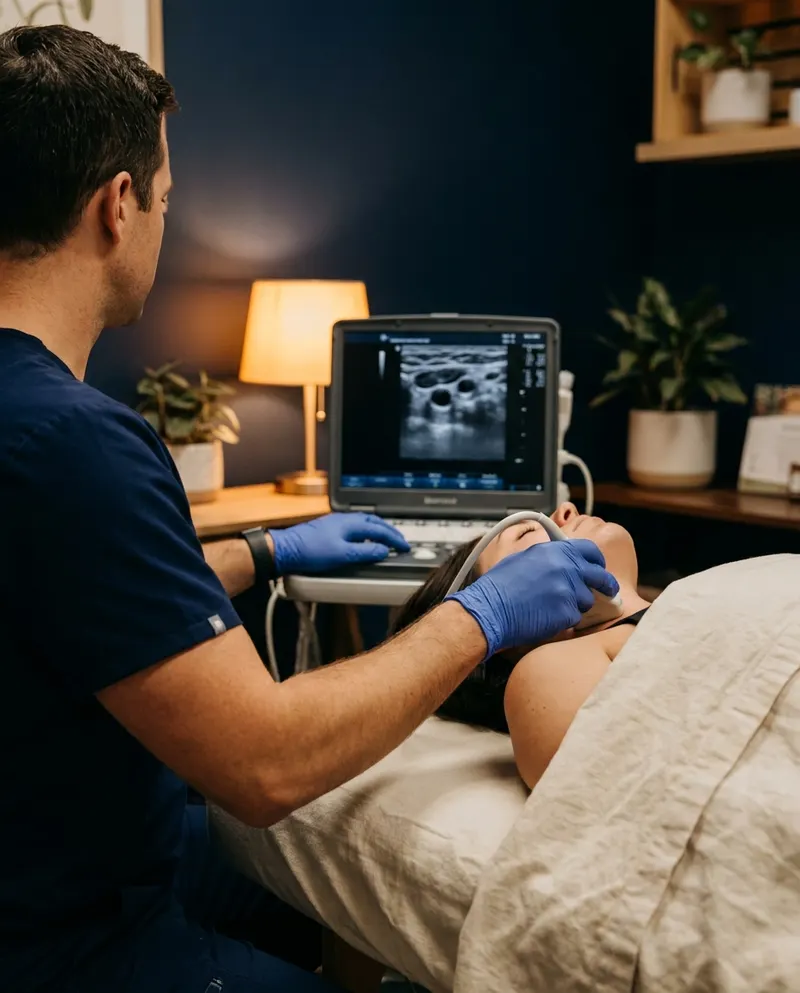
  • Use high-resolution ultrasound to identify the carotid sheath in the lower neck, where the vagus nerve travels between the carotid artery and internal jugular vein
  • Carefully advance a fine needle under real-time imaging
  • Inject a carefully chosen solution to create a fluid space around the vagus nerve
  • Platelet lysate – a highly refined fraction made from your own blood that contains growth factors and signaling proteins while removing most cells and pro-inflammatory components
  • Protein concentrate (A2M) – a purified protein derived from your own blood that may help bind and neutralize inflammatory mediators
  • 5% dextrose in water (D5W) – a simple sugar-water solution that has been shown to calm down nerve inflammation
  • Mechanically free the vagus nerve from tight or irritated surrounding tissues
  • Surround the nerve with a solution that may help calm local neuroinflammation and support more normal nerve function
  • Use high-resolution ultrasound to identify the carotid sheath in the lower neck, where the vagus nerve travels between the carotid artery and internal jugular vein
  • Carefully advance a fine needle under real-time imaging
  • Inject a carefully chosen solution to create a fluid space around the vagus nerve
  • Platelet lysate – a highly refined fraction made from your own blood that contains growth factors and signaling proteins while removing most cells and pro-inflammatory components
  • Protein concentrate (A2M) – a purified protein derived from your own blood that may help bind and neutralize inflammatory mediators
  • 5% dextrose in water (D5W) – a simple sugar-water solution that has been shown to calm down nerve inflammation
  • Mechanically free the vagus nerve from tight or irritated surrounding tissues
  • Surround the nerve with a solution that may help calm local neuroinflammation and support more normal nerve function

Take the First Step Toward Real Healing

Schedule a discovery call to find out if this treatment is right for your condition.

Regenerative medicine specialists in Gilbert, AZ.

Who Might We Consider This For?

We do not offer vagus nerve hydrodissection as a first-line or stand-alone treatment.

We may consider it for patients who:

Whether this procedure is appropriate for you depends on your full story, prior workups, imaging, medications, anatomy, and goals.

  • Have chronic, multisite pain and/or autonomic symptoms (e.g., rapid heart rate, shortness of breath, GI upset)
  • Have already undergone appropriate evaluation with other specialists
  • Have tried standard therapies with limited success
  • Show clinical patterns suggesting impaired vagal tone may be part of the picture

How This Differs From Other Vagus Nerve or Orthobiologic Treatments

Most people who have heard of vagus nerve therapies think of implanted stimulators or external devices. Separately, many know platelet-rich or protein-based injections for joints and tendons.

Vagus nerve hydrodissection at Regenerative Performance combines these worlds:

None of these approaches are magic bullets, and all have limitations. Our job is to help you sort out which, if any, belong in your situation.

  • It is a needle-based, ultrasound-guided procedure near the vagus nerve
  • It uses biologic solutions derived from your own blood (platelet lysate, A2M) and, in some cases, D5W, rather than local anesthetic or electric stimulation
  • It applies regenerative medicine concepts to a key autonomic nerve instead of just joints or soft tissue

Why Technique and Evaluation Matter

You are not buying an injection; you are trusting someone to work millimeters away from critical structures in your neck.

At Regenerative Performance, we emphasize:

Thorough Evaluation

  • Detailed history, physical exam, and review of prior records
  • Screening for red flags and conditions that need other specialist care first
  • Discussion of expectations, uncertainties, and whether this fits into your overall plan

Image-Guided, Safety-First Technique

If we do not feel this is an appropriate or safe option for you, we will tell you plainly.

  • Real-time high-frequency ultrasound to visualize the carotid sheath, carotid artery, internal jugular vein, surrounding muscles, and vagus nerve
  • Meticulous ultrasound technique, with slow, controlled hydrodissection
  • Use of advanced autologous solutions (platelet lysate, A2M), and/or D5W when appropriate

Ready to Take the Next Step?

Schedule a discovery call to find out if this treatment is right for your condition.

Regenerative medicine specialists in Gilbert, AZ.

What to Expect During Vagus Nerve Hydrodissection

Before your procedure

  • Comprehensive consultation to review your symptoms, prior workups, and goals
  • Clear explanation of potential benefits, limitations, alternatives, and risks
  • Decision about which injectate (platelet lysate, A2M, D5W, or a combination) makes the most sense in your case
  • Coordination with other providers when appropriate

During the procedure

  • You lie on a procedure table with your neck gently positioned
  • The skin is cleaned and numbed with local anesthetic
  • Under ultrasound guidance, a fine needle is advanced into the carotid sheath near the vagus nerve
  • The selected solution is slowly injected to create a fluid halo around the nerve, while we continuously monitor your vital signs and check in with you

After the procedure

  • You will be monitored in the clinic for a short period of time
  • We will review what to expect, how to track your symptoms, and when to contact us
  • Some patients notice changes in pain or autonomic symptoms within hours to days

Why Choose Regenerative Performance?

Experience With Ultrasound-Guided Nerve and Orthobiologic Procedures

Our physicians regularly perform ultrasound-guided peripheral nerve, sympathetic chain, and regenerative injections, and are comfortable working around complex neck anatomy.

Evidence-Informed, Not Hype-Driven

Using platelet lysate, A2M, or D5W around the vagus nerve is a new, experimental application of established tools. We follow the literature closely but do not overstate what is known.

Time, Listening, and Follow-Through

We take the time to hear your full story, explain the rationale for this procedure and the choice of injectate in your case, and map out next steps whether or not you choose to proceed.

Ready to Explore Whether Vagus Nerve Hydrodissection Is Right for You?

If you’ve done "all the right things" and still feel stuck with chronic pain or autonomic symptoms, you don’t need another 5-minute visit or generic handout. You need someone to take your case seriously, look at the whole picture, and give you clear options.

At Regenerative Performance, your first step is a comprehensive consultation with one of our physicians. We’ll:

You’re not committing to treatment by booking a visit. You’re committing to getting real answers.

  • Review your full history, prior testing, and treatments
  • Map out how your symptoms fit (or don’t fit) a vagal/autonomic pattern
  • Discuss whether vagus nerve hydrodissection, other nerve procedures, or different therapies make the most sense
  • Give you an honest recommendation, even if that means not doing a procedure

Disclaimer

This information is for educational purposes only and does not constitute medical advice. Vagus nerve hydrodissection using platelet lysate, A2M, and/or D5W is experimental/off-label for chronic pain and autonomic-type symptoms. Results vary and are not guaranteed. These statements have not been evaluated by the FDA, and this treatment is not intended to diagnose, cure, or treat any disease. Always consult your own healthcare providers before making decisions about medical procedures.

Common Questions

Frequently Asked Questions

What solutions do you use in vagus nerve hydrodissection?

Depending on your case, we may use:

  • Platelet lysate (from your own blood)
  • Protein concentrate such as A2M (also derived from your blood or bone marrow)
  • 5% dextrose (D5W), alone or in combination
What conditions might this help with?

Based on very early case reports and our clinical experience, we may consider this for patients with:

  • Chronic multisite pain that has not responded to standard treatments
  • Autonomic-type symptoms (rapid heart rate, shortness of breath on exertion, GI upset) where appropriate cardiac, pulmonary, and GI workups are unrevealing

It is not a proven treatment for any specific disease, and we cannot guarantee improvement in any symptom.

How many treatments will I need? How long do results last?

There is no standardized protocol yet:

  • Some patients may receive a single trial procedure
  • Others, if they experience benefit and tolerate it well, may consider a short series spaced weeks apart

In the small amount of published data using D5W, benefits in some patients persisted for many months. In real life, responses vary widely: some people experience meaningful and lasting change, some notice partial or temporary benefit, and others do not notice any change.

Is vagus nerve hydrodissection safe?

Any procedure near the carotid artery, internal jugular vein, and major nerves carries risk. Potential risks include, but are not limited to:

  • Bleeding or hematoma
  • Infection
  • Temporary changes in voice or swallowing
  • Vascular puncture or nerve irritation
  • Very rare but more serious complications involving nearby structures

Using real-time ultrasound, careful technique, autologous solutions, and close monitoring reduce risk but cannot eliminate it. We will review risks in detail and obtain informed consent before any procedure.

Will I need to stop my medications or other treatments?

Do not stop any prescribed medications on your own. If changes are needed for safety around the time of the procedure (for example, blood thinners), we will coordinate with your prescribing clinicians. Vagus nerve hydrodissection is intended to complement, not replace, appropriate medical and mental health care.

How is this different from your Stellate Ganglion Block (SGB) / cervical sympathetic chain blocks?
  • SGB / cervical sympathetic chain blocks primarily target the sympathetic ("fight-or-flight") system using local anesthetic.
  • Vagus nerve hydrodissection targets the vagus ("rest-and-digest") pathway using biologic solutions (platelet lysate, A2M) and/or D5W.

In some patients, one or the other (or neither) may be appropriate. We will explain why we are recommending (or not recommending) each option in your case.

Am I a candidate?

Not everyone is. You may not be a candidate if you have:

  • Certain cardiovascular, bleeding, or clotting disorders
  • Active infection or uncontrolled medical conditions
  • Anatomical variations or prior surgery in the neck that increase risk

This is why we start with a thorough consultation and, when needed, collaborate with your other providers before deciding.