Prolotherapy for Joint Pain Relief Gilbert, AZ
If you're struggling with chronic joint pain, lingering injuries, or joint instability, and you've been told your only options are cortisone, medications, or surgery, dextrose prolotherapy may be the alternative you've been searching for.
This simple yet powerful regenerative injection therapy stimulates your body's natural ability to heal, without the need for invasive procedures. Whether you're dealing with knee osteoarthritis, a chronically sprained ankle, or an old tendon injury that just never healed right, prolotherapy helps rebuild strength at the cellular level, which can give you long-term pain relief.
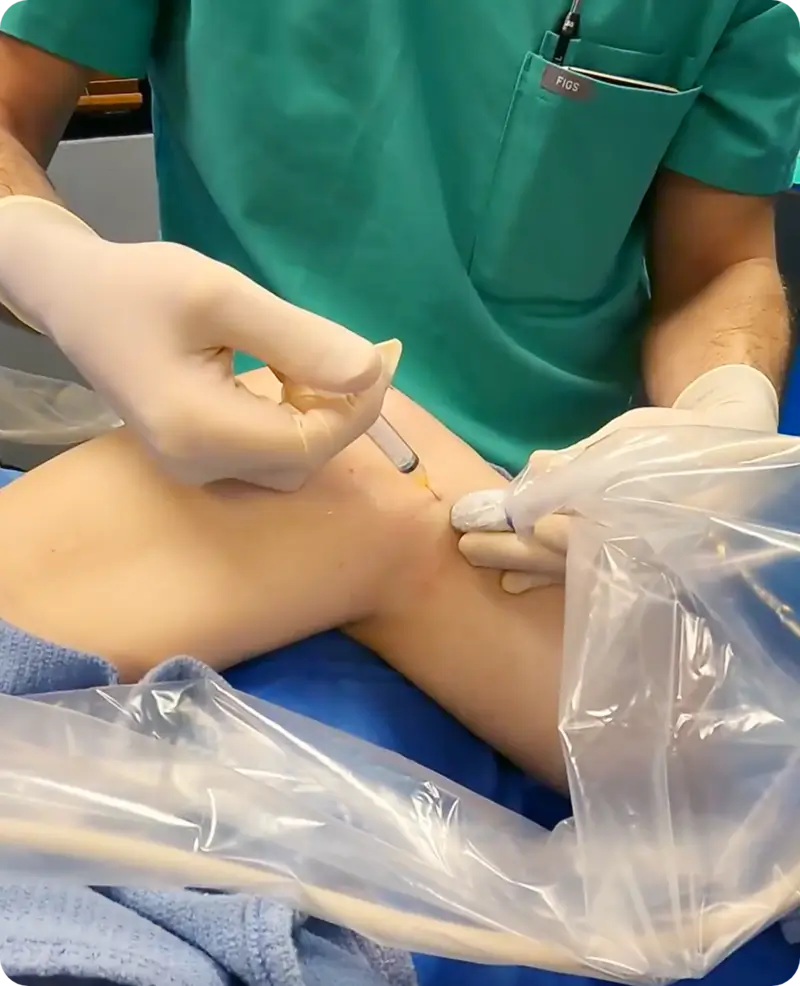
What Is Dextrose Prolotherapy?
Prolotherapy, short for proliferative therapy, is a technique where a dextrose (sugar-based) solution is injected into areas of tissue degeneration or weakness that are causing you pain. These areas commonly include:
- Ligament or tendon attachments (called entheses)
- Arthritic joints (like knees, hips, or shoulders)
- Regions of ligament instability (called laxity)
The goal of prolotherapy isn't just to reduce pain; it's to stimulate your body to strengthen the tissue it's injected into. The injected dextrose creates a mild, localized inflammatory response that signals your body's collagen-producing cells (called fibroblasts) to get to work. Over time, this leads to increased collagen production, resulting in stronger tendons and ligaments, and ultimately, more stable joints with reduced pain.
Dextrose prolotherapy has a long history and is considered the first regenerative injection treatment. This may be shocking, but its origins date back to the 1930s, when an osteopathic physician used an irritant solution to treat his own ligament injury as he didn't want to have surgery. The technique and solutions were refined through the 1950s, at which time the term "prolotherapy" was coined. This work laid the groundwork for the future of regenerative injections, now commonly referred to as orthobiologics.
How Prolotherapy Works, And Why It’s Effective
When tissues like ligaments, tendons, or joint cartilage are injured or degenerated, they often don’t heal completely on their own, especially in areas with poor blood flow. That’s where prolotherapy steps in. By injecting high concentration dextrose into those weak or damaged tissues, we can initiate a controlled healing response.
Here’s what happens inside your body:
- Inflammatory Trigger: Once injected, the dextrose acts as a mild irritant, stimulating a low-grade, temporary inflammatory response. This is the first stage of the healing response.
- Cellular Activation: The high concentration dextrose comes in contact with cells in your tendons and ligaments, called fibroblasts, which stimulates these to produce more collagen. Collagen is the building block of tendons and ligaments.
- Tissue Strengthening: Over several weeks to months, the new collagen made by the fibroblasts strengthens the tendon/ligament, which can help to restore structure and function.
- Pain Reduction: As the tissue gets stronger, pain fibers become less activated, and the joint becomes more stable and less inflamed.
This process, from inflammation to strengthened tissue, takes about 4–6 weeks. In very mild cases, just one treatment may be enough to see significant improvements in pain and function. However, most people are going to need multiple treatments in order to see the full effects. As you are undergoing treatment, you should be noticing progressive improvements with each round of treatment. For a closer look at how this healing response applies to a stubborn tendon problem, read our guide to chronic Achilles tendinopathy.
Why the Right Approach Matters
Getting results with prolotherapy isn’t just about the dextrose that’s injected, it’s also how and where it’s injected. One of the most important principles in regenerative medicine is identifying and treating the true pain generator, what I call the pain-generating diagnosis. That’s why our approach is more thorough and precise than the typical regenerative medicine clinic. For how this diagnosis-first evaluation applies to long-standing pain in general, see our page on chronic pain management.
Here’s what makes our method different:
Listening to your story
This aspect of the appointment is often overlooked, in part because of time restrictions that most doctors have when working with patients. We take our time to hear your story, as every story is unique and provides key insights into why you’re still in pain. This listening sets us up for the next part of the assessment, arguably the most important.
Comprehensive exams
After hearing your story, we perform a thorough hands-on physical assessment that incorporates muscle testing, special orthopedic testing, functional movement assessments, neurological evaluation, and precision palpation to identify the exact structures causing your pain. When these pain-causing structures aren’t identified, the success rate of dextrose prolotherapy plummets dramatically.
Imaging review and diagnostic ultrasound evaluation
While looking at imaging alone to identify the cause of pain is a fruitless endeavor, interpreting imaging in the context of your story and physical exam helps us better understand the best approach for you. As a certified musculoskeletal sonographer, Dr. Timmermans is able to collect valuable information from your diagnostic ultrasound exam which increases your chances of successful treatment.
High-precision injections
Once the key pain-generating tissues have been identified, the dextrose prolotherapy injections are delivered with high precision, utilizing both ultrasound and x-ray depending on the case. Unlike other clinics who treat based on feel, what’s called palpation-guided injections, this high level of injection precision reduces the number of treatments required as each treatment is more effective. Not only do we treat the key tissues involved in your pain, but we also treat the supporting tissues around it for a comprehensive approach. Again, all guided by your history, physical exam, and imaging.
This level of detail helps ensure that you’re not just masking symptoms, but rather you’re targeting the actual dysfunction and helping your body resolve it from the inside out.
Prolotherapy vs. PRP: Which One Is Right for You?
You may be wondering how prolotherapy compares to PRP (platelet-rich plasma) therapy, and which one is best for your case. The answer depends on your diagnosis, tissue health, and even your budget.
Here’s how we help you decide:
For mild issues such as tendinosis or ligament laxity, dextrose prolotherapy is often a great starting point as it’s less invasive and more affordable. However, if Dr. Timmermans and his team think that you will need several sessions of prolotherapy, it’s often more cost effective to take your healing up a notch with PRP injections.
For more severe damage, such as tendon tears, moderate to severe osteoarthritis, or long-standing ligament degeneration, PRP may offer a stronger regenerative effect, delivering concentrated healing factors directly to the affected tissue.
Our complete guide to PRP therapy covers that comparison in more detail, and our guide to alternatives to knee replacement walks through the non-surgical options for knees.
Cost is always something we are cognizant of, seeing as these treatments are not covered by insurance. In many cases, one PRP treatment is equivalent to two or three prolotherapy treatments in terms of healing potential. This is often why Dr. Timmermans recommends PRP over prolotherapy, as most of his patients have moderate to severe conditions that would require a high number of dextrose prolotherapy treatments. But if you can achieve great results with just one or two sessions of dextrose prolotherapy, it’s a wise choice.
You don’t have to settle for ongoing pain or surgery as your only option. Prolotherapy provides an opportunity to regain your mobility, rebuild your strength, and return to doing what you love. Schedule an appointment with us today to see if dextrose prolotherapy is right for you.
What Our Patients Say
I have suffered for 30 years with chronic neck and back pain from a car accident and tried everything to get relief even surgery. Finally, after being treated by Dr. Timmermans I have tremendous relief and am on the road to complete healing.
Verified Google review
I have a lower back and shoulder problem and had a stem cell procedure last spring. I feel like I have gained ten years on my back. Team is unbelievably knowledgeable and very helpful along the way.
Verified Google review
I never thought I could live a life pain-free and so healthy. Thank you again for giving me and my wife back our lives.
Verified Google review
Frequently Asked Questions
What are the risks and side effects?
Before any procedure with us, your physician will explain all potential risks and side effects in person.
Am I guaranteed results?
Like all medical procedures, regenerative injection procedures have a success and failure rate. An initial consultation with Dr. Timmermans will determine if you are a good candidate.
How many treatments will I need?
While each person and condition are different, the majority of patients require 3-6 injections for the full resolution of pain, spread out every 4-6 weeks. The average number of treatments is 4.
How soon can I return to activity?
After the procedure, we recommend minimal activity for the first 3-7 days, followed by light activity for another seven days, followed by increasing intensity on a weekly basis for another 2-4 weeks. You should be back to full activity within 4-6 weeks. Other therapies offered by Regenerative Performance, such as oral or intravenous supplementation can speed the healing process.
What is the cost?
Because each patient is unique, both in their condition to be treated and in which approach is best for them, the pricing of procedures can vary considerably from patient to patient. An evaluation will give you a better idea of condition, treatment, and costs specific to your situation.
Does insurance cover this procedure?
Medicare and most commercial insurance plans do not cover prolotherapy, because they classify it as investigational for joint, ligament, and tendon pain. You may be able to use HSA or FSA funds for eligible medical expenses, and an itemized superbill is available on request for you to submit; what your plan or account administrator requires is between you and them. Regenerative Performance is not contracted with any insurance providers; we are a cash-pay clinic.
How can I prepare for the injection?
We recommend no corticosteroids (inhaled, topical, oral or injection) or blood thinners (e.g. Aspirin) for 4-6 weeks before the procedure and no anti-inflammatory medications (Ibuprofen, Advil, etc.) for one week before the procedure.
How do I get started?
You can get started by booking an appointment with Dr. Timmermans by calling 480-508-4226.