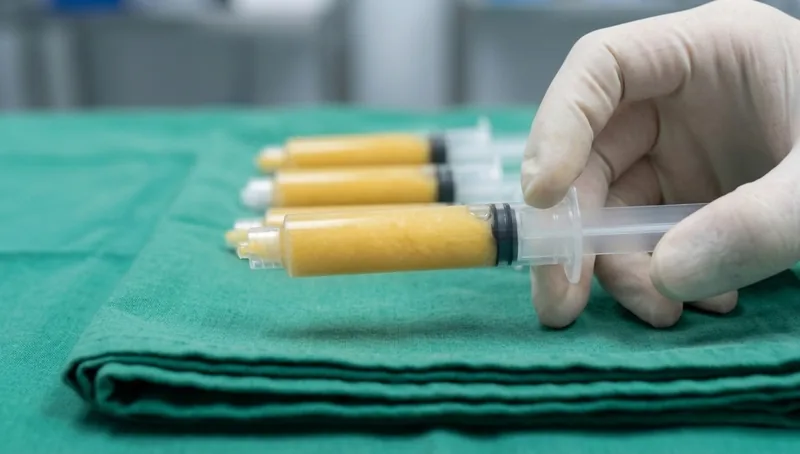
Culture-Expanded Stem Cell Therapy in Gilbert, AZ

Mesenchymal Stem Cell Therapy: Your Own Cells, Amplified

Culture-Expanded Cells Under the Federal Right to Try Act

Dr. Drew Timmermans, ND, RMSK at Regenerative Performance in Gilbert, Arizona partners with Personalized Stem Cells (PSC) to offer culture-expanded autologous mesenchymal stem cell therapy under the Federal Right to Try Act. A small sample of your own fat tissue is grown over roughly 60 days into potency-, purity-, and sterility-tested vials of approximately 18 million mesenchymal stem cells each, then reinjected under ultrasound or x-ray guidance into the structures most likely contributing to your pain. Culture-expanded stem cells are investigational and not FDA-approved for therapeutic use, so your first step is a comprehensive evaluation to confirm whether this pathway fits your case.

18 Million
Cells per vial, grown from your own tissue
60 Days
Laboratory culture expansion
100%
Your own cells; no donor products

One evaluation tells you whether your case calls for culture-expanded cells or a simpler option that gets you there faster.

Culture-expanded mesenchymal stem cell therapy at Regenerative Performance

Have You Run Out of Options That Actually Last?

  • "I have tried cortisone, physical therapy, even PRP. Nothing has lasted." Some of it helped for a while, but the pain keeps coming back, and each round of temporary relief costs you months of waiting to find out.
  • "My knee is bone on bone, and all they offer me is a replacement." You are not against surgery forever, but you want to know whether a serious non-surgical option exists before you commit to one.
  • "My first regenerative procedure helped, but it only carried me so far." The response was real, which tells you your body can heal, but the degeneration may need more support than a single same-day procedure delivered.
  • "I have stopped doing the things I love just to manage the pain." Golf, pickleball, the gym, time on the floor with your kids or grandkids: you are modifying everything around the joint that hurts, and it is wearing you down.
Stem cell treatment preparation at Regenerative Performance in Gilbert, Arizona

Why Your Pain Keeps Coming Back

Why Nothing Has Worked So Far

Most treatments that fall short fall short for one of two reasons: the wrong structure was treated, or the treatment could not deliver enough support for the amount of damage present. Options like PRP and same-day stem cell procedures serve many patients well, but advanced degeneration sometimes asks for more than a single same-day preparation can carry.

Pattern 1

"Cortisone After Cortisone"

Cortisone reduces inflammation short-term, but it does not address the structural damage underneath, and repeated cortisone injections carry documented downsides for cartilage over time. Each round buys weeks or months while the joint itself keeps degenerating.

TypicalAnother injection to quiet the inflammation for a while.
Regenerative PerformanceIdentify the damaged structures and support their repair with your own cells.

Pattern 2

"The Wrong Structure Got Treated"

When the diagnosis is incomplete, even an advanced therapy misses the mark. Several structures around a painful joint can produce the same symptom pattern, but a brief consult and a glance at an MRI cannot reliably tell them apart.

TypicalInject where it hurts after a ten-minute consult.
Regenerative PerformanceA 2-hour evaluation with hands-on exam and diagnostic ultrasound before any cells are harvested.

Pattern 3

Not Enough Cells to Match the Damage

A same-day procedure is limited to the cells your tissue contains at harvest, and that count is not standardized. For many patients that is enough, but for advanced degeneration or complex cases the available dose may not match the scale of the problem.

TypicalRepeat the same procedure and hope for a bigger response.
Regenerative PerformanceCulture-expand your cells into a standardized, tested dose of approximately 18 million MSCs per vial.

What Happens at Your Evaluation

The evaluation answers WHY your pain is happening before any procedure is considered, because injecting even a vial of expanded cells into the wrong structure would waste both the cells and your time. Culture-expanded therapy is never scheduled from a phone call or an imaging report alone.

Over a 2-hour visit, Dr. Timmermans takes a detailed history, performs a hands-on physical exam, reviews any imaging you already have, and uses diagnostic ultrasound to identify the structures most likely contributing to your pain. That working diagnosis determines whether culture-expanded stem cell therapy fits your case, or whether PRP, a same-day stem cell procedure, or another approach is the better match.

You walk away knowing what is most likely driving your pain, whether you are a candidate for the culture-expanded pathway, and what your plan looks like either way. If we do not think regenerative medicine is appropriate for your case, we will tell you and outline other options, including a surgical referral when that is genuinely the right call. If a knee replacement is the option you are weighing, our guide to alternatives to knee replacement walks through how we think about that decision.

Patients traveling from outside Arizona often start with a remote consultation, where your physician reviews your history and the imaging you already have so the trip can be planned properly. The diagnosis, the hands-on exam, and every procedure happen in person at our clinic in Gilbert, Arizona.

What the Research Shows

12 Months
Sustained pain and function improvement after adipose MSC injection (RCT, n=30)2
16.5 pts
WOMAC improvement at 12 months with high-dose cultured MSCs (RCT, n=30)3
2 Years
High-dose group's improvement held steady rather than declining, with no treatment-related adverse events (2-year follow-up, n=18)5
Phase 1
FDA-approved IND trial completed by PSC's lab (separate SVF product, n=29)4

Culture-expanded mesenchymal stem cells have been studied in randomized controlled trials for knee osteoarthritis, and the results suggest meaningful improvements in pain and function compared with baseline and with control treatments. In an Australian randomized trial of 30 participants, Freitag et al. reported clinically significant pain and functional improvement at 12 months after adipose-derived MSC injection.

The evidence also suggests dose matters, and that the benefit holds up over time. In the first proof-of-concept dose-escalation trial of 18 patients, Jo et al. observed WOMAC improvement at 6 months in the high-dose group; a 2-year follow-up of that same cohort found the high-dose group's improvement held steady rather than declining, with no treatment-related adverse events, while the lower-dose groups lost ground after the first year (Jo et al., 2017). In a multicenter randomized trial comparing two doses of cultured bone-marrow MSCs against hyaluronic acid, Lamo-Espinosa et al. reported a 16.5-point WOMAC improvement at 12 months in the high-dose group. A larger, standardized cell dose is why culture expansion exists.

The evidence for tendon applications comes from a separate line of research. In a 2-year follow-up of a first-in-human dose-escalation trial for partial-thickness rotator cuff tears, Jo et al. reported shoulder pain reduced by approximately 90% at 1 and 2 years in the mid- and high-dose groups, with the bursal-sided tendon defect volume in the high-dose group nearly disappearing by 1 year and not recurring through 2 years. And because every cell used at Regenerative Performance is your own, a 2025 network meta-analysis of 8 randomized trials is directly relevant to that choice: Kasagga et al. found that among the MSC regimens studied, high-dose autologous adipose-derived MSCs ranked highest for pain relief through 12 months and had the best safety ranking, while lower-dose donor-derived (allogeneic) preparations ranked worst on both measures; the placebo/standard-care control arms still ranked safest overall, as is typical for any active injection.

Personalized Stem Cells, the cGMP laboratory that processes cells for this program, has completed a Phase 1 clinical trial in knee osteoarthritis under an FDA-approved IND, published by Rogers et al. in 2024. That trial studied a different PSC product, its laboratory-produced autologous adipose-derived stromal vascular fraction (SVF) cell therapy, so we cite it for the laboratory's manufacturing and safety track record rather than as evidence for the culture-expanded dose itself.

We practice evidence-informed medicine, which means being honest about where this evidence stands: culture-expanded therapy is newer than PRP or same-day stem cell procedures, the trials are small, and the therapy remains investigational and not FDA-approved. What the research supports is the mechanism and the safety signal, not a guaranteed outcome, and we discuss both openly at your evaluation.

Published evidence cited above

Knee OA — Dose-FindingStem Cells, 2014
Jo CH, et al. Proof-of-concept dose-escalation trial of culture-expanded adipose MSCs, n=18. WOMAC scores improved at 6 months in the high-dose group. DOI: 10.1002/stem.1634
Knee OA — RCTRegenerative Medicine, 2019
Freitag J, et al. Randomized controlled trial of adipose-derived MSC therapy, n=30. Clinically significant pain and functional improvement at 12 months. DOI: 10.2217/rme-2018-0161
Knee OA — Dose RCTJ Transl Med, 2016
Lamo-Espinosa JM, et al. Multicenter randomized phase I/II trial of cultured bone-marrow MSCs versus hyaluronic acid, n=30. WOMAC improved 16.5 points at 12 months in the high-dose group. DOI: 10.1186/s12967-016-0998-2
Knee OA — Phase 1Stem Cells Dev, 2024
Rogers CJ, et al. Phase 1 trial under an FDA-approved IND of a central cGMP-laboratory-produced autologous adipose-derived stromal vascular fraction (SVF) product, n=29. Cited for PSC's manufacturing and safety track record, not culture-expanded efficacy. DOI: 10.1089/scd.2024.0008
Knee OA — 2-Year Follow-UpAm J Sports Med, 2017
Jo CH, et al. 2-year follow-up of the same dose-escalation cohort, n=18. High-dose group's WOMAC, KSS, KOOS, and VAS improvement held steady through 2 years; no treatment-related adverse events. DOI: 10.1177/0363546517716641
Rotator Cuff — 2-Year Follow-UpArthroscopy, 2020
Jo CH, et al. 2-year follow-up of intratendinous AD MSC injection for partial-thickness rotator cuff tears, n=19. Shoulder pain reduced ~90% at 1 and 2 years in mid/high-dose groups; bursal-sided tendon defect volume in the high-dose group nearly disappeared by 1 year and did not recur through 2 years. DOI: 10.1016/j.arthro.2019.11.120
Knee OA — Network Meta-AnalysisCureus, 2025
Kasagga A, et al. Network meta-analysis of 8 RCTs comparing autologous and allogeneic adipose-derived MSCs. Among the MSC regimens studied, high-dose autologous ranked highest for pain relief through 12 months and had the best safety ranking; low-dose allogeneic ranked worst on both measures; control arms still ranked safest overall. DOI: 10.7759/cureus.82713

Outcome statistics cited are from the published peer-reviewed studies listed above; cell products and protocols differ between laboratories and trials, and results from one product do not transfer to another. Culture-expanded stem cell therapy is investigational and not FDA-approved for therapeutic use. Individual results may vary, and Dr. Timmermans evaluates each patient individually to determine whether the therapy is clinically appropriate.

Find Out Whether Your Case Calls for Culture-Expanded Cells Before You Settle for Another Temporary Fix

Schedule a 2-hour evaluation at our Gilbert, AZ clinic to get a working diagnosis and find out whether culture-expanded stem cell therapy, or a different treatment entirely, fits your case.

Performed under the Federal Right to Try Act in partnership with Personalized Stem Cells (cGMP facility, Poway CA). Autologous cells only.

What Is Culture-Expanded Stem Cell Therapy?

Culture-expanded stem cell therapy uses your own mesenchymal stem cells, harvested from a small sample of adipose (fat) tissue and grown in a laboratory over roughly 60 days into vials of approximately 18 million cells each. A same-day procedure is limited to the cells your tissue contains at harvest, but culture expansion multiplies those same cells into standardized vials that are tested for sterility, purity, and potency before they ever come back to the clinic.

The cells are thought to do their work by releasing growth factors and signaling molecules that support healing in the treated structure, re-stimulating a repair response that has usually stalled in most chronic injuries. The dose is only half the equation, but the other half is placement: Dr. Timmermans injects the expanded cells under ultrasound or x-ray guidance into the structures identified during your diagnostic evaluation, so the cells land where the damage actually is.

This therapy is available through our partnership with Personalized Stem Cells (PSC), a cGMP laboratory in Poway, California whose parent company has operated in veterinary regenerative medicine for more than 20 years and reports over 70,000 doses processed through its cell bank. Culture-expanded cells are classified by the FDA as more than minimally manipulated, which makes them investigational and not FDA-approved for therapeutic use; reinjection at Regenerative Performance is performed under the Federal Right to Try Act, and every cell is your own, with no donor products at any stage.

For the same-day options many patients start with, see our stem cell therapy and PRP therapy pages, read our complete guide to stem cell therapy, or learn more about Dr. Timmermans and his approach to diagnosis-first regenerative medicine.
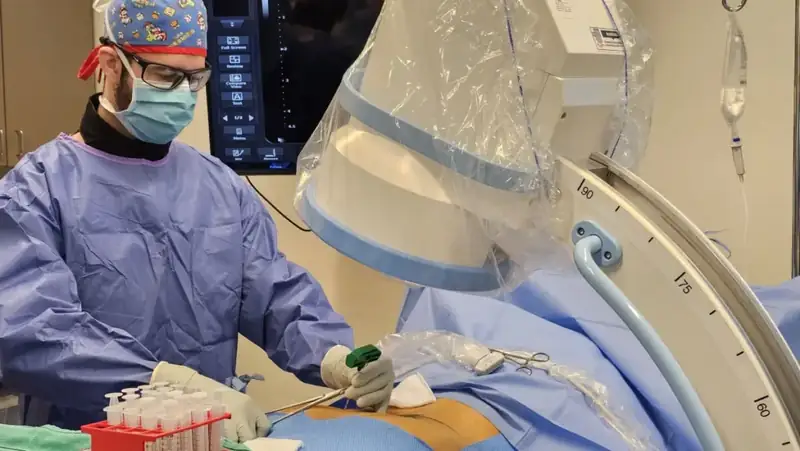
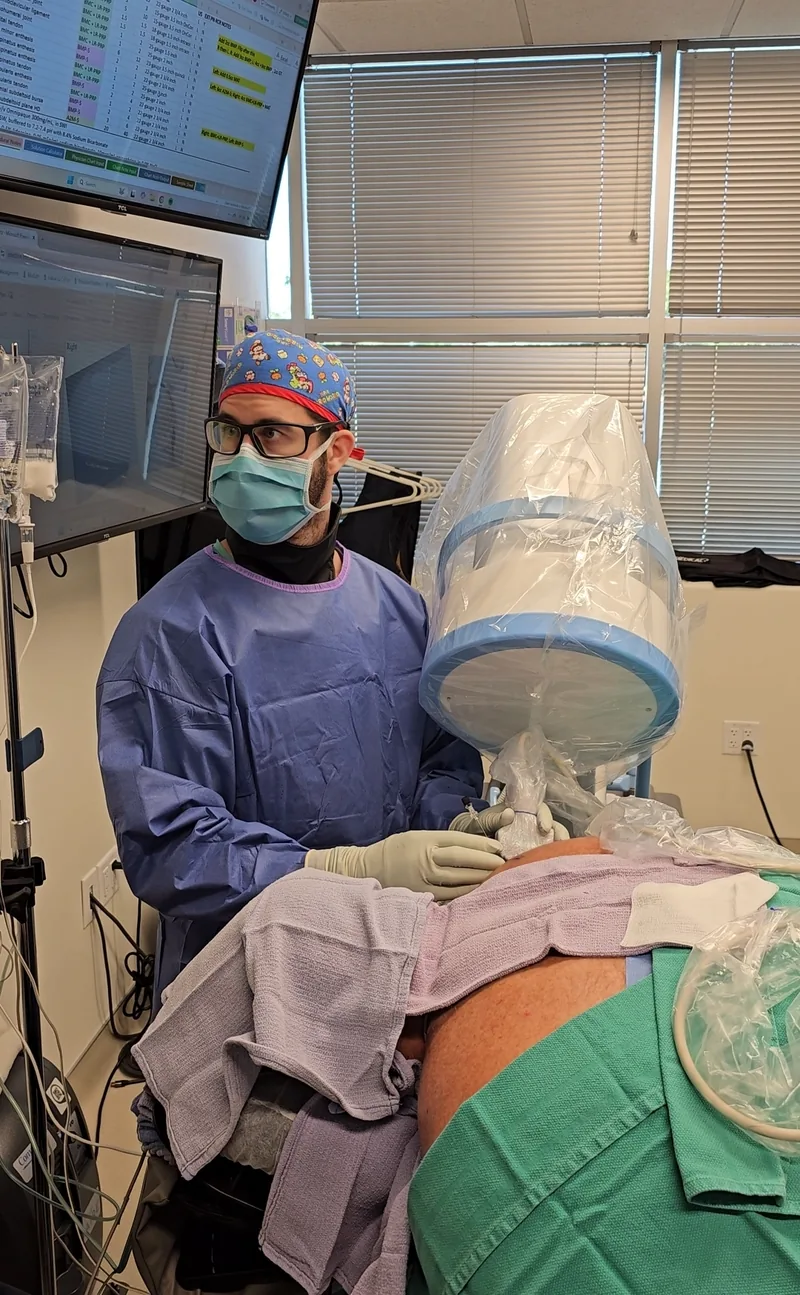
Adipose-derived cell preparation used in stem cell therapy at Regenerative Performance

How Do Culture-Expanded Mesenchymal Stem Cells Support Healing?

Mesenchymal stem cells act primarily as signaling hubs rather than replacement tissue. Once injected into a damaged structure, the cells release growth factors, anti-inflammatory proteins, and signaling molecules thought to recruit your body's own repair machinery, and in a chronic injury this matters because the original healing response has usually stalled. The goal of the injection is to re-stimulate that healing response with a cell dose large enough to sustain it.

Culture expansion is what makes the dose possible. Over roughly 60 days at PSC's cGMP facility, the mesenchymal stem cells from your fat sample are isolated and grown through successive culture passages into vials of approximately 18 million cells each, then tested for sterility, purity, and potency before release. The waiting period is real, but it buys something a same-day procedure cannot offer: standardized, quality-tested vials built entirely from your own biology.

Cryopreservation and Cell Banking

A single harvest produces multiple vials, and PSC also preserves a master cell line from your original tissue sample. Vials beyond your current treatment are cryopreserved at ultra-low temperatures in PSC's cell bank and are ready immediately, with no harvest or wait required. Once those banked vials are used, the master cell line means a future treatment can still skip the harvest, though producing new vials from that line goes through the same roughly 60-day culture-expansion process. Banking matters for planning: cells stored now come from younger tissue than cells harvested years later.

Conditions Considered for Culture-Expanded Stem Cell Therapy

Whether your condition belongs on this list is a diagnostic question, and the evaluation answers it before anything is scheduled.

  • Advanced knee osteoarthritis
  • Hip osteoarthritis
  • Shoulder osteoarthritis
  • Advanced cartilage degeneration
  • Chronic rotator cuff and tendon damage
  • Chronic ligament damage and instability
  • Complex multi-structure joint conditions
  • Insufficient response to PRP or same-day cell procedures

Honest Expectations

Culture-Expanded Stem Cell Therapy Is Probably Not Right If:

  • You are looking for overnight results; culture expansion takes roughly 60 days before reinjection, and healing unfolds over months after it
  • You are unwilling to participate in the recovery work, including strength-focused physical therapy and the habits that support healing
  • You expect a guaranteed outcome; the therapy is investigational, and no specific therapeutic result can be promised
  • You want to try stem cells without understanding what is actually damaged; we will not inject cells into a structure we have not properly evaluated

Some of these reasons point toward a different option, such as PRP or a same-day stem cell procedure, when a faster timeline or a smaller-scale treatment fits better. Others, like expecting a guaranteed outcome or being unwilling to do the recovery work, are reasons to pause before any regenerative treatment, not just this one. Dr. Timmermans will recommend the option that fits your clinical situation and your readiness, not the most involved one. We would rather tell you upfront than waste your time.

How Culture-Expanded Therapy Compares to Same-Day Stem Cell Procedures

Both pathways use your own cells, and both are performed by Dr. Timmermans with the same diagnosis-first evaluation and image-guided injection technique. The difference is what happens to the cells between harvest and injection.

Feature Same-Day Stem Cell (BMAC / MFAT) Culture-Expanded (PSC Partnership)
Cell sourceYour own bone marrow or fat tissue, processed in clinicYour own fat tissue, culture-expanded at PSC's cGMP laboratory in Poway, CA
Cell doseLimited to the cells your tissue contains at harvest; not standardizedStandardized vials of approximately 18 million mesenchymal stem cells each, with multiple vials from a single harvest
TimelineHarvest and injection in a single visitHarvest, then roughly 60 days of culture expansion before reinjection
Quality testingSterile technique, same-day processingLaboratory-tested for sterility, purity, and potency before release
Regulatory statusAutologous, same-day processing with no culture stepInvestigational; more than minimally manipulated per FDA; performed under the Federal Right to Try Act
Cell bankingNot available; cells are used the day they are harvestedAdditional vials cryopreserved for future use, plus a master cell line so future vials do not require another harvest
Best suited forMany joint, tendon, and ligament conditions; the starting point for most stem cell candidatesAdvanced degeneration and complex cases where a larger, standardized dose is clinically appropriate

What to Expect

What to Expect From Evaluation to Recovery

Culture-expanded therapy unfolds over months rather than days, and every stage has a defined purpose. Here is the path from your first visit to the one-year mark.

  1. 1

    Diagnostic Evaluation

    Everything starts with a 2-hour evaluation where Dr. Timmermans takes a detailed history, performs a hands-on physical exam, and uses diagnostic ultrasound to identify the structures most likely contributing to your pain. Not every patient is a candidate for culture-expanded therapy, and this visit determines whether it is the right approach for your condition or whether PRP or another treatment fits better.

  2. 2

    Tissue Harvest (Lipoaspiration)

    If you are a candidate, a small sample of fat tissue is collected through lipoaspiration at our Gilbert clinic. A separate pre-procedure visit comes first, where medications and allergies are reviewed, pre-procedure labs are completed as a standard part of preparation, and aftercare instructions are walked through and provided in writing. The harvest itself is performed sterile, typically under twilight sedation with a dedicated anesthesia provider monitoring you, with transportation home arranged in advance.

  3. 3

    Culture Expansion at PSC (About 60 Days)

    Your tissue sample ships to PSC's cGMP facility in Poway, California, where your mesenchymal stem cells are isolated, expanded over roughly 60 days into vials of approximately 18 million cells each, and tested for sterility, purity, and potency. Vials beyond what your treatment requires, along with a preserved master cell line, are cryopreserved and banked for future use.

  4. 4

    Reinjection at Regenerative Performance

    When your cells are ready, Dr. Timmermans performs the reinjection at our Gilbert clinic under ultrasound or x-ray guidance, targeting the structures identified during your evaluation. Reinjection of culture-expanded cells is performed under the Federal Right to Try Act, and most injection-only visits are done awake and are well tolerated.

  5. 5

    Weeks 1 to 4 (Early Response)

    Most patients have increased soreness for 3 to 7 days depending on the areas treated. Some notice significant pain relief in the first 7 to 14 days as the injected cells release natural anti-inflammatory signals; that early window can fade after a few weeks, and its fading does not mean the procedure failed. Most patients start to see their true response within the first 4 weeks.

  6. 6

    Months 1 to 12 (Healing and Follow-Up)

    The majority of improvement arrives in the first 6 months, with continued healing out to a year, and Dr. Timmermans tracks your response through scheduled follow-up visits across that window. Your recovery plan includes strength-focused physical therapy, nutrition, and targeted supplement and peptide support, because the injection starts the healing response and your daily work sustains it. In a small percentage of cases, a booster PRP injection around the 3-to-6-month mark may be recommended.

How Patients Use Culture-Expanded Stem Cell Therapy

Treat Now

Culture-Expanded Cells for Advanced Joint and Tendon Degeneration

The primary pathway is treatment: patients with advanced osteoarthritis, significant cartilage loss, or chronic tendon and ligament damage whose cases call for a larger, standardized cell dose than a same-day procedure can deliver. Your tissue sample is culture-expanded into the number of standardized vials appropriate for your case, injected under image guidance into the structures identified at evaluation, and the response is tracked over a full year. Any vials beyond what your treatment requires, along with a master cell line from your harvest, are banked automatically as part of the process.

Best for: Advanced knee, hip, or shoulder osteoarthritis, chronic tendon damage, and cases where PRP or same-day cells fell short

Bank First, Decide Later

Banking Your Cells Now Without an Immediate Treatment Plan

The second pathway is banking without a treatment scheduled yet: a small tissue sample is harvested and stored now, while your cells are younger and healthier, and PSC retains a master cell line from that sample. If and when you need treatment later, whether for the same joint or a different one, your cells are culture-expanded into treatment-ready vials at that time, without repeating the harvest. This is a separate decision from treating today, and it is discussed at your evaluation like any other option.

Best for: Patients who want to preserve younger cells before they need them, and those treating one joint now who expect others may need attention later

We do not sell pre-determined treatment packages. After your evaluation, Dr. Timmermans walks through what the diagnosis shows, explains whether the culture-expanded pathway or a different treatment fits your case, and makes a recommendation; the decision stays with you. Program details, including banking options and the full treatment plan, are discussed during the evaluation once the diagnosis is finalized.

What Our Patients Say

Just had my 9 month checkup for the Stem Cell procedure on my knee and I am blown away by the huge improvement I have noticed in reduction of knee pain, movement and strength.

Kristin ★★★★★

Verified Google review

I trusted him and chose the most comprehensive of the 3 options presented to me: PRP and the 'Intra-Osseous' Bone Stem Cell injections.

Matt ★★★★★

Verified Google review

It took a while to take effect, but over time I did feel a significant reduction in swelling, pain and less clicking in my knees.

Eric ★★★★★

Verified Google review

Common Questions

Frequently Asked Questions

What is culture-expanded mesenchymal stem cell therapy?

Culture-expanded mesenchymal stem cell therapy is a two-stage procedure: a small sample of your own fat tissue is collected by lipoaspiration, and the mesenchymal stem cells in that sample are grown in a laboratory over roughly 60 days into vials of approximately 18 million cells each. The expanded cells are then returned to the treating physician and reinjected into the damaged structure under image guidance. Because the cells are grown outside the body, the FDA classifies them as more than minimally manipulated, which makes the therapy investigational rather than FDA-approved.

How is culture-expanded stem cell therapy different from a same-day stem cell procedure?

Culture-expanded stem cell therapy takes roughly 60 days and grows the harvested cells into standardized, sterility-, purity-, and potency-tested vials of approximately 18 million mesenchymal stem cells each, with multiple vials produced from a single harvest. A same-day stem cell procedure (bone marrow concentrate or microfragmented fat), by contrast, harvests, processes, and injects your cells within a single visit, so the cell count is limited to whatever your tissue contains that day and is not standardized. Same-day procedures remain the right choice for many patients, but culture expansion exists for cases where a larger, standardized cell dose is clinically appropriate.

Is culture-expanded stem cell therapy FDA-approved?

No, culture-expanded stem cells are not FDA-approved for therapeutic use. The FDA classifies cells grown outside the body as more than minimally manipulated, so they are regulated as investigational products, and no culture-expanded stem cell product currently holds a Biologics License Application (BLA). In the United States, clinics that offer culture-expanded cells legally do so under specific pathways, such as an FDA-approved Investigational New Drug (IND) trial or the Federal Right to Try Act.

Does the Federal Right to Try Act cover stem cell therapy?

Culture-expanded stem cell products can be offered under the Federal Right to Try Act, signed into law in 2018, only when specific product and patient conditions are met. On the product side, the investigational product must have completed an FDA Phase 1 safety trial, remain under an active Investigational New Drug application, and be in ongoing development. On the patient side, the Act covers patients diagnosed with a life-threatening disease or condition who have exhausted approved treatment options and are unable to participate in a comparable clinical trial, with physician certification and written informed consent. The product's sponsor and the treating physician each play a role in confirming eligibility; neither a completed Phase 1 trial alone nor a clinic evaluation alone establishes it.

Is culture-expanded stem cell therapy legal in Arizona?

Culture-expanded stem cell therapy can be legally accessed in Arizona through the Federal Right to Try Act, which is federal law and applies in every state. Access is conditional rather than automatic: the investigational product must meet the Act's product requirements, and the patient must meet its patient criteria, including diagnosis with a life-threatening disease or condition, exhaustion of approved treatment options, and written informed consent. Whether a specific patient and product qualify is confirmed before any treatment is scheduled.

Are culture-expanded stem cells my own cells or donor cells?

Culture-expanded stem cell therapy under this pathway is autologous: the laboratory starts with cells from your own tissue sample and grows more of them, so every cell reinjected is your own. Some clinics advertise donor-derived (allogeneic) products such as umbilical cord cells; those are a different category of product with a different regulatory footing.

Where does culture-expanded stem cell therapy at Regenerative Performance take place?

Both patient-facing steps happen at Regenerative Performance in Gilbert, Arizona: the adipose tissue harvest (lipoaspiration) and the later reinjection of your expanded cells. Between those two visits, your tissue sample is at Personalized Stem Cells' cGMP laboratory in Poway, California, where the cells are isolated, expanded over roughly 60 days, tested for sterility, purity, and potency, and cryopreserved until your reinjection is scheduled.

Who is a candidate for culture-expanded stem cell therapy?

Candidacy is determined during a diagnostic evaluation, and the therapy is generally considered for advanced joint degeneration, significant tendon or ligament damage, or complex cases where PRP or a same-day cell procedure has not produced enough progress. Not everyone qualifies, and the right recommendation is sometimes a less involved treatment; the working diagnosis drives the plan, not the most advanced option on the menu. Clinical suitability is also separate from legal eligibility: qualifying under the Federal Right to Try Act is its own determination with distinct federal criteria, confirmed before treatment is scheduled.

How long until I see results from mesenchymal stem cell therapy?

Most patients receiving mesenchymal stem cell therapy start to see a response within the first 4 weeks, with the majority of improvement arriving in the first 6 months and continued healing out to a year. Some patients notice significant pain relief in the first 7 to 14 days because the injected cells release natural anti-inflammatory signals; that early window can fade after a few weeks, and its fading does not mean the treatment failed. Recovery habits, including strength-focused physical therapy and nutrition, influence the long-term result.

Can I bank my stem cells for future use?

Yes. A single harvest produces multiple vials, so cryopreserved vials beyond your current treatment are already available for later use. PSC also keeps a master cell line from your original sample on file, which means a future treatment does not require a repeat harvest at all; new vials can be culture-expanded directly from that master line when you need them. Banking cells earlier means the stored cells come from younger tissue. Whether banking makes sense for your situation is discussed during the evaluation.

Why does culture-expanded stem cell therapy cost what it does?

The cost of culture-expanded stem cell therapy reflects the number and complexity of structures treated plus the laboratory work behind the dose, including roughly 60 days of culture expansion, quality testing, and cell banking, so there is no single flat price. A phone call or discovery call can provide a range of fees by body region and procedure type; the specific quote comes after a new-patient evaluation, because the finalized diagnosis determines which structures are treated. Financing is available through Advance Care Card.

Does insurance cover culture-expanded stem cell therapy?

Insurance does not cover culture-expanded stem cell therapy, because insurers do not reimburse treatments the FDA classifies as investigational. Eligible patients can often use HSA or FSA funds toward treatment, and financing options such as Advance Care Card are available. An itemized superbill documenting the treatment can be provided, and confirming what a specific plan or health-share ministry requires is between the patient and that plan.

You Did Not Read This Far Because Things Are Going Well

Something needs to change, and you want to know if this is it. Whether the answer for your case is culture-expanded stem cell therapy, a same-day stem cell procedure, PRP, or a referral elsewhere, the path to finding out is the same 2-hour evaluation, and there is no sales pitch waiting on the other side of it.

Schedule a 2-hour evaluation at our Gilbert, AZ clinic (also serving Chandler, Mesa, Scottsdale, Tempe, and the greater Phoenix area) to get a working diagnosis and a clear recommendation.

If you are unsure whether this therapy fits your situation, or you are traveling from outside the Phoenix area, you can also call and ask about a brief 15 minute discovery call.

Performed under the Federal Right to Try Act in partnership with Personalized Stem Cells (cGMP facility, Poway CA). Autologous cells only.

726 N Greenfield Rd, STE 101, Gilbert, AZ 85234

References
  1. Jo CH, et al. Intra-Articular Injection of Mesenchymal Stem Cells for the Treatment of Osteoarthritis of the Knee: A Proof-of-Concept Clinical Trial. Stem Cells, 2014; 32(5):1254–1266. DOI: 10.1002/stem.1634.
  2. Freitag J, et al. Adipose-derived mesenchymal stem cell therapy in the treatment of knee osteoarthritis: a randomized controlled trial. Regenerative Medicine, 2019; 14(3):213–230. DOI: 10.2217/rme-2018-0161.
  3. Lamo-Espinosa JM, et al. Intra-articular injection of two different doses of autologous bone marrow mesenchymal stem cells versus hyaluronic acid in the treatment of knee osteoarthritis: multicenter randomized controlled clinical trial (phase I/II). Journal of Translational Medicine, 2016; 14:246. DOI: 10.1186/s12967-016-0998-2.
  4. Rogers CJ, et al. Clinical Evaluation of Safety and Efficacy of a Central Current Good Manufacturing Practices Laboratory Produced Autologous Adipose-Derived Stromal Vascular Fraction Cell Therapy Product for the Treatment of Knee Osteoarthritis. Stem Cells and Development, 2024; 33(11-12):277–289. DOI: 10.1089/scd.2024.0008.
  5. Jo CH, et al. Intra-articular Injection of Mesenchymal Stem Cells for the Treatment of Osteoarthritis of the Knee: A 2-Year Follow-up Study. The American Journal of Sports Medicine, 2017; 45(12):2774–2783. DOI: 10.1177/0363546517716641.
  6. Jo CH, et al. Intratendinous Injection of Mesenchymal Stem Cells for the Treatment of Rotator Cuff Disease: A 2-Year Follow-Up Study. Arthroscopy, 2020; 36(4):971–980. DOI: 10.1016/j.arthro.2019.11.120.
  7. Kasagga A, et al. Autologous Versus Allogeneic Adipose-Derived Mesenchymal Stem Cell Therapy for Knee Osteoarthritis: A Systematic Review, Pairwise and Network Meta-Analysis of Randomized Controlled Trials. Cureus, 2025; 17(4):e82713. DOI: 10.7759/cureus.82713.

Note on investigational status: Culture-expanded stem cells are considered investigational and are not FDA-approved for therapeutic use. The FDA classifies culture-expanded cells as more than minimally manipulated, and no Biologics License Application (BLA) is on file for these products. Reinjection at Regenerative Performance is performed under the Federal Right to Try Act. The Act's requirements include, on the patient side, diagnosis with a life-threatening disease or condition, exhaustion of approved treatment options, inability to participate in a comparable clinical trial, physician certification, and written informed consent; and on the product side, a completed FDA Phase 1 safety trial, an active Investigational New Drug application, and ongoing development, confirmed with the product's sponsor. Cells are processed at Personalized Stem Cells' FDA-compliant cGMP facility in Poway, California, and are autologous only; no donor cells are used. Personalized Stem Cells holds an FDA-approved Investigational New Drug (IND) application for osteoarthritis. Clinical candidacy is assessed during evaluation with Dr. Drew Timmermans, ND, RMSK. No specific therapeutic outcome can be predicted or guaranteed. Individual results may vary.