Hormone Therapy in Gilbert, AZ

Hormone Therapy to Restore Energy, Mood, and Metabolism

Naturopathic BHRT and Hormone Care Led by Dr. Kaitlyn Myers

Dr. Kaitlyn Myers, ND at Regenerative Performance in Gilbert, Arizona provides evidence-informed hormone therapy for adults whose energy, sleep, mood, metabolism, or libido no longer match how they want to feel. She uses a comprehensive evaluation, targeted lab testing, and bioidentical hormone replacement therapy (BHRT) when appropriate to restore physiologic hormone levels and support long-term health. Hormone care at Regenerative Performance is built around getting the full picture right before writing any prescription.

Hormone therapy at Regenerative Performance

Does It Feel Like Your Body Is Not Matching Your Effort?

  • You eat reasonably well, try to stay active, and still feel exhausted, foggy, and heavier than you remember. Your labs were called "normal," yet you do not feel normal.
  • Sleep is lighter or broken. You wake up unrefreshed, wired at night and sluggish in the morning. Caffeine does less than it used to.
  • Mood and motivation have shifted. You feel flat, irritable, or anxious in ways that do not match your life circumstances. Libido has changed, and intimacy feels different.
  • You have been told it is "just aging," "just stress," or "just being a parent," and were offered an antidepressant or a sleep aid instead of a real hormone workup.

If any of this sounds familiar, you are not alone, and it is not all in your head. Hormones are not the only explanation, but they may be part of the picture that never got fully evaluated.

Patient reviewing lab results with a clinician — recognizing the patterns that prior workups missed

Why Prior Workups Fell Short

Why You Still Feel Off Even When Your Labs Are "Normal"

Most hormone evaluations are too narrow or too rushed. A single snapshot lab, a seven-minute visit, or a one-size-fits-all pellet or testosterone protocol does not match how complex the endocrine system actually is.

Pattern 1

Symptoms Treated, Not Causes

It is common to get an antidepressant for low mood, a sleep aid for insomnia, or a stimulant for fatigue without anyone asking why your energy, mood, and sleep changed in the first place. When symptoms are managed in isolation, you can end up on multiple medications while the underlying hormone picture is never addressed.

TypicalTreat mood, sleep, and weight separately without a unifying explanation.
Regenerative PerformanceStart with a hormone-centered workup that looks at how your systems interact.

Pattern 2

Labs Checked, But Not the Right Ones

Many patients are told their hormones are fine based on a basic panel. A single TSH or a single total testosterone can miss thyroid patterns, adrenal patterns, or free hormone levels that better explain symptoms. Reference ranges are built for population averages, not for how you personally feel and function.

TypicalMinimal labs interpreted only against broad reference ranges.
Regenerative PerformanceTargeted lab panel sized to your situation, interpreted alongside symptoms and history.

Pattern 3

One-Size-Fits-All Hormone Protocols

High-volume pellet clinics and testosterone mills often use fixed protocols. Women are placed on pellets that cannot be adjusted for months. Men are pushed to the top of the testosterone range plus an aromatase inhibitor, whether or not estrogen was a problem. When the protocol does not fit your body, you are the one who pays the price.

TypicalPellets or protocol-based dosing that cannot be adjusted quickly.
Regenerative PerformanceFlexible dosing with creams, injections, or troches that can be fine-tuned over time.

What Happens during a Hormone Therapy Evaluation?

Your first visit is built around understanding the full picture before any prescription is written.

  • Detailed history of your symptoms, sleep, stress, nutrition, movement, injuries, and medications
  • Review of prior labs and workups you have already had
  • Lab orders tailored to your case: sex hormones, thyroid, adrenal patterns, metabolic and nutrient markers when indicated

At your follow-up visit, Dr. Myers walks you through the results in plain language and shows how they fit your symptoms. Together you decide whether hormone therapy belongs in your treatment plan and what else needs to be addressed in parallel. If we do not think hormone therapy is appropriate, we will tell you directly and outline other options. The goal of the evaluation is clarity, not a prescription.

Hormone imbalance left unaddressed does more than blunt how you feel day to day. Sustained patterns are associated with sleep disruption, mood and cognitive changes, body composition shifts, bone density loss, and downstream cardiovascular and metabolic effects. Mapping the hormone picture early gives you better information and better options.

What the Research Shows About Hormone Therapy

Hormone therapy has one of the largest evidence bases in modern medicine, and the way it is interpreted has changed substantially since the original Women's Health Initiative results were published in 2002. The sections below summarize the research most relevant to women considering hormone therapy in perimenopause and menopause, men considering testosterone therapy, and the off-label applications discussed transparently at evaluation.

For Women

Hormone Therapy Research for Women

<10 yr
Window from menopause onset where the AHA scientific statement and the WHI re-analysis identify a favorable cardiovascular risk-benefit profile for initiating hormone therapy25
~34%
Reduction in hip fracture risk with estrogen-progestin therapy in the original Women's Health Initiative trial. Bone density loss is one of the strongest indications for hormone therapy in early postmenopause6

The North American Menopause Society now positions hormone therapy as first-line treatment for moderate-to-severe vasomotor symptoms in appropriately selected women.1

The 2017 WHI re-analysis (Manson et al.) introduced the timing hypothesis: women who initiate hormone therapy under age 60 or within 10 years of menopause have a different risk-benefit profile than women who initiate later in life.2 This is why initiating decisions look different at 52 than at 72, and why we walk through your individual cardiovascular, breast, and bone history before recommending any prescription.

The original 2002 Women's Health Initiative results were widely interpreted as "hormone therapy causes breast cancer," driving a roughly 20-year drop in HRT prescribing.6 Subsequent re-analyses showed the apparent risks applied primarily to women initiating well outside the 10-year window from menopause onset, and the conjugated equine estrogen plus medroxyprogesterone formulation studied in WHI is not the bioidentical estradiol plus micronized progesterone we prescribe today.2 NAMS 2022 and the AHA 2020 scientific statement on the menopause transition reflect this updated reading.15

Studies Referenced in This Section
NAMS 2022Position Statement
Hormone therapy is positioned as first-line for moderate-to-severe vasomotor symptoms in women under 60 or within 10 years of menopause onset, with individualized assessment of cardiovascular, breast, and venous thromboembolic risk. DOI: 10.1097/GME.0000000000002028
El Khoudary et al.Circulation, 2020
American Heart Association scientific statement on the menopause transition and cardiovascular disease risk, supporting the timing hypothesis: starting hormone therapy in early menopause (within 10 years of menopause onset, or before age 60) carries a different cardiovascular risk profile than starting it later in life. DOI: 10.1161/CIR.0000000000000912
Manson et al.JAMA, 2017
18-year cumulative follow-up of the Women's Health Initiative trials reported that all-cause mortality during the intervention and post-intervention periods did not differ significantly from placebo for either conjugated equine estrogens alone or combined estrogen-progestin therapy, supporting age-stratified initiation. DOI: 10.1001/jama.2017.11217
Rossouw et al.JAMA, 2002
Original Women's Health Initiative trial: estrogen-progestin therapy reduced hip fracture risk by approximately one-third compared with placebo. The same trial's headline cardiovascular and breast cancer findings were later re-interpreted in light of age and time-since-menopause subgroup analyses. DOI: 10.1001/jama.288.3.321
For Men

Testosterone Therapy Research for Men

5,204
TRAVERSE (NEJM 2023): in 5,204 men with low testosterone and elevated cardiovascular risk, testosterone therapy showed no increased risk of heart attack, stroke, or cardiovascular death compared with placebo4
2-3% / yr
Rate at which free testosterone declines after age 40 as SHBG rises with age, separate from the ~1.6%/year decline in total testosterone. Many men are symptomatic at "low-normal" levels long before crossing the 300 ng/dL hypogonadal cutoff7

For men, the conversation extends beyond the formal Endocrine Society cutoff of 300 ng/dL. Total testosterone falls about 1.6% per year starting around age 40, and free testosterone falls 2-3% per year as SHBG rises with age.7 A man whose total testosterone was 700 ng/dL at 35 and is now 380 ng/dL at 55 is technically in the "normal" range but has lost the majority of his bioavailable testosterone. Symptoms (low energy, low libido, mood change, loss of muscle mass, sleep disruption) and lab trends together drive the decision, not a single threshold. The Testosterone Trials (Snyder et al., NEJM 2016) showed improvement in sexual function, vitality, and mood with testosterone replacement in older men with documented low testosterone.3

The TRAVERSE trial (Lincoff et al., NEJM 2023) showed no increase in heart attack, stroke, or cardiovascular death on testosterone therapy versus placebo over a mean ~22-month follow-up.4 It did identify small absolute increases in atrial fibrillation (1.1%) and acute kidney injury (0.8%) in the testosterone group. We screen for these risk factors at intake, watch hematocrit and metabolic markers on monitoring labs, and adjust dose or route when indicators move.

Studies Referenced in This Section
Lincoff et al.NEJM, 2023
TRAVERSE: in 5,204 men with low testosterone and elevated cardiovascular risk, testosterone gel did not increase major cardiovascular events (heart attack, stroke, or cardiovascular death) compared with placebo over a mean ~22-month follow-up. Small absolute increases in atrial fibrillation and acute kidney injury were observed in the testosterone group. DOI: 10.1056/NEJMoa2215025
Snyder et al.NEJM, 2016
In men 65 years or older with low testosterone (laboratory-documented hypogonadism), testosterone treatment for one year produced moderate benefit on sexual function and vitality versus placebo, with smaller effects on physical function. DOI: 10.1056/NEJMoa1506119
Harman et al.JCEM, 2001
Baltimore Longitudinal Study of Aging: in healthy men, total testosterone declines approximately 1.6% per year and free testosterone declines 2-3% per year after age 40 due to a parallel age-related rise in sex hormone-binding globulin. DOI: 10.1210/jcem.86.2.7219
A Note On Off-Label Use

Off-Label Hormone Therapy Applications

Some hormone therapy applications (DHEA prescribing in selected patients, testosterone in selected women, certain thyroid combinations) are off-label. Off-label use is legal, common in medicine, and discussed transparently at evaluation. The decision to use a hormone therapy off-label is made together: the evidence supporting the use is reviewed, the risks specific to your case are discussed, and a treatment plan that includes monitoring labs and clinical response is agreed upon before any prescription is written.

Outcome statistics and research findings cited are from published peer-reviewed studies. Individual results may vary. Hormone therapy is a medical treatment with risks, benefits, and contraindications that depend on your individual history. Decisions about whether to start, continue, or stop hormone therapy are made together with your provider based on your full clinical picture.

Find Out Whether Hormone Therapy Belongs in Your Plan

Schedule a comprehensive evaluation at our Gilbert, AZ clinic to see whether hormone therapy, thyroid or adrenal support, or other approaches make the most sense for your situation.

Lab-guided, physician-prescribed. No pellets. Dose adjustment based on your response and repeat lab work.

Our Approach

A Workup-First, Individualized Approach to Hormone Therapy

Step 1: Comprehensive Evaluation

We start with a 120-minute visit to map your hormone picture, not guess at it. The goal is to understand how sex hormones, thyroid, adrenal output, sleep, stress, gut function, and nutrition are interacting in your body, and to identify which patterns are most likely driving the symptoms you came in with. Lab orders are tailored to your specific case rather than pulled from a template panel: sex hormones, full thyroid markers (TSH, free T3, free T4, antibodies, reverse T3 when indicated), adrenal patterns, metabolic markers, and nutrient status when patterns warrant it. You leave knowing exactly what we ordered and why.

Step 2: Individualized Plan

At your follow-up visit (typically 4 to 6 weeks after the initial evaluation, once labs return), the plan is built around what your body is actually missing or imbalanced, not a protocol applied to every patient. Dr. Myers walks through your results in plain language, shows how they fit your symptoms, and discusses the specific options that match your case.

If hormone therapy is appropriate, options we commonly discuss include:

  • Bioidentical estrogen and progesterone for appropriate women, prescribed as compounded creams, oral micronized progesterone, troches, or other adjustable preparations chosen to fit your symptoms and risk profile
  • Testosterone replacement or optimization for appropriate men with documented low testosterone and for selected women whose symptoms and labs match. We use injections or topical preparations rather than pellets, which preserves dose flexibility and the ability to adjust quickly
  • Thyroid and adrenal support when patterns warrant it, based on a full thyroid panel and adrenal markers rather than a single TSH or single cortisol value in isolation
  • DHEA and pregnenolone as precursor hormones that feed downstream hormone pathways. When the body lacks the raw materials to produce its own estrogens, androgens, or cortisol effectively, supporting these precursors can sometimes restore better balance with lower dosing of the downstream hormones
  • Nutrition, movement, sleep, and stress strategies so the hormones you are taking have the conditions to actually work, and so the upstream factors that influenced the imbalance get addressed alongside the prescription

Every plan includes non-hormonal strategies that support the same goals, including but not limited to herbs, specific vitamins and minerals, supplements, and peptides. The aim is to use the lowest effective hormone dose while addressing the upstream factors that influenced the imbalance in the first place.

Step 3: Ongoing Monitoring and Adjustment

Hormones are not set-and-forget. We schedule structured rechecks during the first 8 to 12 weeks once you start a plan, then move to a 6 to 12 month cadence once dosing is stable. At each recheck, dose, delivery route, and supporting strategies can be adjusted based on both your lab numbers and how you feel day to day.

The priority is to support how you function while respecting safety and long-term health. If a symptom pattern shifts, or labs show something we want to address, the plan shifts with it.


What Is Hormone Therapy and How Does It Work?

Hormone therapy refers to the medically supervised use of hormones to restore levels that have become low or imbalanced and are contributing to symptoms. At Regenerative Performance, that includes:

  • Sex hormones such as estrogen, progesterone, and testosterone
  • Thyroid hormones such as TSH, free T3, and free T4
  • Adrenal and metabolic signaling such as cortisol patterns and insulin resistance when indicated

We use bioidentical hormones when appropriate, meaning molecules structurally identical to the ones your body already makes. The goal is to restore physiologic ranges that fit your symptoms and history, not to chase extreme numbers.

Routes of Delivery

Route is chosen based on your labs, risk profile, symptom pattern, and personal preference, and can be adjusted in days rather than months as your case evolves. We do not use pellets because they cannot be adjusted once placed.

Hormone therapy is almost never the only tool. It is one part of a larger plan that includes nutrition, movement, sleep, stress management, and sometimes peptide or supplement support.

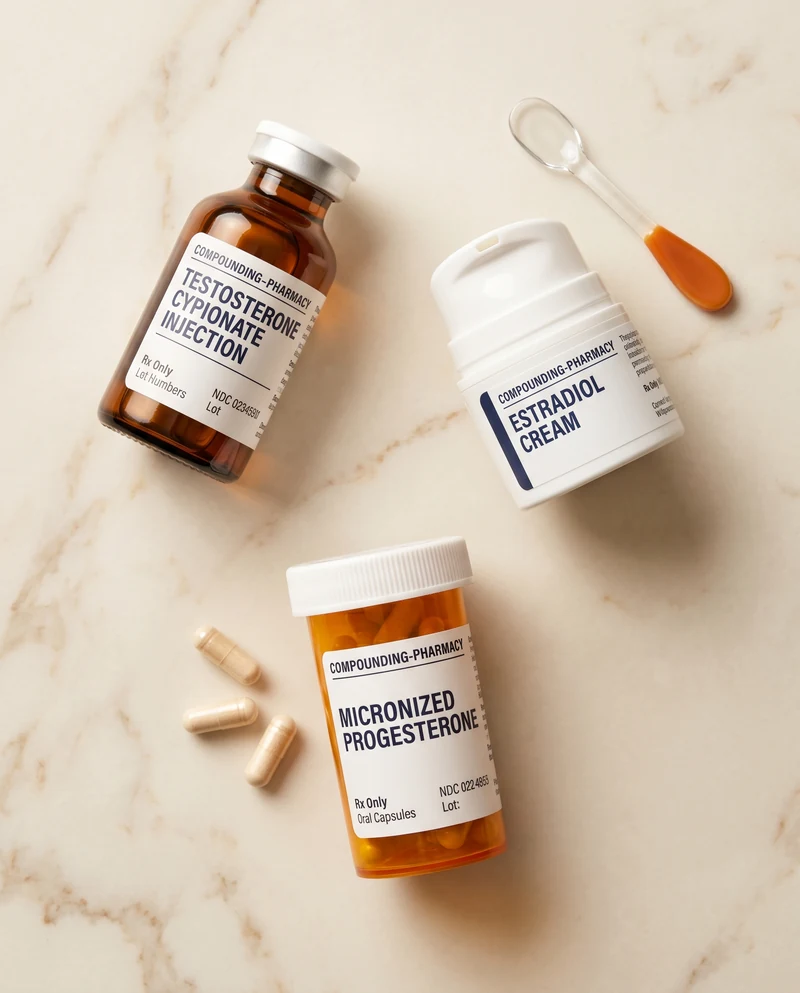
Bioidentical hormone preparations: testosterone cypionate injectable vial, estradiol compounded cream, and oral micronized progesterone capsules

How Hormone Care at Regenerative Performance Differs

The mechanics of bioidentical hormone therapy are well understood. The differentiators are in how the workup is done, which patterns get tested, and how dosing is adjusted over time. Four pieces of our protocol set us apart from high-volume hormone clinics:

  • Comprehensive evaluation before any prescription is written. A 120-minute initial visit to map your symptom history, review prior workups, and order labs that fit your case rather than a template panel.
  • Lab-guided dosing rather than protocol-based dosing. Doses and routes are chosen for your individual labs, symptoms, and risk profile. Recheck labs determine the next adjustment, not a calendar.
  • Three flexible delivery routes (injection, topical, troche), no pellets. If a dose needs to come down or a route needs to change, we can do it in days rather than waiting months for a pellet to wear off.
  • Single-provider continuity. Dr. Myers evaluates, orders labs, prescribes, and monitors. The same provider who knows your case is the one adjusting your plan.

Why Lab-Guided Dosing Matters

Hormone reference ranges are population averages, not individualized targets. The point of regular labs alongside symptom tracking is to find your physiologic range, not to push toward a population number. That is also why we test thyroid, adrenal, and metabolic markers when patterns warrant it: a single TSH or a single total testosterone in isolation often misses the pattern that explains how you actually feel.

Conditions and Patterns We Address with Hormone Therapy

Hormone-related symptoms cluster differently in women, men, and patients with thyroid or adrenal patterns. Each tab lists the patterns Dr. Myers most commonly addresses with hormone therapy or hormone-adjacent care.

Women's Hormone Patterns

Patterns that span perimenopause, menopause, and postmenopause, where symptoms cluster around vasomotor changes, sleep, mood, libido, and body composition.

  • Hot flashes and night sweats
  • Sleep disruption (perimenopause, menopause, postmenopause)
  • Mood changes, anxiety, low mood
  • Brain fog and cognitive complaints
  • Vaginal dryness and genitourinary symptoms
  • Low libido
  • Cycle changes in perimenopause
  • Bone density loss
  • Unexplained weight gain or body composition shifts

Men's Hormone Patterns

Men with documented or suspected low testosterone whose symptoms point to hormonal contribution, where testosterone replacement therapy may be appropriate when labs confirm the clinical picture.

  • Low energy and decreased motivation
  • Low libido and erectile concerns
  • Loss of muscle mass and strength
  • Increased abdominal fat
  • Mood changes, irritability, or low mood
  • Sleep disruption
  • Slower recovery from exercise or injuries
  • Laboratory-documented low or low-normal testosterone

Thyroid and Adrenal Patterns

Patterns that drive fatigue, cognitive complaints, weight changes, and stress intolerance in both women and men, where conventional single-TSH screening often misses the underlying picture.

  • Fatigue not explained by sleep alone
  • Cold intolerance
  • Brain fog and slow cognition
  • Unexplained weight changes
  • Hair changes (texture, thinning, brittleness)
  • Stress intolerance and slow recovery from stressors
  • Sleep disruption with elevated nighttime cortisol patterns
  • Patterns missed by single-TSH screening (free T3, free T4, antibodies, reverse T3)

Honest Expectations

Hormone Therapy Is Probably Not Right If:

  • You are looking for a quick fix without changing sleep, nutrition, or movement
  • You want supraphysiologic doses for performance or cosmetic goals
  • You are unwilling to do follow-up labs or attend regular check-ins
  • You want hormone pellets specifically; we do not offer pellet therapy at Regenerative Performance
  • You have an active hormone-sensitive cancer or recent venous thromboembolism that has not been cleared by your treating oncologist or hematologist

We would rather tell you upfront than waste your time. If any of these apply and you are still curious, a discovery call is the fastest way to find out where you stand.

How Our Hormone Care Differs From High-Volume Clinics

Factor Typical Hormone Clinic Regenerative Performance
Visit length10 to 20 minute consult120-minute initial evaluation; structured follow-up at lab return
Lab scopeLimited sex hormone panelSex hormones plus thyroid, adrenal, metabolic, and nutrient markers when indicated
Dosing approachProtocol-based, same for most patientsIndividualized dosing based on labs, symptoms, and goals
Delivery routesFrequent use of pellets and oral estrogenThree adjustable routes: injection, topical, and troche
Upstream contributorsOften not addressedSleep, stress, nutrition, gut, and movement addressed alongside hormones
Follow-up cadenceInfrequent, focused on refillsStructured first-quarter rechecks, then labs every 6 to 12 months once stable
Provider continuityMay rotate between staffDr. Myers evaluates, orders labs, prescribes, and monitors
Integration with other careHormones in isolationIntegrated with naturopathic medicine and, when relevant, regenerative medicine

What to Expect

What Happens When You Start Hormone Therapy

Once you start hormone therapy, the body responds in stages. Some changes are noticeable within days; others take weeks or months. The timeline below describes what most patients notice and when, with exact timing depending on which hormones are dosed, what the body needs, and how upstream factors like sleep, stress, and nutrition are being addressed alongside the prescription.

  1. 1

    Days 1 to 7 (Early Adjustment)

    Many patients notice subtle shifts within the first week. Sleep depth or quality is often the first thing to change. Some patients describe early shifts in mood, energy, or libido. Side effects, if any, tend to surface in this window, which is one reason we use adjustable delivery routes that allow dose changes in days rather than months.

  2. 2

    Weeks 2 to 4 (Early Response Window)

    This is when most patients describe their first clearly noticeable change. For women on bioidentical estrogen and progesterone, hot flashes and night sweats often reduce in this window. For men on testosterone, energy and motivation typically pick up. For thyroid support, cognitive clarity and temperature regulation start to consistently shift. The full picture is not yet stable, but the trend is usually clear.

  3. 3

    Weeks 4 to 12 (Strongest Initial Changes)

    This is the period when most patients see their strongest initial changes. Sleep, mood, and energy improvements typically consolidate. For women, hot flashes and night sweats are often well-controlled by this point if dosing is appropriate. For men, libido and recovery from exercise often improve. Body composition changes may start to become visible. We do the first structured recheck around the 8 to 12 week mark, where we confirm the dose is right and adjust if needed.

  4. 4

    Months 3 to 6 (Sustained Response)

    Body composition shifts often become more visible in this window. Mood and energy patterns stabilize at the new baseline. Sleep quality consolidates. For women, bone-density support starts to register on follow-up DXA scans, although these changes are slower than symptom changes. The dose often finds its stable point in this window, and side effects, if any, are usually resolved.

  5. 5

    Months 6 to 12 and Beyond (Long-Term Outcomes)

    Symptom relief settles into the new baseline. Bone density and metabolic markers continue to improve on follow-up labs. Dose is typically stable, and visits drop to a 6 to 12 month cadence for lab rechecks and symptom check-ins. Hormone needs may shift over time as life stage, stressors, or other medications change, and the plan adjusts with you.

Hormone Therapy Applications at Regenerative Performance

Women's Hormone Therapy

Bioidentical Hormone Replacement Therapy for Women

For appropriate candidates, we prescribe bioidentical estrogen and oral micronized progesterone to address vasomotor symptoms (hot flashes, night sweats), sleep disruption, mood changes, and genitourinary symptoms. We use creams, troches, or low-dose oral preparations chosen to fit your symptoms, your risk profile, and how easily a route can be adjusted. Testosterone may be added for selected women with low libido or low energy when symptoms and labs match.

Best for: Perimenopause, menopause, postmenopause, and selected pre-menopausal hormonal patterns. Women with hot flashes, night sweats, sleep disruption, mood swings, vaginal dryness, low libido, or unexplained fatigue who want a lab-guided, individualized approach.

Men's Hormone Therapy

Testosterone Replacement Therapy for Men

Testosterone replacement may be appropriate for men whose symptoms and labs together suggest suboptimal levels, including labs that sit just above the conventional "clinically low" threshold. The standard allopathic approach waits until labs drop further, which can leave men at risk for downstream health conditions despite symptoms that already respond to treatment. We use injections or topical preparations for tighter dose control, monitor with labs and symptom tracking, and follow estrogen, prolactin, and metabolic markers as part of routine care.

Best for: Men with decreased energy, motivation, or libido, loss of muscle mass and strength, increased abdominal fat, low mood or irritability, and slower recovery from exercise or injuries, when the symptom picture and lab patterns together point to a hormonal contribution.

After your evaluation, Dr. Myers walks through the hormone pathways she has determined are contributing to your symptoms, and you decide together where to start. We do not commit any patient to long-term hormone packages before you know how your body responds to the initial dose and route; adjustments come from labs and how you feel, not a calendar. For patients working with Dr. Timmermans on a PRP or stem cell procedure, hormone evaluation may become part of the larger picture when his clinical assessment determines that hormone patterns may be impacting recovery.

Treatment Options

Hormone Therapy Options We Commonly Use

Estrogen and Progesterone

For appropriate candidates, we use bioidentical estrogen and progesterone, often as a compounded cream for estrogen and oral micronized progesterone at bedtime. The goal is symptom relief with dosing and delivery chosen to respect safety and your individual risk factors. Progesterone may also be prescribed to selected men when patterns warrant it.

Testosterone (Men and Selected Women)

Testosterone is prescribed for appropriate men and selected women when symptoms and labs match. In our practice, this is delivered as injections or topical preparations that allow dose flexibility and careful monitoring.

Thyroid Support

When indicated, we use thyroid hormone replacement or modulation to support metabolism, energy, and cognition. Decisions are based on a full thyroid panel and how you feel, not a single TSH value in isolation.

Adrenal and Metabolic Support

Adrenal patterns, blood sugar regulation, and metabolic markers are addressed with a combination of lifestyle, nutritional, and sometimes targeted supplement or medication support.

We do not use hormone pellets at Regenerative Performance. In our experience, pellets can make it harder to fine-tune dosing and adjust quickly if you have side effects or do not feel well on a given dose. We prefer delivery methods that allow tighter control over time.

What Our Patients Say

Dr. Myers is AMAZING! She's a hormone genie! I've been to plenty of doctors and none have understood my hormones and what my body needs like she has.

Jordyn ★★★★★

Verified Google review

Dr. Timmermans and Dr. Myers are one of the best. At 56 I have the energy of a 20-year-old, my body hasn't looked this good since I was in my 20s.

Patrick ★★★★★

Verified Google review

Dr. Myers was the first doctor who really listened and helped me address my hormone and thyroid issues.

Jillian ★★★★★

Verified Google review

Common Questions

Frequently Asked Questions

How safe is hormone therapy?

When prescribed and monitored by trained clinicians using appropriate testing and follow-up, hormone therapy can be used safely for many patients. As with any medical treatment, there are risks and potential side effects that depend on your history, current medications, and the specific hormones used. Risks include venous thromboembolism, breast cancer (with combined estrogen-progestin therapy), and stroke; these are weighed individually based on your age, time-since-menopause, and personal/family history. We review risks, benefits, and alternatives in detail before you decide.

How do I know if hormone therapy is right for me?

Hormone therapy decisions are not based on symptoms alone or labs alone. We look at both together. If your symptoms, history, and lab results all point toward a hormone-related issue, and other causes have been reasonably ruled out, we discuss whether hormone therapy makes sense or if other treatments should come first. The 2-hour evaluation is designed to answer this question.

How quickly does hormone therapy work?

Hormone therapy results vary by symptom. Some patients notice changes in sleep, mood, or energy within a few weeks. Changes in body composition, bone density, and tissue recovery take longer. We typically reassess both labs and symptoms over the first 8 to 12 weeks, then adjust as needed.

How long will I be on hormone therapy?

Hormone therapy duration varies. Some patients use it for a defined period (for example, the 5 to 10-year window after menopause where the WHI re-analysis showed favorable risk-benefit). Others choose longer-term support based on symptom recurrence and bone-health goals. We reassess regularly and make decisions together based on your goals, risks, and how you are doing.

How does hormone therapy affect weight?

Hormone therapy is not a weight-loss treatment, but it can remove some of the biological brakes that make fat loss harder when hormone imbalance is contributing. When hormones are optimized and paired with appropriate nutrition, movement, and sleep, many patients find it easier to lose fat and maintain muscle.

How does hormone therapy fit with the WHI 2002 safety findings?

Hormone therapy guidance evolved after the original Women's Health Initiative results published in 2002 raised concerns that paused the broad use of hormone therapy. Subsequent re-analyses (Manson et al., JAMA 2017) demonstrated that age at initiation matters: women under 60 or within 10 years of menopause have a different risk-benefit profile than women initiating later in life. The North American Menopause Society 2022 position statement now lists hormone therapy as first-line for moderate-to-severe vasomotor symptoms in appropriately selected women. We walk through your individual risk factors during your evaluation.

What types of hormone delivery does Regenerative Performance use, and why no pellets?

Hormone delivery at Regenerative Performance uses topical creams and gels, injections, and oral preparations when appropriate. We do not use hormone pellets because they are difficult to adjust once placed. During your evaluation we walk through pros and cons of each option and choose the simplest one that fits your goals and risk profile.

How does Regenerative Performance evaluate the thyroid as part of a hormone therapy workup?

Thyroid evaluation goes beyond a single TSH. A full thyroid panel includes TSH, free T3, free T4, and (when indicated) reverse T3 and thyroid antibodies. Many thyroid patterns that drive symptoms are not visible on TSH alone, especially in patients with autoimmune thyroid conditions or non-thyroidal illness. The full panel is interpreted alongside your symptoms, energy, weight, sleep, and any prior thyroid history.

Can men get hormone therapy at Regenerative Performance?

Yes, Dr. Myers prescribes testosterone replacement therapy for men with laboratory-documented low testosterone and matching symptoms. The workup framework is the same as for women: comprehensive evaluation, full panel, root contributors first, then prescription if indicated. Testosterone is FDA-approved for documented hypogonadism, which is why we test before we prescribe.

Your Hormone Symptoms Deserve More Than a Quick Prescription

If you feel unlike yourself and prior workups have not given you clear answers, a more complete evaluation may be the missing step. Hormone therapy, thyroid or adrenal support, and non-hormonal strategies are all on the table. The first step is understanding your full picture.

Schedule a comprehensive evaluation for your hormone health at our Gilbert, AZ clinic (also serving Chandler, Mesa, Queen Creek, Scottsdale, Tempe, and the greater Phoenix area).

If you are unsure whether hormone therapy is appropriate, or you are traveling from outside the Phoenix area, you can also call and ask about a brief 15-minute discovery call.

Lab-guided, physician-prescribed. No pellets. Dose adjustment based on your response and repeat lab work.

726 N Greenfield Rd, STE 101, Gilbert, AZ 85234

References
  1. The 2022 Hormone Therapy Position Statement of The North American Menopause Society. Menopause, 2022; 29(7):767–794. DOI: 10.1097/GME.0000000000002028.
  2. Manson JE, Aragaki AK, Rossouw JE, et al. Menopausal Hormone Therapy and Long-term All-Cause and Cause-Specific Mortality: The Women's Health Initiative Randomized Trials. JAMA, 2017; 318(10):927–938. DOI: 10.1001/jama.2017.11217.
  3. Snyder PJ, Bhasin S, Cunningham GR, et al. Effects of Testosterone Treatment in Older Men. N Engl J Med, 2016; 374(7):611–624. DOI: 10.1056/NEJMoa1506119.
  4. Lincoff AM, Bhasin S, Flevaris P, et al. Cardiovascular Safety of Testosterone-Replacement Therapy. N Engl J Med, 2023; 389(2):107–117. DOI: 10.1056/NEJMoa2215025.
  5. El Khoudary SR, Aggarwal B, Beckie TM, et al. Menopause Transition and Cardiovascular Disease Risk: Implications for Timing of Early Prevention. A Scientific Statement From the American Heart Association. Circulation, 2020; 142(25):e506–e532. DOI: 10.1161/CIR.0000000000000912.
  6. Rossouw JE, Anderson GL, Prentice RL, et al. Risks and Benefits of Estrogen Plus Progestin in Healthy Postmenopausal Women: Principal Results From the Women's Health Initiative Randomized Controlled Trial. JAMA, 2002; 288(3):321–333. DOI: 10.1001/jama.288.3.321.
  7. Harman SM, Metter EJ, Tobin JD, Pearson J, Blackman MR. Longitudinal Effects of Aging on Serum Total and Free Testosterone Levels in Healthy Men. Baltimore Longitudinal Study of Aging. J Clin Endocrinol Metab, 2001; 86(2):724–731. DOI: 10.1210/jcem.86.2.7219.

Note on off-label use: Some hormone therapy applications discussed on this page are off-label, including DHEA prescribing in selected patients, testosterone in selected women, and certain thyroid combinations (for example, T3/T4 combination therapy). Off-label use refers to the use of an approved drug or hormone preparation for an indication that has not been formally approved by a regulatory body. Off-label use is legal, common in medicine, and supported by published peer-reviewed research for the patterns we treat. Bioidentical hormone replacement therapy for menopausal vasomotor symptoms in appropriate candidates is consistent with the 2022 NAMS position statement; testosterone replacement is FDA-approved when low testosterone is laboratory-documented in men. Dr. Myers evaluates every patient individually and discusses the regulatory framing of any recommended therapy during the evaluation. Individual results may vary.