Stem Cell Therapy for Mesa, AZ: Knee, Hip, and SI Joint Pain
Your Own Cells, BMAC and MFAT, for Knee, Hip, and SI Joint Pain
Regenerative Performance treats patients from Mesa for stem cell therapy at its neighboring Gilbert, AZ clinic, a short drive across the East Valley. Stem cell therapy at Regenerative Performance uses your own cells: bone marrow concentrate (BMAC) or microfragmented adipose tissue (MFAT). Both are stem cell therapy; PRP concentrates platelets and growth factors and is not a stem cell treatment. Every injection is performed under the image guidance the structure requires, using ultrasound, x-ray, or both, and every patient begins with a comprehensive 2-hour evaluation before any treatment is planned.
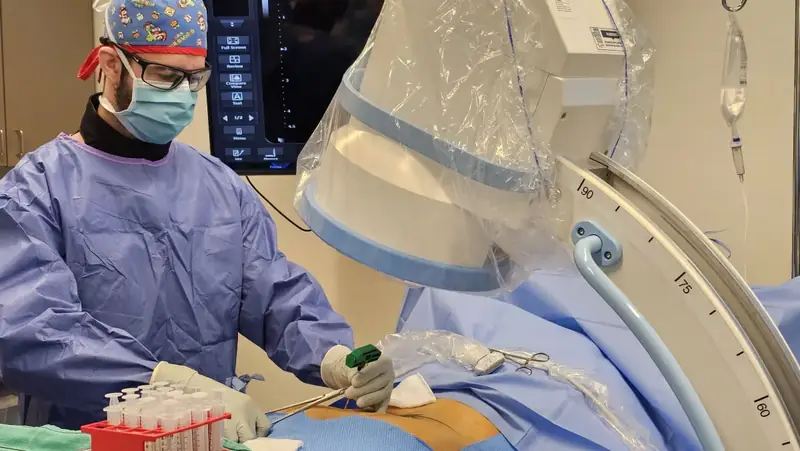
What Stem Cell Therapy Is and How It Works
BMAC is obtained through a bone marrow aspiration, typically from the iliac crest, and processed the same visit into a concentrated preparation of the patient's own cells. MFAT is obtained through a lipoaspiration and mechanically processed; fat-derived (MFAT) injections are always combined with PRP at Regenerative Performance. We only use cells obtained from you; we do not use donor, umbilical, or embryonic cells. A third option, culture-expanded mesenchymal stem cells, is investigational, not FDA-approved, and offered under the federal Right to Try Act, with cells processed at an FDA-compliant cGMP facility; it is described on our culture-expanded mesenchymal stem cell therapy page.
In the United States, autologous bone marrow concentrate for orthopedic conditions is typically an off-label application, not an FDA-approved treatment.
Patients researching stem cell therapy in Mesa often find template-style city pages published by multi-location regenerative medicine chains, listing services without naming a treating physician, a specific evaluation process, or how candidacy is actually determined. Regenerative Performance takes a different approach: every stem cell procedure uses the patient's own bone marrow or fat tissue, processed the same day, and the choice between BMAC and MFAT, or whether stem cell therapy is the right fit at all, is made by Dr. Timmermans in person after a hands-on physical exam and diagnostic ultrasound identify which structure is actually generating the pain. For patients who started with Regenerative Performance's PRP therapy for Mesa and are now asking whether stem cell therapy is a better fit, that question is answered during the same diagnostic evaluation, not before it.
For patients who want the underlying mechanism, research, and full list of conditions stem cell therapy addresses, the complete guide to stem cell therapy covers it in depth, and the stem cell therapy service page walks through the clinic's full evaluation and treatment process.
Knee Osteoarthritis, Hip Pain, and SI Joint Pain
Knee osteoarthritis is one of the most common reasons Mesa patients look into stem cell therapy, often for a knee that imaging has already labeled bone on bone. Stem cell therapy may help some patients delay or avoid a knee replacement when the joint has moderate to advanced cartilage or bone damage that has not responded to conservative care. Research suggests it may do a better job than PRP at supporting repair of the structure itself, including bone marrow edema, the swelling within the bone beneath the cartilage that often drives knee pain. The imaging and the symptoms do not always agree: pain can persist even as a scan improves, and some patients feel comparatively little pain despite a scan that looks worse, which is why treatment targets the structure and the symptoms rather than the scan alone. End-stage bone-on-bone arthritis with joint misalignment is typically beyond what any injection, including stem cell therapy, can correct.
Hip osteoarthritis and sacroiliac (SI) joint pain are worked up the same way: history first, then a hands-on physical exam, then diagnostic imaging as context, addressing the whole joint complex, cartilage, tendons, ligaments, peripheral nerves, and subchondral bone, rather than one structure in isolation. The SI joint sits close enough to the low back and hip that pain from any of the three is often mistaken for the others, which is why an accurate diagnosis, not the treatment itself, is usually the deciding factor in whether an injection helps. A closer look at how SI joint pain is diagnosed and treated with orthobiologic injections is in PRP injections for SI joint pain in Mesa. Stem cell therapy is typically not a fit for active cancer or bone marrow malignancy, active infection, or an expectation that treatment is certain to succeed. Regenerative Performance treats both long-standing chronic pain and more recent pain, and treats many structures in a single treatment session rather than one at a time.
Serving Mesa and the East Valley
Regenerative Performance's clinic is in neighboring Gilbert, and Mesa is one of the closest cities to reach it from, a straightforward drive across the East Valley for a stem cell program that keeps the diagnosis, the procedure, and the follow-up with the same physician rather than routing patients through a multi-location chain. Mesa patients typically make two trips rather than one: the 2-hour evaluation comes first to nail down the diagnosis and plan, then the bone marrow or adipose harvest is scheduled on a separate day so the preparation is never rushed.
Mesa patients weighing which stem cell option, or whether stem cell therapy is the right fit at all, are welcome to call and ask questions before scheduling anything.
What Every Stem Cell Treatment Includes
Every injection is performed under the image guidance the structure requires, using ultrasound, x-ray, or both, by Dr. Drew Timmermans, ND, RMSK, who completed a residency in Pain Management and Regenerative Medicine at Southwest College of Naturopathic Medicine and has been performing bone marrow concentrate and microfragmented adipose procedures since 2017. Outcomes tracked since 2021 in partnership with DataBiologics.
Procedures that include a bone marrow or adipose harvest are typically done under twilight sedation with a dedicated anesthesia provider monitoring you, while simpler injection-only visits are usually done awake and are well tolerated.
Most patients have increased soreness for 3 to 7 days. Some feel a significant drop in pain in the first 7 to 14 days because the injected cells release natural anti-inflammatory compounds; that early relief wears off after a few weeks, and losing it does not mean the procedure failed. Most patients who respond start to see it within the first 4 weeks, the majority of improvement arrives in the first 6 months, and healing typically continues out to a year.
Frequently Asked Questions About Stem Cell Therapy for Mesa, AZ
Is stem cell therapy in Mesa the same at every clinic?
Stem cell therapy in Mesa is not the same at every clinic. Preparations vary widely: some clinics use a patient's own bone marrow or fat tissue, while others use donor-derived products marketed as umbilical cord, amniotic, or exosome preparations. An accurate diagnosis and image-guided placement of the injection matter as much as which preparation is used, since even the right cell type injected into the wrong structure will not relieve pain.
Can stem cell therapy help a knee that is bone on bone?
Stem cell therapy can help some patients with bone-on-bone knee arthritis, but candidacy depends on the pattern of damage rather than the diagnosis alone. Moderate to advanced cartilage or bone damage that has not responded to conservative care is the best-suited scenario; end-stage arthritis with significant joint misalignment typically still needs a surgical replacement, since no injection can correct a mechanically unstable joint.
How far is Regenerative Performance's stem cell therapy clinic from Mesa?
Regenerative Performance's stem cell therapy clinic is a short drive from Mesa, in neighboring Gilbert, AZ. Many Mesa patients travel to the clinic for both the 2-hour evaluation and the treatment visit, since it is one of the closer options for an autologous, evaluation-first stem cell program in the East Valley.
Can stem cell injections treat SI joint pain?
Stem cell injections may be used for sacroiliac (SI) joint pain when a hands-on exam and imaging confirm the SI joint, rather than the low back or hip, is the primary pain generator. Because the SI joint sits close to several structures that commonly refer pain to the same area, an accurate diagnosis is usually the deciding factor in whether a stem cell or PRP injection is likely to help.
Ready to Find Out If Stem Cell Therapy Can Help?
Mesa patients travel a short distance to Regenerative Performance's neighboring Gilbert clinic, where Dr. Timmermans performs every injection under image guidance using the patient's own bone marrow or fat tissue, never a donor product. Knee osteoarthritis, hip pain, and SI joint pain that has not responded to conservative care are the most common reasons patients from Mesa and the rest of the East Valley schedule an evaluation.
More than 1,500 orthobiologic cases since 2015.
726 N Greenfield Rd, STE 101, Gilbert, AZ 85234