Stem Cell Therapy for Queen Creek, AZ
Your Own Cells, BMAC and MFAT, for Knee, Hip, and Joint Pain
Regenerative Performance treats patients traveling from Queen Creek for stem cell therapy at its Gilbert, AZ clinic. Stem cell therapy at Regenerative Performance uses your own cells: bone marrow concentrate (BMAC) or microfragmented adipose tissue (MFAT). Both are stem cell therapy; PRP concentrates platelets and growth factors and is not a stem cell treatment. Every injection is performed under the image guidance the structure requires, using ultrasound, x-ray, or both, and every patient begins with a comprehensive 2-hour evaluation before any treatment is planned.
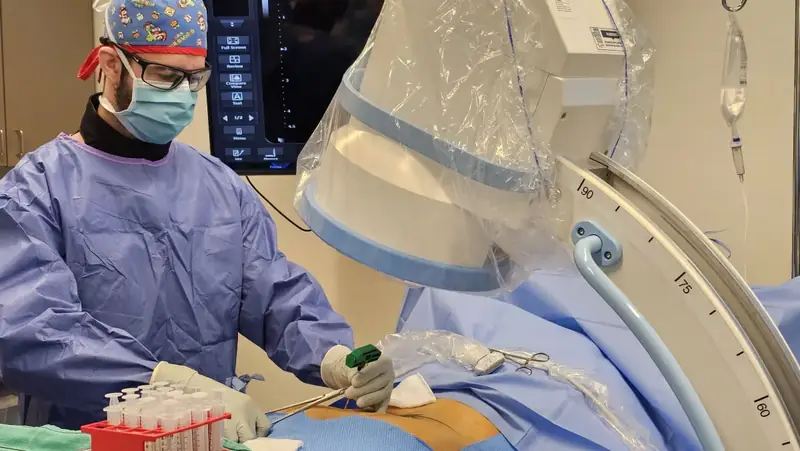
What Stem Cell Therapy Is and How It Works
BMAC is obtained through a bone marrow aspiration, typically from the iliac crest, and processed the same visit into a concentrated preparation of the patient's own cells. MFAT is obtained through a lipoaspiration and mechanically processed; fat-derived (MFAT) injections are always combined with PRP at Regenerative Performance. We only use cells obtained from you; we do not use donor, umbilical, or embryonic cells. A third option, culture-expanded mesenchymal stem cells, is investigational, not FDA-approved, and offered under the federal Right to Try Act, with cells processed at an FDA-compliant cGMP facility; it is described on our culture-expanded mesenchymal stem cell therapy page.
In the United States, autologous bone marrow concentrate for orthopedic conditions is typically an off-label application, not an FDA-approved treatment.
Many Queen Creek patients arrive at this page after first finding Regenerative Performance's PRP therapy for Queen Creek page, since PRP and stem cell therapy are frequently searched together but are not the same treatment. PRP concentrates platelets and growth factors from a patient's own blood; stem cell therapy uses cell-based preparations, either bone marrow concentrate or microfragmented adipose tissue, that fall into a different category entirely, with cells rather than platelets doing the work. The decision between the two, or whether both have a role in the same treatment plan, is made after a hands-on physical exam and diagnostic ultrasound identify which structures in a joint, tendon, or the spine are actually generating the pain, not from a search query or a treatment name alone.
Patients wanting more detail can read the complete guide to stem cell therapy for the mechanism and research behind it, or visit the stem cell therapy service page for the full evaluation and treatment process.
Treating Joint Arthritis in More Than One Structure
Queen Creek patients evaluating stem cell therapy often have arthritis or degenerative damage affecting more than one area at once, a worn knee alongside a stiff shoulder, or hip pain paired with a lingering ankle problem, rather than a single isolated joint. Because a single bone marrow or fat tissue harvest yields enough cell concentrate for more than one injection site, more than one structure can often be treated during the same procedure visit rather than scheduling a separate harvest day for each joint. Candidacy is still assessed structure by structure: moderate to advanced cartilage or bone damage that has not responded to conservative care is the target in each joint being considered, and end-stage bone-on-bone arthritis with joint misalignment in any one structure typically still needs a surgical referral for that structure specifically, even when other structures remain reasonable candidates for stem cell therapy.
Good candidates for stem cell therapy have moderate to advanced joint, tendon, or spinal damage that has not responded to conservative care. Stem cell therapy is typically not a fit for structural joint problems an injection is unlikely to address (such as severe misalignment), complete tears that require surgical repair, active cancer or bone marrow malignancy, active infection, or an expectation that treatment is certain to succeed. Regenerative Performance treats both long-standing chronic pain and more recent pain, and treats many structures in a single treatment session rather than one at a time.
Serving Queen Creek and the Southeast Valley
Regenerative Performance's clinic is in Gilbert, in the neighboring southeast Valley from Queen Creek, and many patients find the drive a natural extension of trips they already make toward Gilbert or the wider East Valley for work, shopping, or other appointments. Queen Creek patients book the evaluation and the procedure as two separate trips to Gilbert: the first establishes the diagnosis and treatment plan, and the harvest is scheduled on its own day so nothing about the preparation has to be rushed.
Patients weighing whether stem cell therapy is worth pursuing from Queen Creek are welcome to call and ask questions about the clinic, the evaluation process, or candidacy before scheduling anything.
What Every Stem Cell Treatment Includes
Every injection is performed under the image guidance the structure requires, using ultrasound, x-ray, or both, by Dr. Drew Timmermans, ND, RMSK, who completed a residency in Pain Management and Regenerative Medicine at Southwest College of Naturopathic Medicine and has been performing bone marrow concentrate and microfragmented adipose procedures since 2017. Outcomes tracked since 2021 in partnership with DataBiologics.
Procedures that include a bone marrow or adipose harvest are typically done under twilight sedation with a dedicated anesthesia provider monitoring you, while simpler injection-only visits are usually done awake and are well tolerated.
Most patients have increased soreness for 3 to 7 days. Some feel a significant drop in pain in the first 7 to 14 days because the injected cells release natural anti-inflammatory compounds; that early relief wears off after a few weeks, and losing it does not mean the procedure failed. Most patients who respond start to see it within the first 4 weeks, the majority of improvement arrives in the first 6 months, and healing typically continues out to a year.
Frequently Asked Questions About Stem Cell Therapy for Queen Creek, AZ
What are cell-based orthobiologic injections?
Cell-based orthobiologic injections use living cells collected from a patient's own body, rather than platelets alone, to support the repair of a damaged joint, tendon, or spinal structure. Bone marrow concentrate (BMAC) and microfragmented adipose tissue (MFAT) are both cell-based preparations, drawn from a patient's own bone marrow or fat tissue and processed the same day; both fall under the umbrella of stem cell therapy. Platelet-rich plasma (PRP) is a separate category: it concentrates platelets and growth factors from a patient's own blood, and while it is a genuine orthobiologic option, it is not a stem cell treatment. Knowing which category a given injection falls into is the first step in comparing options.
Can stem cell therapy help joint arthritis in more than one joint?
Stem cell therapy can treat more than one joint in the same visit: a single bone marrow or fat tissue harvest can yield enough cell concentrate for multiple joints, tendons, or spinal levels, so patients with arthritis in, for example, both a knee and a hip are not required to schedule separate procedures for each structure. The typical course is one treatment session, followed by tracking the response over the following year, with an occasional booster PRP injection around the 3- to 6-month mark in select cases. Whether more than one joint should be treated in the same session depends on which structures are actually diagnosed as pain generators, not simply which joints show wear on imaging.
How far is Regenerative Performance's stem cell therapy clinic from Queen Creek?
Regenerative Performance's stem cell therapy clinic is in Gilbert, in the neighboring southeast Valley from Queen Creek, and many Queen Creek patients find it a straightforward drive for both the 2-hour evaluation and, when stem cell therapy is the right fit, the treatment visit itself. Because starting point and traffic vary, the clinic is glad to answer specific questions about the drive by phone before scheduling.
Is a bone marrow draw painful?
A bone marrow draw, or aspiration, is performed with local anesthetic to numb the skin and underlying tissue at the harvest site, most often the iliac crest. Patients generally describe the sensation as pressure or a dull ache rather than sharp pain. Procedures that include a bone marrow or adipose harvest are typically done under twilight sedation with a dedicated anesthesia provider monitoring you, while simpler injection-only visits are usually done awake and are well tolerated.
Ready to Find Out If Stem Cell Therapy Can Help?
Patients from Queen Creek and the rest of the southeast Valley make a straightforward drive to Regenerative Performance's Gilbert clinic, where Dr. Timmermans performs every injection under image guidance using the patient's own bone marrow or fat tissue rather than a donor product. Arthritis affecting more than one joint, stubborn tendon injuries, and damage that has not responded to conservative care are common reasons for the visit.
More than 1,500 orthobiologic cases since 2015.
726 N Greenfield Rd, STE 101, Gilbert, AZ 85234