Stem Cell Therapy for Paradise Valley, AZ
Your Own Cells, BMAC and MFAT, for Shoulder, Elbow, and Joint Pain
Regenerative Performance treats patients traveling from Paradise Valley for stem cell therapy at its Gilbert, AZ clinic. Stem cell therapy at Regenerative Performance uses your own cells: bone marrow concentrate (BMAC) or microfragmented adipose tissue (MFAT). Both are stem cell therapy; PRP concentrates platelets and growth factors and is not a stem cell treatment. Every injection is performed under the image guidance the structure requires, using ultrasound, x-ray, or both, and every patient begins with a comprehensive 2-hour evaluation before any treatment is planned.
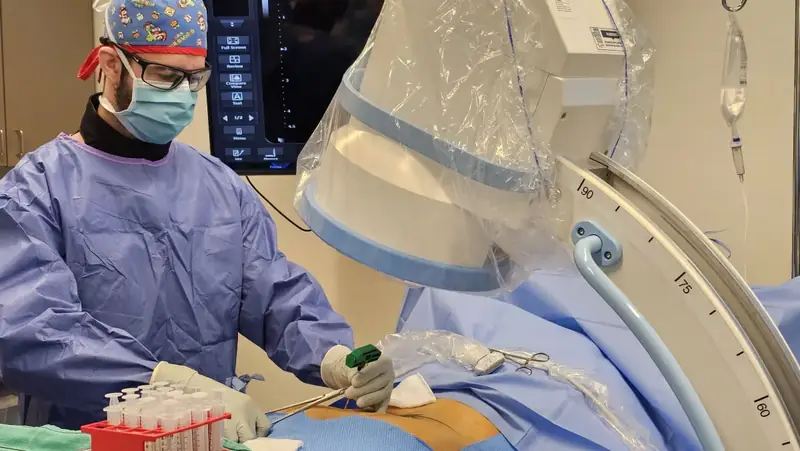
What Stem Cell Therapy Is and How It Works
BMAC is obtained through a bone marrow aspiration, typically from the iliac crest, and processed the same visit into a concentrated preparation of the patient's own cells. MFAT is obtained through a lipoaspiration and mechanically processed; fat-derived (MFAT) injections are always combined with PRP at Regenerative Performance. We only use cells obtained from you; we do not use donor, umbilical, or embryonic cells. A third option, culture-expanded mesenchymal stem cells, is investigational, not FDA-approved, and offered under the federal Right to Try Act, with cells processed at an FDA-compliant cGMP facility; it is described on our culture-expanded mesenchymal stem cell therapy page.
In the United States, autologous bone marrow concentrate for orthopedic conditions is typically an off-label application, not an FDA-approved treatment.
Patients in Paradise Valley researching stem cell therapy are more likely to find Regenerative Performance through organic search than through a map listing, since Paradise Valley sits outside the local search radius the clinic's Gilbert-centered map presence reaches, and the north Valley's regenerative-medicine market includes clinics advertising donor-derived, umbilical, and exosome products in the same searches. Regenerative Performance's stem cell program is autologous only, and because the injected material is always the patient's own bone marrow or fat tissue, there is no donor-tissue safety question attached to the choice: candidacy for BMAC or MFAT, or whether a stem cell procedure fits at all, is decided by a hands-on physical exam and diagnostic ultrasound identifying which structure is generating the pain. For patients who started with Regenerative Performance's PRP therapy for Paradise Valley and are now asking whether stem cell therapy would serve them better, that question is answered during the same diagnostic evaluation.
For more on how it works, what the research shows, and which conditions it treats, see the complete guide to stem cell therapy and the stem cell therapy service page.
Shoulder and Elbow Pain, and Joint Damage
Shoulder pain, often from a rotator cuff tendon that has not responded fully to physical therapy or anti-inflammatory treatment, is one of the more common reasons Paradise Valley patients look into stem cell therapy. Research suggests stem cell therapy may do a better job supporting repair of the tendon tissue itself in cases involving a partial-thickness rotator cuff tear, though a torn tendon does not always track with symptoms: some patients feel worse even as imaging improves, and some feel little pain despite imaging that looks worse, so both the structure and the symptoms are addressed rather than the scan result alone. Once a tear has fully retracted, the clinical picture changes and a surgical consult, not an injection, is usually the more appropriate next step.
Elbow tendon and joint pain, along with general joint damage elsewhere in the body, is worked up the same way: history first, then a hands-on physical exam, then diagnostic imaging as context, addressing the whole joint or tendon complex, cartilage, tendons, ligaments, peripheral nerves, and subchondral bone, rather than one structure in isolation. Because every procedure uses the patient's own bone marrow or fat tissue rather than a donor or manufactured product, there is no donor-material safety question to weigh into that decision, only whether the joint or tendon in question is actually a good candidate for the treatment. Stem cell therapy is typically not a fit for active cancer or bone marrow malignancy, active infection, or an expectation that treatment is certain to succeed. Regenerative Performance treats both long-standing chronic pain and more recent injuries, and can treat several structures, a shoulder and an elbow, for example, in a single treatment session rather than one at a time.
Serving Paradise Valley and the North Valley
Regenerative Performance's clinic is in Gilbert, at the opposite end of the Valley from Paradise Valley, the longest drive among the cities the clinic currently serves with a dedicated stem cell therapy page. The distance does not change how the visit is structured: the evaluation and the procedure are still scheduled as two separate visits, the 2-hour evaluation establishing the diagnosis and treatment plan, and any bone marrow or adipose harvest scheduled for its own day so the preparation can be processed without rushing the visit.
Patients from Paradise Valley weighing whether the drive across the Valley is worth it for an autologous, evaluation-first stem cell option are welcome to call and ask questions before scheduling anything.
What Every Stem Cell Treatment Includes
Every injection is performed under the image guidance the structure requires, using ultrasound, x-ray, or both, by Dr. Drew Timmermans, ND, RMSK, who completed a residency in Pain Management and Regenerative Medicine at Southwest College of Naturopathic Medicine and has been performing bone marrow concentrate and microfragmented adipose procedures since 2017. Outcomes tracked since 2021 in partnership with DataBiologics.
Procedures that include a bone marrow or adipose harvest are typically done under twilight sedation with a dedicated anesthesia provider monitoring you, while simpler injection-only visits are usually done awake and are well tolerated.
Most patients have increased soreness for 3 to 7 days. Some feel a significant drop in pain in the first 7 to 14 days because the injected cells release natural anti-inflammatory compounds; that early relief wears off after a few weeks, and losing it does not mean the procedure failed. Most patients who respond start to see it within the first 4 weeks, the majority of improvement arrives in the first 6 months, and healing typically continues out to a year.
Frequently Asked Questions About Stem Cell Therapy for Paradise Valley, AZ
How far is Regenerative Performance's stem cell therapy clinic from Paradise Valley?
Regenerative Performance's stem cell therapy clinic is in Gilbert, on the opposite side of the Valley from Paradise Valley, the longest drive among the cities Regenerative Performance currently serves with a dedicated stem cell therapy page. Patients traveling from Paradise Valley schedule both the 2-hour evaluation and any treatment visit at the Gilbert clinic, and many make the trip specifically for an autologous, evaluation-first stem cell option they have not found closer to home in the north Valley.
Does stem cell therapy work for shoulder pain?
Stem cell therapy can help with some causes of shoulder pain, most notably a partial-thickness rotator cuff tear that has plateaued despite physical therapy or anti-inflammatory treatment. Research suggests stem cell therapy may support repair of the tendon itself better than a treatment that addresses symptoms alone, though the imaging picture and how a shoulder actually feels do not always match: pain can persist even as a scan improves, and a shoulder can feel fine while a scan still shows damage. A full-thickness tear that has already retracted is generally a surgical question rather than an injection-based one, which is why a hands-on physical exam and diagnostic ultrasound, not the symptom alone, determine candidacy.
What should someone expect after a stem cell injection?
After a stem cell injection, most patients notice increased soreness for the first 3 to 7 days as the tissue responds to the procedure. Many feel a real, if temporary, drop in pain within the following 7 to 14 days, driven by the anti-inflammatory compounds the injected cells release; that early window of relief typically fades over the next few weeks, and its fading does not mean the treatment failed. The response that lasts tends to build in gradually: it usually becomes noticeable within the first month, most of the total improvement shows up over the first 6 months, and healing continues to develop for up to a year afterward.
Is stem cell therapy safe at Regenerative Performance?
Stem cell therapy at Regenerative Performance is an autologous procedure: the bone marrow concentrate or fat tissue injected always comes from the patient's own body, never a donor. Disease transmission is not applicable to an autologous procedure, since no donor material is involved, and the risk of an adverse reaction to the injection itself is extremely low. As with any injection, temporary soreness and swelling at the harvest and injection sites are common in the days afterward, and uncommon complications such as bleeding, infection, or injury to a nearby structure remain possible with any image-guided procedure. A hands-on physical exam and diagnostic ultrasound confirm candidacy before any procedure is scheduled.
Ready to Find Out If Stem Cell Therapy Can Help?
For patients from Paradise Valley and the rest of the north Valley, the trip to Regenerative Performance's Gilbert clinic is on the opposite side of the Valley, where Dr. Timmermans performs every injection under image guidance using the patient's own bone marrow or fat tissue. Shoulder pain, elbow pain, and joint damage that has not responded to conservative care are the most common reasons for the visit.
More than 1,500 orthobiologic cases since 2015.
726 N Greenfield Rd, STE 101, Gilbert, AZ 85234