
Failed PRP Treatment: What the Evidence Shows
Short Answer
- When platelet-rich plasma (PRP) does not help, the problem is usually not the treatment itself
- Three things account for most of what went wrong: the diagnosis, where the injection went, and whether the platelet dose was high enough
- All three are checkable after the fact, which is why a second look at the diagnosis is a more useful next step than repeating the same injection or giving up on the approach
If you paid out of pocket for an injection that was supposed to work, the disappointment is compounded by the cost, and it is reasonable to want an actual explanation before spending anything again.
You may have worked through physical therapy, chiropractic care, a round of cortisone that helped for a while before it stopped working, and then a PRP injection described as the option that would finally address the tissue. When that came up short too, the conclusion offered was probably that your case is simply too far gone.
There is usually a more specific explanation.
Failed PRP treatment is rarely a failure of biology. Platelet-rich plasma concentrates your own healing signals, and those signals only do useful work where they are delivered. When a PRP injection does not help, in our experience the most common issue is an incomplete or missed diagnosis of which structure is generating the pain. Inadequate dosing is another major reason, and unguided placement is a third. At Regenerative Performance in Gilbert, AZ, a re-evaluation re-opens the diagnosis first, using history, a hands-on exam, and diagnostic musculoskeletal ultrasound when indicated. A genuine non-response sometimes does point toward surgery rather than another injection.
If you have pain that has not improved after a PRP injection elsewhere, the next step is a detailed, in-person assessment to identify the exact tissues causing your pain and review non-surgical orthobiologic options like ultrasound-guided PRP therapy and Stem Cell Therapy.
Schedule a 2-hour evaluation for your nagging symptoms at our Gilbert, AZ clinic (also serving Chandler, Mesa, Queen Creek, and the greater Phoenix area).
We limit how many new regenerative patients we accept each month to devote sufficient time and attention to each case.
Many of the patients who come to our Gilbert clinic, from across Arizona and from out of state, have already tried conventional care and then a PRP injection somewhere else. Neither one gave them lasting relief.
What they are usually missing is an answer to why their previous PRP injection did not help. Sometimes that answer is a higher platelet dose, and sometimes it is a different diagnosis or a different target.
Key Facts About Failed PRP Treatment
Here is what is worth knowing about a PRP injection that did not work before deciding whether the approach itself is finished for you.
- What a failed PRP injection usually means: one of three things went wrong. The structure causing your pain was missed, the injection did not reach it, or the platelet dose was too low for it.
- Most common cause: in our experience, an incomplete or missed diagnosis of which structure is generating the pain.
- Other factors in your response: your overall health and how severe the pain and tissue damage are also shape how well PRP works.
- Who this applies to: adults with ongoing pain in a joint, tendon, ligament, the spine, or a specific nerve entrapment that did not change after a PRP injection (sometimes just called a platelet injection) elsewhere. Knees, shoulders, hips, and ankles are the joints we treat most often.
- What the dose research shows: in knee osteoarthritis, a 2024 meta-analysis reported that PRP treatment courses delivering more than 10 billion platelets in total led to greater improvement at six months on a combined joint pain and function score than the comparison treatments.
- How a re-evaluation works: a detailed history, a hands-on physical exam that tests each suspect structure, and diagnostic ultrasound when indicated, before any decision about another injection.
- Timeline: after a correctly targeted and dosed PRP injection, changes typically begin within the first month, and most of the gain arrives over the first three months. Individual results may vary.
- Typical treatments: we start with one treatment session and track your individual response. A second session may be considered later, based on how you responded, rather than a fixed prescription.
- Where: Regenerative Performance, Gilbert, AZ, serving Chandler, Mesa, Queen Creek, and the greater Phoenix area.
- Next step: Call 480-508-4226 to schedule a 2-hour evaluation for your nagging symptoms in Gilbert, AZ.
This applies especially if you were told your PRP injection "did not take," you were offered a second identical round without a re-examination, or you are now weighing whether to try again or book the surgery.
What Does a Failed PRP Injection Mean?
When PRP does not work, it usually means one of three things went wrong. The diagnosis missed the structure generating your pain, the injection did not reach that structure, or the platelet dose was too low for it.
On its own, a failed injection does not show that your tissue cannot heal or that PRP is the wrong treatment for you. Your overall health and how advanced the pain and tissue damage are also influence how well PRP works, which is why the same injection can produce different results in two people with similar symptoms.
Each of the three can be checked after the fact, starting with the diagnosis.
What Is the Most Common Reason PRP Does Not Work?
In our experience, the most common reason PRP fails is an incomplete or missed diagnosis of which structure is driving the pain. If PRP is delivered into tissue that was never the pain generator, no amount of platelets or image guidance will make it work.
This happens more easily than most patients expect, because several structures can produce nearly identical symptoms. Pain that is felt in the hip, for example, could be coming from the joint, the gluteal tendons, or even radiate from the lower back.
Imaging alone cannot confirm which structure is causing your pain. Degenerative findings are common in people with no pain at all, and a scan read in isolation can point confidently at the wrong structure.
The most important step in finding the pain generator is a hands-on physical exam. Pressing on, stretching, and loading each suspect structure in turn shows which one reproduces the pain you feel.
Diagnostic ultrasound then adds something other imaging cannot. With the probe directly over a suspect structure, the examiner can press on that exact structure while watching it on screen, a technique called sonopalpation. A finding only counts as the source of your pain if the exam reproduces your familiar symptoms. Otherwise it may be incidental, however abnormal it looks on the image.
Was the PRP Injection Guided to the Right Target?
The second reason PRP fails is that the PRP never arrived where it was meant to. Even a correct diagnosis needs a needle that reaches the named structure.
An injection guided by feel alone relies on anatomical landmarks, standardized points on the body that are used the same way for every patient. The pathology causing your pain is often somewhere other than the spot those landmarks point to. Real-time imaging shows the damaged tissue directly, so the PRP can be injected directly into the pathology rather than into a standard location.
The imaging tool depends on the structure being treated. Ultrasound handles soft tissue such as tendons, ligaments, and peripheral nerves, while ultrasound combined with x-ray guidance is used where a joint itself is the target.
A painful joint is rarely a single-structure problem. Treating one structure while ignoring others that also contribute to the pain often explains why a previous treatment failed.
Rather than relying on a single injection to treat everything, we use imaging to inject each painful structure, whether that is the joint, a ligament, a tendon, or an irritated nerve nearby.
Was the PRP Platelet Dose High Enough?
The third reason PRP fails is dose. PRP works by delivering a concentrated supply of your own platelets, and the growth factors they release, to the injured tissue, so the number of platelets that reach that tissue matters. Research in knee osteoarthritis suggests results depend on how many platelets are delivered, which means an injection with too few platelets for the structure being treated can look like a failed treatment when the real problem was under-dosing.

Important note: In the United States, PRP for musculoskeletal pain is typically an off-label use of devices cleared to prepare platelet concentrates, not an FDA-approved treatment for musculoskeletal pain.
A 2024 review pooling multiple knee osteoarthritis trials, by Berrigan et al., sorted studies by the total number of platelets delivered across a full treatment course. At six months, courses totaling more than 10 billion platelets produced meaningfully greater improvement on a combined joint pain and function score than the comparison treatments. Courses totaling 5 to 10 billion platelets relieved pain better than the comparison treatments but showed no clear advantage on that combined score.
A separate randomized trial by Bansal et al. standardized a single injection to 10 billion platelets in moderate knee osteoarthritis. At one year, patients in that group could walk considerably farther than before treatment, while patients who received a hyaluronic acid injection walked about the same distance as before.
Both dose studies above are in knee osteoarthritis, so the right dose depends on the condition and the size of the structure, and the 10 billion figure should not be read as a universal target for a tendon, a ligament, or a small joint in the hand.
In a five-year randomized trial, Di Martino et al. reported that the improvement patients noticed after PRP for knee osteoarthritis lasted a median of twelve months, against nine months after hyaluronic acid, a difference the authors describe as not statistically meaningful. Dose is a real variable that appears to raise the chances of a good response, but it is not a guarantee.
Our processing is standardized to a therapeutic platelet dose for the structure being treated, and each sample is tested in-house to confirm it meets that range.
Schedule a 2-hour evaluation for your nagging symptoms at our Gilbert, AZ clinic.
What Does a Re-Evaluation After a Failed PRP Injection Involve?
A re-evaluation after a failed PRP injection re-opens the diagnosis rather than assuming the first one was correct. The central question is whether the original target structures were the cause of your pain, and it is answered with a detailed history, a hands-on physical exam, then diagnostic imaging when indicated.
The history covers what was injected, where, at what platelet dose, whether imaging guided the needle, and how your symptoms responded afterward. The exam then tests each suspect structure from scratch rather than accepting the previous clinic's diagnosis as settled.
A re-evaluation usually ends in one of three conclusions.
- The original diagnosis holds, and the problem was the dose or where the injection went. A properly dosed PRP injection guided by real-time imaging is a reasonable next step.
- A different structure is driving your pain, so the treatment target changes.
- Another injection is not the right call, and a different treatment, including a surgical opinion, is more appropriate.
You can also read how PRP is dosed, targeted, and evaluated in our complete guide before booking anything.
When Does a Non-Response to PRP Mean Something Else Entirely?
A non-response sometimes means the pain is coming from a structure nobody has treated yet, and sometimes it means PRP is not the right tool for the problem.
The joint can turn out to be the real source when a ligament was what got treated, a tendon can be the culprit when the joint was what got injected, and sometimes the cause is an entrapped nerve that was never considered. Finding a different source of pain changes where treatment is directed rather than ruling treatment out.
Some patients arrive as a last resort before surgery. After a well-targeted, well-dosed PRP treatment that produced no response, the right recommendation is sometimes a surgical referral.
Surgery removes, repairs, or replaces damaged tissue, while PRP supports the tissue's own capacity to heal. When the damage has progressed past the point where healing is realistic, surgery is often the more appropriate option.
What to Expect at Our Clinic After a Failed PRP Injection
After a failed PRP injection elsewhere, care at Regenerative Performance follows four steps, from a 2-hour evaluation through follow-up.
The 2-Hour Evaluation
Every new patient starts with a detailed 2-hour evaluation, a thorough history, a hands-on physical exam with structure-specific provocation testing, and diagnostic ultrasound when indicated. That exam tests the suspected structures directly rather than relying on imaging alone or the previous clinic's working diagnosis. This step is crucial, since identifying the specific tissues causing your pain is what everything else in the plan depends on.
Individualized Treatment Plan
Based on the evaluation, we determine whether you are a candidate for PRP, another regenerative approach, or something else, then build a plan specific to your case, including which structures will be treated and your role in recovery.
We typically recommend supplements and peptides during the healing window to give your body every advantage.
Ultrasound-Guided PRP Injection
On your treatment day, we draw 120 to 300 mL of blood, depending on how many structures we are treating, and preparation typically takes one to one and a half hours because of how meticulous we are with processing. You relax in our IV lounge while we process your blood into PRP.
We treat every painful structure individually, under the appropriate image guidance, rather than relying on one injection into the joint space.
Recovery and Follow-Up
After your injection, we recommend resting for the remainder of that day so your body can begin healing. Physical activity restrictions typically last 1 to 4 weeks, with a gradual return to full activity guided by your response, and for most patients we refer to a physical therapist for a rehabilitation plan specific to your treatment and goals.
We schedule follow-up visits to check your progress and track your results in our outcome registry, giving both you and our team objective data on how your treatment is working.
Schedule a 2-hour evaluation for your nagging symptoms at our Gilbert, AZ clinic.
Who Is a Good Candidate for a Second Opinion After Failed PRP?
A second opinion after failed PRP is typically a good fit for adults whose pain persists after a PRP injection and who have never had that injection's diagnosis independently re-examined. Our 2-hour evaluation is designed to confirm this for your specific case.
In our Gilbert clinic, we most often see active adults 40 and older with low back pain, partial-thickness tears, chronic tendinosis, or nerve-related pain who have tried PT and cortisone without lasting relief and want to avoid surgery.
If you see yourself in the list below, a re-evaluation may be worth exploring.
- Failed conservative care such as physical therapy, chiropractic, massage, or medications
- Cortisone that helped temporarily but wore off, or that you have chosen to avoid
- A prior PRP injection that produced no lasting change
- Looking for non-surgical options before surgery
- Want structure-specific treatment targeting the exact joints, ligaments, tendons, or nerves involved
- You are willing to invest in your health, as these are cash-pay procedures.
Our clinic is in Gilbert, AZ, and patients travel in from out of state and internationally; we schedule the evaluation and procedure in a single trip.
During your evaluation, we will assess whether a regenerative approach is the right one for your specific condition, or whether a different treatment, including a surgical referral, might be more appropriate.
If you are unsure whether orthobiologic injections like PRP or stem cell therapy are appropriate, or you are traveling from outside the Phoenix area, you can also call and ask about a brief 15 minute discovery call.
Frequently Asked Questions About Failed PRP Treatment
What happens if a PRP injection does not work?
If a PRP injection does not work, the next step is re-examining the diagnosis rather than repeating the same injection. A non-response usually means one of three things went wrong: the wrong structure was treated, the injectate did not reach the intended target, or the dose was too low for that structure. Each of those is checkable through history, a hands-on exam, and imaging, and in some cases the re-examination points away from injection and toward a surgical opinion.
How can someone maximize their PRP results?
For maximizing PRP results, the largest factor is an accurate diagnosis of which structures are generating the pain, because a correctly targeted PRP injection is what everything else depends on. Beyond that, an appropriate platelet dose, real-time imaging during the injection, and a rehabilitation plan afterward all contribute, especially during the first three months when most healing occurs.
Is there anything better than PRP for chronic joint pain?
For a knee with advanced cartilage loss, stem cell therapy appears to be the stronger orthobiologic option than PRP, a difference in track record rather than a head-to-head comparison. For pain relief alone, the two treatments can reach broadly similar results, with PRP usually requiring more sessions. For some diagnoses the better answer is surgery, and for others it is treating a structure nobody has addressed yet, so the right choice depends on the diagnosis rather than a general ranking of treatments.
What percentage of PRP treatments are successful?
There is no single reliable success rate for PRP, because outcomes depend on the condition being treated, how severe the pain and tissue damage are, the patient's overall health, the platelet dose delivered, and how accurately the target was identified. In knee osteoarthritis specifically, treatment courses totaling more than 10 billion platelets outperformed the comparison treatments on a combined joint pain and function score at six months, while courses totaling 5 to 10 billion platelets did not show a clear advantage on that combined score. That points to a dose-response pattern rather than one fixed success rate.
If PRP failed at another clinic, can Regenerative Performance still help?
Yes, PRP that did not work elsewhere is a frequent starting point for new patients at Regenerative Performance. We start by re-opening the diagnosis, with a full history, a hands-on exam, and diagnostic musculoskeletal ultrasound when indicated, to establish which structures are generating your pain. If the original diagnosis holds and the issue was dose or placement, a properly targeted treatment is reasonable. If a different structure is driving the pain, the target changes. If neither is true, we will tell you and outline other options.
Does a failed PRP injection mean surgery is the only option left?
A failed PRP injection does not mean surgery is the only remaining option. A non-response is most often explained by a missed diagnosis, an injection that did not reach the painful structure, or a platelet dose too low for that structure, and each of those can be checked. Surgery is the right call for some cases, and after a well-targeted and well-dosed PRP treatment that produced no response, a surgical referral is sometimes the right recommendation.
Is PRP covered by insurance in Arizona?
PRP injections are typically not covered by insurance. In the United States, PRP for musculoskeletal pain is typically an off-label use of devices cleared to prepare platelet concentrates, not an FDA-approved treatment for musculoskeletal pain. That regulatory status is one reason insurers do not cover it. Patients can often use HSA or FSA funds, and third-party financing such as Advance Care Card is commonly available. Cost depends on the number and complexity of structures treated and is reviewed at the evaluation rather than quoted in advance. Regenerative Performance is not contracted with any insurance providers; we are a cash-pay clinic.
Can patients from outside Arizona have PRP at Regenerative Performance?
Regenerative Performance treats PRP patients who live outside Arizona, and for out-of-state patients the first appointment is a remote consultation. All care happens in person at the clinic in Gilbert, AZ, with the evaluation and procedure scheduled in a single trip for travel patients.
Still have questions? The best way to get answers is a conversation. Call 480-508-4226.
About Dr. Jack Meister
About Dr. Jack Meister
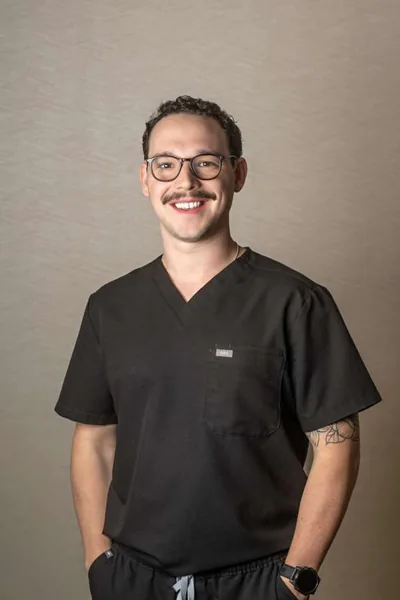
Dr. Jack Meister, ND, is a naturopathic physician completing his residency at Regenerative Performance in Gilbert, AZ, mentored by Dr. Timmermans. He treats chronic musculoskeletal and nerve pain with ultrasound-guided orthobiologic injections, and prescribes integrative supplement and peptide protocols intended to support recovery and tissue healing around those treatments.
Patients see him for the same 2-hour comprehensive evaluation and structure-by-structure diagnostic process the clinic's musculoskeletal side uses for every new patient.
References
- Berrigan W, et al. The effect of platelet dose on outcomes after platelet rich plasma injections for musculoskeletal conditions: a systematic review and meta-analysis. Current Reviews in Musculoskeletal Medicine, 2024. DOI: 10.1007/s12178-024-09922-x.
- Bansal H, et al. Platelet-rich plasma (PRP) in osteoarthritis (OA) knee: correct dose critical for long term clinical efficacy. Scientific Reports, 2021. DOI: 10.1038/s41598-021-83025-2.
- Di Martino A, et al. Platelet-rich plasma versus hyaluronic acid injections for the treatment of knee osteoarthritis: results at 5 years of a double-blind randomized controlled trial. American Journal of Sports Medicine, 2019. DOI: 10.1177/0363546518814532.
NOTE: This article provides general information to help the reader better understand regenerative medicine, nerve and musculoskeletal conditions, naturopathic approaches to pain, and related subjects. All content provided in this article, website, or any linked materials, including text, graphics, images, research, and outcomes, are not intended, and should not be used, as a substitute for direct medical advice, diagnosis, or treatment. Please always consult with a professional and licensed healthcare provider to discuss if any treatment is right for you.